Inverter AC vs Non-Inverter AC – Which One Fits Your Home?
Published: 16 Oct 2025
When the sun starts to burn bright and the heat feels endless, an air conditioner becomes your best friend. But when you plan to buy one, you’ll often face a common question: Inverter AC vs Non-Inverter AC? Both keep your room cool, but the way they work and how much energy they use are quite different.
An Inverter AC changes its speed based on how much cooling is needed, making it smart and energy-efficient. A Non-Inverter AC, on the other hand, runs at a fixed speed and turns on and off to maintain the temperature. That’s why many people compare them – one focuses on saving power, while the other is simpler and more affordable.
In this article, we’ll explore how both types work, their performance, features, cost, and which one fits your home best.
So, are you ready? Let’s see which one suits you better.
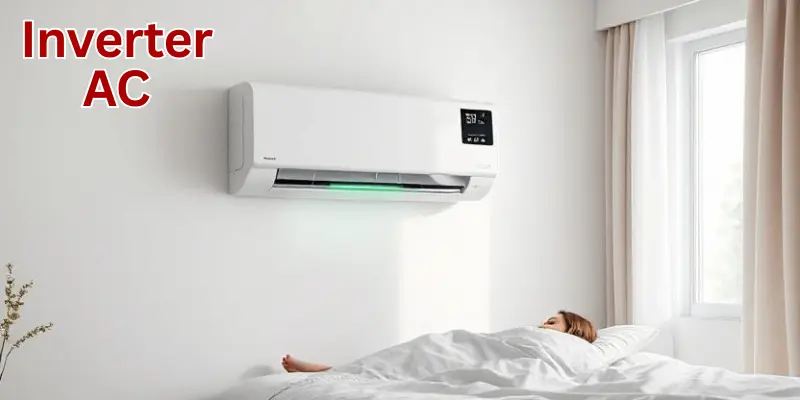
What is a DC Inverter AC?
An Inverter AC adjusts the compressor speed automatically based on the room’s temperature. It provides steady cooling, saves energy, and runs quietly. It’s ideal for people who use their AC for long hours or want lower electricity bills.
What is a Non-Inverter AC?
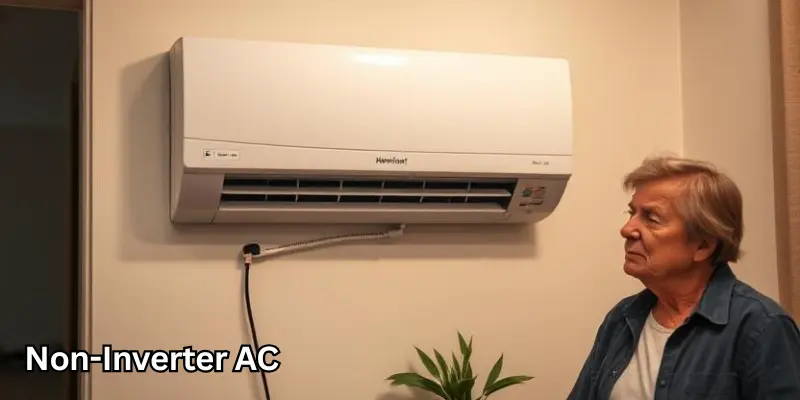
A Non-Inverter AC works at a fixed speed, turning the compressor on and off to maintain cooling. It cools the room quickly but uses more power over time. It’s suitable for those who use the AC for short periods or have a smaller budget.
After reviewing the basics of both air conditioners, we will discuss their comparison in the next section. So, are you ready?
Differences Between Inverter AC and Non-Inverter AC
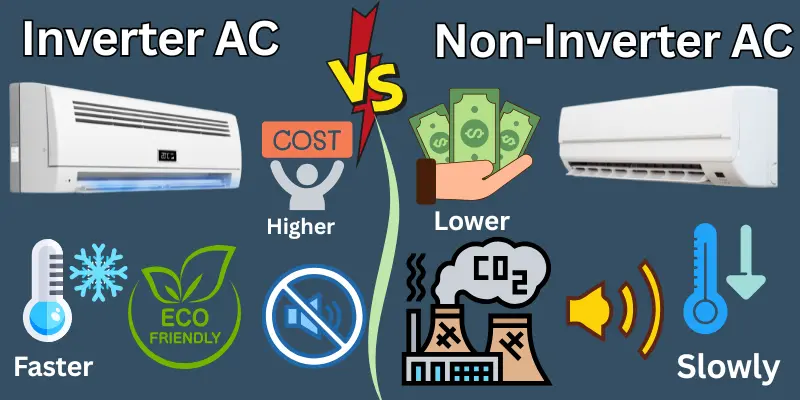
Choosing between a DC Inverter AC and a Non-Inverter AC depends on your cooling needs, budget, and how long you use the air conditioner each day. Here’s a simple table to help you understand their main differences at a glance.
Comparison Table.
| Feature | Inverter AC | Non-Inverter AC |
| Technology | Uses a variable-speed compressor that adjusts cooling automatically | Uses a fixed-speed compressor that turns on and off to control temperature |
| Energy Efficiency | More energy-efficient and saves electricity | Consumes more power due to frequent compressor starts and stops |
| Cooling Speed | Provides consistent and faster cooling | Cools more slowly, and the temperature may fluctuate |
| Noise Level | Operates quietly with low vibration | Can be noisy due to compressor cycling |
| Durability | Longer lifespan with less wear and tear | Shorter lifespan due to frequent compressor activity |
| Maintenance | Needs regular servicing for smooth performance | Simple structure; easier and cheaper to maintain |
| Cost | Higher initial price, but saves money over time | Lower upfront cost but higher electricity bills |
| Comfort | Maintains a steady room temperature | Temperature may vary slightly during use |
| Ideal For | Homes with long daily AC usage | Occasional or short-term users |
| Environmental Impact | Eco-friendly due to lower power use | Higher carbon footprint from energy consumption |
Now we discuss all the points in detail, one by one. Are you ready?
1. Technology
When it comes to how they work, both ACs use different types of compressors.
Inverter AC:
- Runs on a variable-speed compressor.
- Adjusts power automatically based on the room temperature.
- Keeps cooling smoothly without switching on and off.
- Uses advanced electronics for steady performance.
- Works smartly to save power.
Non-Inverter AC:
- Has a fixed-speed compressor.
- Turns on and off repeatedly to control temperature.
- Cooling is not consistent every time.
- Uses basic technology that’s simple to repair.
- Works well for short cooling needs.
If you like steady and smart cooling, go for an Inverter AC. But if you prefer a simple system, a Non-Inverter AC is fine.
2. Energy Efficiency
Energy use is one of the biggest differences between these two AC types.
Inverter AC:
- Consumes less power because it adjusts speed.
- Runs continuously but uses low energy.
- Helps reduce monthly electricity bills.
- Great for long daily use.
- Environmentally friendly due to lower energy use.
Non-Inverter AC:
- Uses more power each time the compressor restarts.
- Power spikes increase electricity costs.
- Better for short use or smaller rooms.
- Less efficient when used for long hours.
- May lead to higher bills over time.
For energy savings and long-term use, Inverter AC is the winner.
3. Cooling Speed
Both can cool rooms well, but their speed and stability differ.
Inverter AC:
- Cools rooms faster and evenly.
- Maintains a steady temperature.
- Avoids sudden cold or warm air bursts.
- Works well even in extreme heat.
- Keeps comfort constant all the time.
Non-Inverter AC:
- Takes more time to reach the set temperature.
- Cooling feels uneven at times.
- Works better in smaller areas.
- Stops and restarts often.
- Temperature changes can be noticeable.
If you want faster and smoother cooling, an Inverter AC performs better.
4. Noise Level
Noise can make a big difference in comfort, especially at night.
Inverter AC:
- Operates quietly.
- The compressor runs smoothly without sudden noise.
- Ideal for bedrooms and offices.
- Minimal vibration during use.
- Keeps the room peaceful and calm.
Non-Inverter AC:
- Noisier due to frequent compressor restarts.
- The sound level rises each time the unit turns on.
- Can disturb sleep or quiet time.
- More vibration in older models.
- Works fine in less noise-sensitive areas.
For a quiet and calm experience, an Inverter AC is a better option.
5. Durability
The lifespan of your AC depends on how it’s built and used.
Inverter AC:
- Has advanced parts that last longer.
- The compressor faces less stress.
- Designed for regular, long-hour use.
- Needs proper servicing for best results.
- Offers more reliable performance.
Non-Inverter AC:
- Simple design with fewer electronic parts.
- The compressor works harder and wears faster.
- Best for light, short-term use.
- May need repairs more often.
- Lifespan can be shorter under heavy use.
If you want a longer-lasting air conditioner, an Inverter AC is more dependable.
6. Maintenance
Both need care, but one needs a bit more attention.
Inverter AC:
- Needs regular check-ups by professionals.
- Filters must be cleaned often.
- More components mean detailed servicing.
- Higher maintenance cost.
- Keeps efficiency high with proper care.
Non-Inverter AC:
- Easy to maintain.
- Fewer parts to check and clean.
- Lower servicing costs.
- It can be cleaned at home easily.
- Works fine with basic maintenance.
If you prefer low maintenance, a Non-Inverter AC is easier to handle.
7. Cost
Price plays a big role in deciding which one to buy.
Inverter AC:
- Costs more to buy and install.
- Saves more on electricity in the long run.
- Better return on investment for daily users.
- Offers premium features for comfort.
- Worth the higher upfront price.
Non-Inverter AC:
- Cheaper at the time of purchase.
- Uses more electricity overall.
- Ideal for limited budgets.
- Basic cooling at a lower cost.
- Good for occasional use.
If you want savings over time, an Inverter AC is better. But for a low starting price, a Non-Inverter AC works fine.
8. Comfort
Comfort means how evenly and steadily your room stays cool.
Inverter AC:
- Keeps temperature steady.
- No sudden changes in cooling.
- Feels smoother and more natural.
- Perfect for longer use.
- Provides a relaxing environment.
Non-Inverter AC:
- Cooling changes with compressor cycles.
- May feel warm, then cool again.
- Works fine for short stays.
- Slight temperature swings are normal.
- Feels less stable in comfort.
For all-day comfort, the Inverter AC wins easily.
9. Ideal For
Who should use which? Let’s make it simple.
Inverter AC:
- Perfect for homes and offices with long AC hours.
- Great for large rooms.
- Fits modern energy-saving needs.
- Ideal for hot climates.
- Good for people who care about comfort and bills.
Non-Inverter AC:
- Works well for small rooms.
- Best for short-term or occasional use.
- Good for rentals or backup units.
- Suitable for moderate climates.
- Ideal for low-budget users.
If you use AC daily, pick an Inverter AC. For short or budget use, a Non-Inverter is enough.
10. Environmental Impact
Both cool the air, but one is kinder to nature.
Inverter AC:
- Uses less electricity, reducing carbon output.
- Many models use eco-friendly refrigerants.
- Runs smoothly without power spikes.
- Saves energy and supports sustainability.
- Meets modern energy standards.
Non-Inverter AC:
- Consumes more power.
- It can produce more greenhouse gases.
- Older models may use harmful refrigerants.
- Puts extra load on the power grid.
- Less eco-friendly overall.
If you care about the planet, an Inverter AC is the greener choice.
Which One Should You Choose?
After comparing both, here’s the truth – Inverter AC and Non-Inverter AC each have their own place.
If you use air conditioning for long hours, want lower electricity bills, and care about comfort, then an Inverter AC is your smart choice. It works quietly, keeps the temperature steady, and saves energy – perfect for homes, offices, or shops that run AC daily.
On the other hand, a Non-Inverter AC fits people who use cooling for short periods or have a small room. It’s simple, affordable, and easy to maintain – great for beginners, small businesses, or anyone on a budget.
Both types can cool your room well. The right one depends on how often you use it and what matters most – cost or comfort.
Now that you know the difference, choose the air conditioner that fits your needs best and enjoy cool comfort your way!
Want to know how inverter technology works in refrigerators, too? Check out my detailed guide on Inverter vs. Non-Inverter Refrigerators.
Common Questions and Answers About Inverter or Non-Inverter AC
Still confused about which air conditioner to buy? Don’t worry, many people feel the same when choosing between an Inverter AC and a Non-Inverter AC. Here are some simple and clear questions that will help you understand both better before you make your choice.
- Which AC cools the room faster, Inverter or Non-Inverter?
- Does an Inverter AC save more electricity than a Non-Inverter?
- Which one makes less noise while running?
- Can I use an Inverter AC in a small room?
- Which AC is easier to repair or service?
- Does a Non-Inverter AC need more maintenance?
- Which AC lasts longer if used every day?
- Is there a big difference in price between the types?
- Which AC works better in very hot weather?
- Can both AC types work with a home inverter or generator?
- Can we run Inverter and Non-Inverter ACs on solar power?
Now, let’s discuss all these questions one by one in detail with their answers.
A Non-Inverter AC cools the room a little faster because its compressor runs at full speed until the set temperature is reached. An Inverter AC takes a bit longer as it adjusts speed slowly for even cooling. But once the room is cool, the Inverter AC keeps it steady without big temperature changes. So, for quick cooling, Non-Inverter works faster, but for steady comfort, Inverter is better.
Yes, an Inverter AC saves more electricity. It controls compressor speed based on the room temperature. This means it uses less power over time. A Non-Inverter AC runs at one fixed speed, using more energy. So, if you use your AC for long hours daily, the Inverter AC will help you save on bills.
Inverter AC makes less noise because its compressor doesn’t turn on and off again and again. It runs smoothly at a steady speed. A Non-Inverter AC starts and stops suddenly, which creates more sound. If you want a peaceful sleep or a quiet study room, an Inverter AC is the better choice.
Yes, you can use an Inverter AC in a small room. It adjusts cooling as per the room size and temperature. It won’t overcool or waste power. Just pick the right capacity, like 1 ton for a small bedroom. This will give you comfort without using too much electricity.
A Non-Inverter AC is easier and cheaper to repair because its system is simpler. Inverter ACs have modern parts and sensors that need expert service. If the Inverter AC breaks down, repairs can cost more. But with good care, both types can work smoothly for many years.
No, both types need almost the same cleaning and care. The main difference is that Non-Inverter ACs can get hot more often because the compressor works harder. You should clean filters and get a check-up once or twice a year. Doing this helps both ACs work better and last longer.
An inverter AC usually lasts longer when used daily. It runs gently without putting too much pressure on the compressor. A Non-Inverter AC works at full speed each time, so its parts wear out faster. With regular service, both can last many years, but Inverter ACs tend to stay efficient longer.
Yes, Inverter ACs cost more to buy at first. But they save money later because they use less electricity. Non-inverter ACs are cheaper to buy but cost more to run every month. If you want long-term savings, go for an Inverter AC. If you want a low starting cost, choose a Non-Inverter AC.
Inverter AC works better in very hot areas because it adjusts power automatically. It keeps the room cool even when the outside heat changes. Non-inverter AC can struggle a bit as it works at one fixed speed. For places with high temperatures, an Inverter AC gives more steady cooling
Yes, both can work with a home inverter or generator, but an Inverter AC is easier to run. It uses less power and starts smoothly without a high load. A Non-Inverter AC needs more power to start, so you may need a bigger generator. Always check the power capacity before connecting.
Yes, both can run on solar power if your solar setup is strong enough. Inverter AC is more suitable because it uses less electricity and runs at variable speeds. A Non-Inverter AC may need higher power, which means more solar panels. With proper installation, an Inverter AC works well with solar systems.
Conclusion
So, guys, in this article, we’ve covered Inverter AC vs Non-Inverter AC in detail. If you use your air conditioner daily or for long hours, I suggest going for an Inverter AC. It saves energy and gives steady comfort. But if you use it for short periods, a Non-Inverter AC is fine too. Now that you know the difference, choose the one that matches your needs and enjoy cool, fresh air all summer!
So guys, now it’s time to say goodbye to you. But before we end, if you want to explore more types of air conditioners and see how they compare, we have a full guide ready for you. You can read it here – Compare Split AC vs Window AC.