Types of Refrigerator Gas – Easy Guide for Safe Cooling
Published: 30 Nov 2025
Imagine opening your fridge on a hot summer day, expecting cold drinks, only to find everything slightly warm. Frustrating, right? Often, the problem isn’t the fridge itself-it’s the gas inside that keeps things cool. Knowing the types of refrigerator gas can help you understand why some fridges work better, why some are more energy-efficient, and even how to handle repairs safely. In this guide, we’ll explore all the common types of refrigerator gas in simple, easy-to-understand language so you can make smarter choices and keep your fridge running smoothly.
So, are you ready? Let’s discuss in detail.
Types of Refrigerator Gas
Knowing the different types of fridge gas can help you understand how your refrigerator works. It also helps you pick a fridge that is safe, energy-efficient, and better for the environment. When you know these names, you can also handle repairs and maintenance with more confidence.
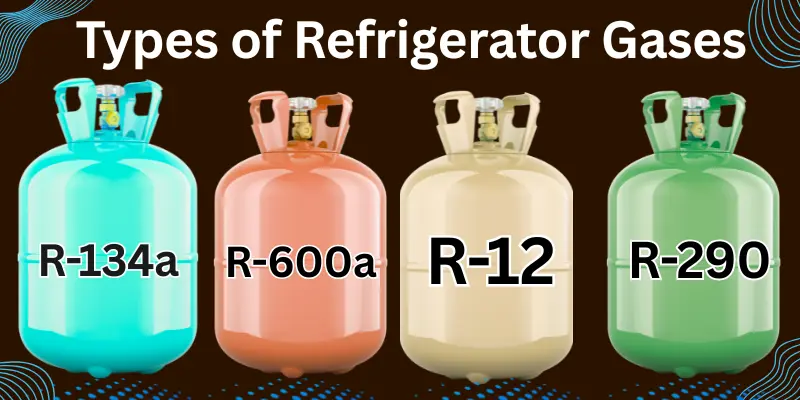
Here are the main types of refrigerant gases used in refrigerators:
- R-12 (Dichlorodifluoromethane)
- R-134a (Tetrafluoroethane)
- R-600a (Isobutane)
- R-290 (Propane)
- R-744 (CO₂)
- R-717 (Ammonia)
These are the gases commonly connected with refrigerator systems.
Now we will discuss all these types one by one in detail.
1. R-12 Refrigerator Gas
R-12 (chemical formula: CCl₂F₂) is an older type of refrigerant gas that was widely used in home fridges for many years. It gave steady cooling and kept food fresh without much trouble. Today, it is no longer used in new refrigerators because it harms the environment, but some old units may still contain it.
Key Features:
- Strong and stable cooling performance.
- Non-flammable, which made it safe for basic home use.
- Works well in low-pressure refrigerator systems.
- Easy for technicians to manage in the older days.
- Very high environmental impact, which led to a global phase-out.
Real-World Examples:
- Old single-door refrigerators made before the 1990s.
- Vintage mini-fridges are still running in some homes.
- Classic display fridges in old shops or cafés.
If you have a fridge that still uses R-12, keep it only if it runs safely, and a trained technician can guide you. As an expert, I recommend shifting to a fridge with modern, eco-friendly gas like R-600a for better cooling and lower energy use.
Compared to today’s gases, R-12 is not eco-friendly and is no longer part of modern refrigerator systems.
2. R-134a Refrigerator Gas
R-134a (chemical formula: C₂H₂F₄) is a popular refrigerator gas that replaced older gases like R-12. It gives steady cooling, works well in many home fridges, and is much safer for the environment compared to older options. Many refrigerators made after the 1990s use this gas.
Key Features:
- Gives smooth and reliable cooling for daily use.
- Non-flammable, making it safe for home refrigerators.
- Works well in medium-pressure systems.
- Easier to refill and handle for trained technicians.
- Has a higher global warming impact than modern gases like R-600a.
Real-World Examples:
- Many double-door refrigerators were made in the 2000s.
- Older frost-free refrigerators are still running today.
- Some commercial storage units were designed before newer, eco-friendly gases became popular.
If your fridge uses R-134a, you can keep it without worry as long as it runs well and a technician handles any repairs. As an expert, I suggest choosing R-600a or similar modern gases when you buy a new fridge because they save more energy and are kinder to the environment.
Compared to newer gases like R-600a, R-134a is less eco-friendly but still safer and cleaner than old gases like R-12.
3. R-600a Refrigerator Gas
R-600a (chemical formula: C₄H₁₀) is a modern refrigerator gas used in many new home fridges. It gives strong cooling, uses less electricity, and is very friendly to the environment. Today, it is one of the most common gases in household refrigerators.
Key Features:
- Very energy-efficient, which helps lower electricity bills.
- Eco-friendly with a very low global warming impact.
- Works smoothly in small and medium home fridges.
- Gives fast and steady cooling performance.
- Mildly flammable, so it needs safe and proper handling by technicians.
Real-World Examples:
- New single-door and double-door home refrigerators.
- Modern inverter refrigerators are sold by big brands.
- Energy-saving mini-fridges are used in bedrooms and offices.
If your fridge uses R-600a, you already have a good and modern cooling system. As an expert, I recommend choosing this gas when buying a new refrigerator because it is safe, efficient, and gentle on the environment.
Compared to older gases like R-134a, R-600a uses less energy and is much more eco-friendly.
4. R-290 Refrigerator Gas
R-290 (chemical formula: C₃H₈) is a natural refrigerator gas known for strong cooling and very low environmental impact. It is becoming common in modern fridges because it saves energy and keeps food fresh without harming the planet. Many new models now use this gas as a clean and efficient choice.
Key Features:
- Very eco-friendly with a low global warming impact.
- Gives fast and powerful cooling performance.
- Works well in energy-saving and inverter refrigerator systems.
- Helps reduce electricity use in daily home cooling.
- Mildly flammable, so only trained technicians should handle it.
Real-World Examples:
- Modern frost-free refrigerators from well-known brands.
- High-efficiency single-door and double-door home fridges.
- Newer commercial coolers are designed to be eco-friendly.
If your fridge uses R-290, you can enjoy strong cooling with low energy use. As an expert, I suggest choosing R-290 when buying new fridges because it is clean, efficient, and future-ready.
Compared to R-134a, R-290 is more energy-efficient and far better for the environment.
5. R-744 Refrigerator Gas
R-744 (chemical formula: CO₂) is a natural refrigerator gas known for its very low impact on the environment. It offers strong cooling and works well in systems designed to handle high pressure. Many modern commercial and some specialty refrigerators use this gas because it is clean and reliable.
Key Features:
- Extremely eco-friendly with almost zero global warming impact.
- Delivers fast and steady cooling performance.
- Works in high-pressure systems built for strong cooling needs.
- Safe, non-toxic, and non-flammable.
- Great for long-term, heavy-duty cooling.
Real-World Examples:
- Commercial refrigerators are used in supermarkets.
- High-performance coolers in food storage areas.
- Special cold rooms are made for stable and clean cooling.
If your system uses R-744, you get strong cooling with almost no harm to the environment. As an expert, I recommend R-744 for commercial or heavy-duty use, especially when eco-friendly performance is important.
Compared to gases like R-600a, R-744 needs high-pressure systems but offers cleaner and greener cooling.
6. R-717 Refrigerator Gas
R-717 (chemical formula: NH₃) is a natural refrigerator gas known for its very strong cooling power and excellent energy efficiency. It has been used for many years in large cooling systems because it cools fast and uses very little electricity. Even today, it is a top choice for heavy-duty cooling needs.
Key Features:
- Very high cooling efficiency, even in large systems.
- Zero global warming impact, making it very eco-friendly.
- Works well in big commercial and industrial refrigerators.
- Non-flammable but toxic, so it needs careful handling.
- Long-lasting and cost-effective for large operations.
Real-World Examples:
- Cold storage rooms are used for fruits, vegetables, and meat.
- Big commercial ice plants and dairy storage units.
- Industrial freezers are used in factories and food processing units.
If your system uses R-717, you get powerful cooling with very low energy costs. As an expert, I recommend R-717 only for commercial or industrial use because it needs trained technicians and proper safety systems.
Compared to R-600a or R-290, R-717 is stronger and better for large spaces, but not suitable for small home refrigerators.
Comparison Table
Comparing the different types of refrigerator gas helps you understand which one fits your needs. It also makes it easier to see the cooling strength, safety level, and eco-friendliness of each gas. Here is a simple table you can scan quickly.
| Gas Type | Key Feature | Best Use | Main Pros | Main Cons |
| R-12 | Old, strong cooling | Old home fridges | Stable cooling | Very harmful to the environment |
| R-134a | Reliable cooling | Older modern fridges | Safe, non-flammable | Higher global warming impact |
| R-600a | Energy-saving | New home fridges | Very eco-friendly, low power use | Mildly flammable |
| R-290 | Strong natural cooling | Modern home fridges | Low GWP, powerful cooling | Mildly flammable |
| R-744 (CO₂) | High-pressure cooling | Commercial fridges | Very eco-friendly, safe | Needs special high-pressure systems |
| R-717 (Ammonia) | Very strong cooling | Industrial systems | Zero GWP, very efficient | Toxic, needs trained handling |
How to Choose the Right Type of Gas Refrigerator
Picking the right refrigerator gas depends on what matters most to you—energy use, cooling strength, safety, or environmental impact. Here’s an easy guide:
- For everyday home refrigerators, choose R‑600a. It cools well, uses less electricity, and is eco-friendly. Most new household fridges use it because it balances performance and energy savings.
- For bigger fridges or commercial use, R‑290 or R‑744 (CO₂) are good options. R‑290 provides strong cooling and is environmentally friendly. R‑744 works well in high-demand commercial or specialty refrigerators.
- For older fridges, R‑134a still works, but it’s less eco-friendly and consumes more energy than newer gases.
- For industrial or large storage units, R‑717 (Ammonia) or R‑744 (CO₂) is best. They are efficient and strong, but require trained technicians to handle them safely.
Expert advice: For most homes, I recommend R‑600a for its energy efficiency, safety, and environmental friendliness. For commercial or large fridges, R‑290 or R‑744 is better, but always use certified technicians for installation and maintenance.
Choosing the right gas helps your fridge run efficiently, saves electricity, and protects the environment.
FAQs
Even if you’ve read about the main types of fridge gas, many beginners still have extra questions. People often wonder about safety, maintenance, energy use, and future trends. These FAQs will help you understand the practical side of refrigerants and make smarter choices for your fridge.
Here are some common questions people ask:
- Can a refrigerator gas leak, and how dangerous is it?
- How do I know which refrigerant my fridge uses?
- Are natural gases like R‑600a or R‑290 safe around children and pets?
- How often should refrigerator gas be refilled or checked?
- What is the future of eco-friendly refrigerator gases?
Now we will discuss each question and answer them one by one in simple, clear language.
Yes, refrigerator gas can leak if the system has a crack or loose connection. Small leaks in modern gases like R‑600a or R‑290 are usually not harmful if you follow safety rules, but these gases are flammable. Gases like R‑134a or CO₂ are safer in small amounts but can reduce cooling efficiency if they leak. Always call a trained technician if you suspect a leak. Never try to repair it yourself.
You can usually find the refrigerant type on a sticker or label inside the fridge or on the back panel. The label will show the gas name, like R‑600a or R‑134a. If you cannot find it, check the user manual or contact the manufacturer. Knowing the gas type is important for safe maintenance and repairs.
Yes, they are safe when the fridge is used normally. These gases are flammable, so you should not try to open or tamper with the fridge system. Keep the fridge in a well-ventilated area, and never let children or pets play near any leaking parts. With normal use, these gases do not pose danger.
Most modern fridges do not need gas refills for many years if there are no leaks. If cooling becomes weak, a technician can check the gas level and refill it safely. It is a good idea to have a professional inspection every 2–3 years, especially for older fridges. Never add gas yourself, as it can be dangerous.
New gases are being developed to reduce global warming and save electricity. Gases like R‑600a, R‑290, and R‑744 (CO₂) are becoming more common in homes and commercial fridges. Experts expect old gases like R‑134a and R‑12 to be phased out completely. Using eco-friendly gases helps save energy, reduce pollution, and protect the planet.
Conclusion
In this article, we have covered the main types of refrigerator gas, including R‑12, R‑134a, R‑600a, R‑290, R‑744, and R‑717. We discussed their features, real-world uses, safety, and environmental impact. You also learned how to choose the right gas for your fridge and answered common questions beginners often have.
As a personal recommendation, guys, understanding these gases is important not just for keeping your fridge running well, but also for saving energy, reducing bills, and protecting the environment. Choosing the right type makes a real difference in safety, efficiency, and eco-friendliness.
So, friends, keep these tips in mind the next time you buy a fridge, check your old fridge, or call a technician. Stay curious, stay safe, and keep learning about how to make your home appliances work better!