What Is a Deep Freezer and How Does It Work to Keep Food Fresh
Published: 12 Dec 2025
Many people see a large freezer at home or in shops and wonder what it really does. If you feel the same, don’t worry. In this guide, we will explain what is a deep freezer, why it is useful, how it works, the types available, and its advantages and disadvantages. Everything is explained simply so that you can understand it easily.
Let’s get started.
Definition of Deep Freezer
A deep freezer is a special appliance designed to keep food frozen for a long time at very low temperatures. Unlike a regular fridge freezer, it focuses entirely on freezing. It can store large amounts of meat, fish, vegetables, and other items for months without spoiling. Thick walls and strong insulation lock in cold air, keeping the temperature steady.
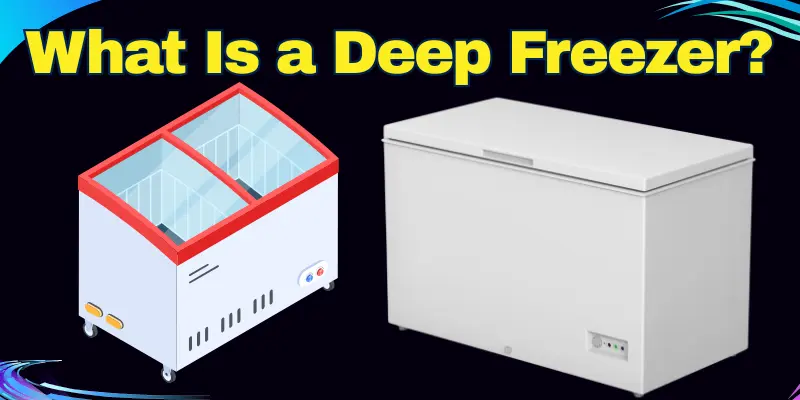
It cools faster than standard freezer compartments, making it ideal for homes and small shops. Using a deep freezer helps save money and reduces the stress of daily grocery shopping.
Importance of a Deep Freezer
A deep freezer is more than just extra storage. It helps families and shops manage food efficiently while keeping it fresh and safe.
- Reduces daily grocery trips.
- Helps plan meals in advance.
- Keeps food safe for a long time.
- Supports small shops with steady storage.
- Prevents food from spoiling, saving money.
How a Deep Freezer Works
The working of a deep freezer is simple when broken down. Think of it as a machine that removes heat to keep your food cold.
- Warm air from inside the freezer is pulled out.
- A cooling system converts the warm air into cold air.
- Cold air spreads evenly around all stored items.
- Thick walls keep the cold air inside.
- The temperature remains steady all day.
- Food stays frozen as long as the freezer lid is closed.
Types of Deep Freezers
Deep freezers come in different styles, and each one fits a different need. Some are big and wide, while others look like a normal fridge. These types help people choose the freezer that works best for their home or shop.
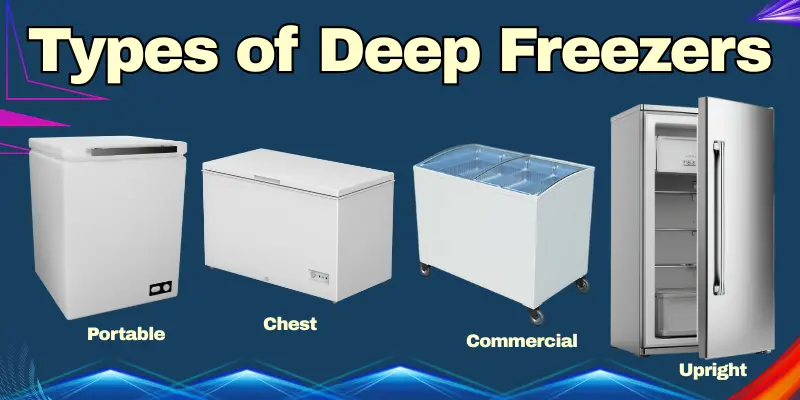
- Chest Freezer – A wide freezer that opens from the top and stores a large amount of food.
- Upright Freezer – A standing freezer with shelves for easy organizing and quick access.
- Portable / Compact Freezer – A small freezer for travel, small homes, or temporary storage.
- Drawer / Under-Counter Freezer – A freezer that fits under counters and opens like a drawer.
- Commercial Deep Freezer – A large freezer used in shops, restaurants, and businesses.
- Frost-Free Deep Freezer – A freezer that prevents ice buildup automatically with even cooling.
- Manual Defrost Deep Freezer – A simple freezer that needs manual defrosting but saves energy.
- Solar-Powered / Off-Grid Deep Freezer – A freezer that runs on solar power for places with limited electricity.
If you want to read in detail about the types of deep freezers, you can check out our complete guide.
Advantages and Disadvantages of a Deep Freezer
In this section, we will look at the pros and cons. This helps you understand what a deep freezer can do for you. It also shows where it may not fit your needs.
Advantages of a Deep Freezer
Here are the good things it offers:
| Pros |
|---|
|
Disadvantages of a Deep Freezer
Here are a few points to consider:
| Cons |
|---|
|
If you want to read the detailed advantages and disadvantages of deep freezers, you can read our guide.
Common Mistakes to Avoid with a Deep Freezer
In this section, we cover the usual mistakes people make when using a deep freezer. Avoiding these can help your freezer last longer and keep your food fresh.
- Overloading the freezer, which blocks proper air circulation.
- Keeping the lid open for too long causes temperature fluctuations.
- Storing hot or warm food directly inside.
- Not cleaning or defrosting regularly can reduce efficiency.
- Ignoring the recommended temperature settings.
- Placing the freezer too close to walls or heat sources.
- Storing food without proper organization makes it hard to find items.
- Using damaged or worn-out door seals, which lets cold air escape.
Common Misconceptions About Deep Freezers
In this section, we cover some common misunderstandings people have about deep freezers. Knowing the truth helps you use your freezer better and avoid problems.
- A deep freezer is not just a bigger fridge; it is meant mainly for long-term freezing.
- Freezing food does not kill all bacteria; proper handling is still important.
- Leaving the freezer half-empty does not harm it, but organizing items matters for airflow.
- Deep freezers do not consume too much electricity if used correctly.
- You don’t need to defrost it every day; regular maintenance is enough.
- Putting everything in plastic bags is not always best; proper storage containers are better.
- Freezing food does not improve its taste; it only preserves it.
Best Practices for Using a Deep Freezer
In this section, we cover simple tips to use your deep freezer efficiently. Following these practices keeps your food fresh longer and helps the freezer work better.
- Always organize food so cold air can circulate evenly.
- Set the temperature to the recommended level for your freezer.
- Avoid putting hot or warm food directly inside.
- Clean and defrost the freezer regularly to maintain efficiency.
- Keep the lid closed as much as possible.
- Use airtight containers or freezer-safe bags to store food.
- Check door seals regularly to prevent cold air from escaping.
- Label food with dates to use items before they expire.
- Keep the freezer away from heat sources like ovens or direct sunlight.
- Plan storage so you can access frequently used items easily.
The Future of Deep Freezers
In this section, we cover what to expect from deep freezers in the coming years. New features and improvements will make them more efficient, convenient, and user-friendly.
- Energy-efficient models that use less electricity.
- Smart freezers with digital controls and temperature monitoring.
- Faster freezing technology to preserve food quality better.
- Compact and space-saving designs for smaller homes.
- Eco-friendly refrigerants that are safe for the environment.
- Better organization features like adjustable shelves and compartments.
- Remote monitoring and alerts through mobile apps.
- Long-lasting building materials for durability and reliability.
Latest Trends in Deep Freezers
In this section, we cover the current trends in deep freezers. These trends show how technology and design are improving storage and convenience for users.
- Rise of smart freezers with touch screens and app controls.
- Energy-saving models that reduce electricity bills.
- Freezers with faster freezing and improved temperature stability.
- Sleek, space-saving designs for modern kitchens.
- Multi-functional freezers that can switch between fridge and freezer modes.
- Eco-friendly refrigerants and sustainable materials.
- Better storage features like adjustable shelves and compartments.
- Freezers with noise reduction technology for quieter operation.
Conclusion
In this guide, we have explained what is a deep freezer, how it works, the different types, its advantages and disadvantages, common mistakes, best practices, and even future trends. Now you have a clear picture of how this appliance can help you store food safely and efficiently.
My personal recommendation, folks, is to choose a deep freezer that fits your space and needs, follow the best practices, and keep it organized. This way, you can save money, reduce food waste, and always have fresh food ready when you need it.
So, guys, make the most of your deep freezer and keep learning about ways to make your kitchen smarter and your life easier!
FAQs About Deep Freezers
In this section, we cover the common questions people have about deep freezers. These questions help beginners and advanced users understand how to use a deep freezer safely and efficiently.
Different foods last for different times in a deep freezer. Meat like beef or chicken can stay frozen for 6–12 months. Fish usually stays good for 3–6 months. Vegetables and fruits can last 8–12 months if stored properly. Always check food for freezer burn or unusual smell before eating.
The best temperature for a deep freezer is around -18°C (0°F). This keeps food frozen for a long time without losing quality. Some freezers let you adjust slightly colder for longer storage. Avoid setting it too high, as food may spoil faster. Keep a thermometer handy if your freezer doesn’t show exact numbers.
Yes, a deep freezer can keep food cold for a few hours during a power outage. Keep the lid closed as much as possible. A full freezer stays cold longer than a half-empty one. Avoid opening it until power returns. If the outage is long, check food carefully before eating.
The electricity use depends on the size and type of freezer. Small upright freezers use about 100–200 kWh per year, while larger chest freezers can use 200–400 kWh per year. Energy-efficient models use less electricity. Keeping it full and organized also reduces power use. Regular cleaning and proper temperature help save energy.
Yes, you can store juice, milk, or other liquids in a deep freezer. Use airtight containers or freezer-safe bottles. Leave some space at the top because liquids expand when frozen. Avoid freezing carbonated drinks, as they can explode. Thaw liquids slowly in the fridge before using.
Chest freezers are usually more energy-efficient because cold air stays inside when the lid is opened. Upright freezers are easier to organize but can use slightly more electricity. Both types keep food frozen well. Choosing between them depends on your space, storage needs, and convenience.
Yes, but check the freezer’s operating temperature range first. Some freezers work only in certain indoor temperatures. Avoid placing it in direct sunlight or near heaters. Keep it level and stable to protect the compressor. During very cold or very hot weather, monitor the freezer to ensure it stays at the right temperature.
Clean the inside and outside regularly to avoid dirt and ice buildup. Defrost it when the ice is more than 0.5 cm thick. Check the door seals and replace them if worn out. Keep the area around it clean and well-ventilated. organize food so cold air circulates freely.
Place frequently used items near the top or front for easy access. Group similar items like meat, vegetables, or frozen meals together. Use containers or freezer bags to avoid mess. Label each item with the date so you know when it was stored. Keep some space between items for air circulation to maintain even freezing.
Yes, a half-empty deep freezer can still work, but efficiency is better when it’s fuller. You can fill gaps with bottles of water or ice packs to keep cold air circulating. Avoid leaving large empty spaces, as this can make the freezer work harder. Proper organization helps maintain temperature evenly.