How a Deep Freezer Works: Step-by-Step Explained Simply
Published: 22 Dec 2025
Last week, Maria bought a big batch of vegetables and meat for her small café. She opened her deep freezer and carefully stacked everything inside, knowing it would stay fresh for weeks. Have you ever wondered how a Deep Freezer works to keep food frozen for so long? In this article, we will explain the process step by step in simple words, so you can use your freezer efficiently at home or in your business.
So, are you ready? Let’s know everything in detail.
What is a Deep Freezer?
A deep freezer is a large appliance that keeps food frozen for a long time. It uses very low temperatures to stop food from spoiling, which helps you store items for weeks or even months.
Unlike a regular freezer, which is usually part of a refrigerator, a deep freezer has more space and can store larger amounts of food. Regular freezers are good for daily use, but deep freezers are built for bulk storage.
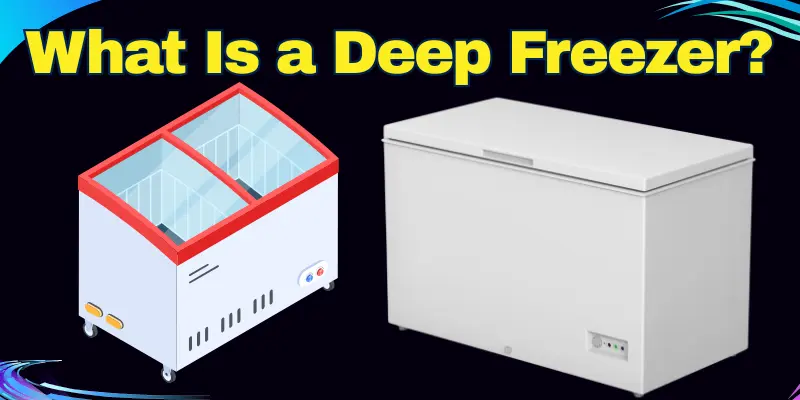
Deep freezers are used in many places. At home, they help families store meat, vegetables, and frozen meals. In restaurants and small businesses, they keep ingredients fresh and ready for busy days.
Example: A bakery can keep dough and pastries fresh for days, and a café can store vegetables and meat for multiple recipes without frequent shopping.
Main Parts of a Deep Freezer
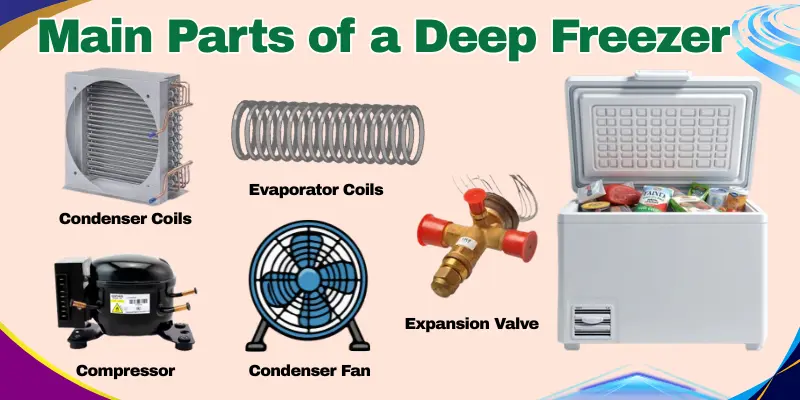
A deep freezer may seem simple from the outside, but it has several important parts that work together to keep your food frozen. Understanding these parts helps you know how the freezer maintains a cold temperature and keeps your food fresh.
Here are the main parts of a deep freezer:
- Compressor
- Thermostat
- Condenser Coils
- Condenser Fan
- Expansion Valve / Tube
- Evaporator Coils
- Insulation
Now we will discuss each part in detail.
1. Compressor
The compressor is the heart of a deep freezer. It pushes the refrigerant through the system, creating pressure so it can absorb heat from inside the freezer. Without the compressor, the freezer cannot cool properly. It works constantly to keep food frozen even when the door is opened often. A strong compressor ensures the freezer runs efficiently for a long time.
- Pushes refrigerant through the system
- Creates pressure to absorb heat
- Keeps freezer cold even with frequent use
Example: Think of the compressor like a pump that moves water through pipes. Instead of water, it pushes refrigerant to make your freezer cold.
2. Thermostat
The thermostat controls the temperature inside the deep freezer. It checks how cold the freezer is and tells the compressor when to start or stop. When the freezer gets too warm, the thermostat turns the compressor on. When the freezer is cold enough, it turns it off. This helps save electricity and keeps food at the right freezing level. A good thermostat prevents over-freezing and protects your food.
- Controls freezer temperature
- Turns the compressor on and off
- Saves power and keeps food safe
Example: Think of the thermostat like a switch in a fan. When the room gets hot, the fan turns on. When it gets cool, the fan turns off. The thermostat does the same job for your deep freezer.
3. Condenser Coils
Condenser coils release heat from the refrigerant to the outside of the freezer. When the refrigerant flows through these coils, it cools down and changes from a gas to a liquid. This step prepares the refrigerant to absorb heat again inside the freezer. Condenser coils help maintain a stable temperature and improve efficiency.
- Releases heat to the outside
- Changes refrigerant from gas to liquid
- Keeps the freezer efficient and steady
Example: Think of condenser coils like a car radiator. The radiator releases heat to keep the engine cool, just like coils release heat to keep your freezer working properly.
4. Condenser Fan
The condenser fan moves air over the condenser coils. This helps remove heat from the refrigerant faster. It makes the freezer more efficient and keeps the inside temperature stable. Without the fan, the freezer could overheat and consume more electricity.
- Moves air over condenser coils
- Helps remove heat quickly
- Keeps the temperature inside stable
Example: Think of the condenser fan like a small desk fan on a hot day. It blows away heat so your freezer stays cold inside.
5. Evaporator Coils
Evaporator coils are inside the freezer. They absorb heat from the food and air, making the inside very cold. The refrigerant in these coils picks up heat and carries it outside. This process keeps your food frozen for a long time. Proper evaporator coils make the freezer efficient and reliable.
- Absorbs heat from food and air
- Helps keep inside very cold
- Transfers heat to the outside
Example: Think of evaporator coils like a sponge soaking up heat from your frozen food to keep it cold.
6. Expansion Valve/Tube
The expansion valve or tube lowers the pressure of the refrigerant. This makes the refrigerant very cold before it enters the evaporator coils. It helps the freezer reach the low temperature needed to keep food frozen. Without it, the freezer cannot stay properly cold. The valve controls the flow of cold refrigerant effectively.
- Lowers refrigerant pressure
- Makes the refrigerant very cold
- Controls cold flow to the evaporator
Example: Think of the expansion valve like a tap that controls how much cold liquid goes into the freezer to keep your food frozen.
7. Insulation
Insulation keeps cold air inside the freezer and stops warm air from entering. It helps maintain a steady temperature without using extra electricity. Good insulation makes the freezer energy-efficient. It also keeps food frozen for longer and prevents ice build-up.
- Keeps cold air inside
- Prevents warm air from entering
- Saves electricity and energy
Example: Think of insulation like a thick blanket around your freezer that stops heat from getting in.
How the Cooling Process Works
The cooling process in a deep freezer is simple when explained step by step. First, the refrigerant inside the freezer absorbs heat from the food and air. Then, the compressor pushes the refrigerant to the condenser coils. Here, the heat is released outside the freezer. The refrigerant cools down and returns inside to absorb more heat. This cycle keeps repeating, so the freezer stays cold all the time.
- Refrigerant absorbs heat from inside
- The compressor pushes refrigerant to release heat
- Cooled refrigerant goes back inside to freeze food
Example: Think of it like moving heat out of a room to make it colder, just like opening windows to let hot air out.
Why Deep Freezers Keep Food Frozen
Deep freezers keep food safe and frozen by maintaining very low temperatures. This prevents spoilage and helps your food last longer. Insulation also plays an important role in keeping the temperature steady.
- Low Temperature (-18°C or lower) – Keeping food at very cold temperatures slows down spoilage.
- Slows Bacteria and Enzyme Activity – Freezing prevents bacteria and enzymes from growing, which keeps food safe to eat.
- Insulation Keeps Temperature Steady – Thick walls stop warm air from getting in and cold air from escaping.
Example: It’s like putting ice cubes in a cooler with a tight lid. The ice stays solid longer because the cold is trapped inside.
Types of Deep Freezers
There are different types of deep freezers used in homes and businesses. Each type works slightly differently and suits different needs. Here are some common types you should know:
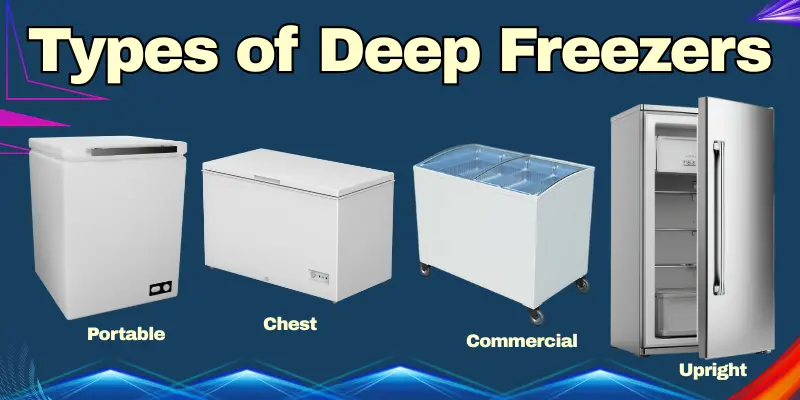
- Upright deep freezer
- Chest deep freezer
- Commercial deep freezer
- Portable deep freezer
For a detailed overview of the various types of deep freezers, our comprehensive guide is available.
Maintenance Tips for a Deep Freezer
Taking care of a deep freezer is easy if you follow a few simple habits. These tips help it work better and last longer.
- Keep similar foods together so items are easy to find
- Avoid overloading shelves so cold air can move freely
- Defrost the freezer if your model needs manual defrosting
- Check the temperature often to keep food safely frozen
- Clean the coils and door seals from time to time to keep cooling strong
Common Problems and How to Avoid Them
Deep freezers can face small issues if not used the right way. The good news is that most problems are easy to prevent with simple care.
- Freezer not cooling properly
Keep the temperature set correctly and do not overload it. Make sure air vents are not blocked. - Frost build-up
Do not leave the door open for long. Defrost the freezer when ice starts to build up. - Door not sealing properly
Clean the door gasket often and check for cracks. Always close the door fully after use.
Simple habits can save food, power, and repair costs.
Final Thoughts
So guys, in this article, we discussed what a deep freezer is, its main parts, how the cooling process works, and why it keeps food frozen for a long time. We also talked about different types of deep freezers, simple maintenance tips, and common problems with easy solutions. All these points help you understand how a Deep Freezer works in daily life.
As an expert, I suggest keeping your deep freezer clean, not overloading it, and checking the temperature often. These small habits help the freezer work better and last longer. Whether you use it at home or for business, proper use saves food and electricity.
If you want to learn more, you can also read our other articles about deep freezers, refrigerators, and air conditioners to gain more useful knowledge.
We have also prepared a bonus question and answer section for you.
Let’s see it in the next section.
Common Questions and Answers
You now understand how a deep freezer works, but a few questions may still come to your mind. This section covers some extra and useful questions that were not explained above.
Here are some common questions related to deep freezers:
- How long does a deep freezer take to freeze food fully?
- Does opening the deep freezer often affect cooling?
- Can a deep freezer run without power for some time?
- Is it safe to keep cooked food in a deep freezer?
- How do you know if a deep freezer is working properly?
- Can a deep freezer increase electricity bills a lot?
- What foods should not be stored in a deep freezer?
Let’s now discuss the answers to all the questions one by one.
A deep freezer usually takes 6 to 12 hours to freeze food fully. The exact time depends on the amount of food and its temperature. Fresh food takes more time than already-chilled food. Do not overload the freezer, as this slows freezing. Always leave space for cold air to move.
Yes, opening the deep freezer often lets warm air go inside. This makes the freezer work harder to stay cold. Over time, it can use more electricity. Food near the door may also thaw slightly. Try to open the door only when needed.
Yes, a deep freezer can keep food frozen for some hours without power. A full freezer stays cold longer than an empty one. If the door stays closed, food can remain safe for 12 to 24 hours. Insulation helps trap the cold air inside. Avoid opening the door during a power cut.
Yes, cooked food is safe to store in a deep freezer. Let the food cool down first before freezing it. Use airtight containers to avoid smell and dryness. Label the food with dates for easy tracking. This helps you use older food first.
A working deep freezer keeps food hard frozen. The inside should feel very cold when opened. There should be no strange noises or water leaks. Ice cream should stay solid, not soft. Checking the temperature regularly also helps.
A deep freezer does use electricity, but proper use keeps bills under control. Overloading or frequent door opening increases power use. Old or poorly insulated models consume more energy. Cleaning coils helps it run better. Energy-efficient models save money over time.
Some foods do not freeze well in a deep freezer. Raw potatoes become grainy after freezing. Milk-based sauces may split when thawed. Fresh fruits with high water content can turn mushy. Foods with mayonnaise also lose texture.