Why Is My Refrigerator Not Cooling? Easy Fixes and Tips
Published: 31 Dec 2025
Imagine this: you open your fridge to get some milk or vegetables, only to find that they aren’t cold enough. Your fresh food is starting to spoil, money could be wasted, and it can even affect your health. A refrigerator not cooling is a common problem, but the reasons are not always obvious. Sometimes the issue is small and easy to fix, while other times the cause is hidden deep inside the fridge.
In this guide, we will explain why is my refrigerator not cooling and cover all the main reasons your fridge may stop working properly. From simple issues like temperature settings and blocked vents to bigger problems like faulty fans or compressor trouble, you will learn everything in simple, easy steps. We will also share troubleshooting tips, maintenance advice, and guidance on when to call a professional.
So, are you ready? Let’s learn everything in detail without wasting any time.
Refrigerator Running vs Refrigerator Cooling
Just because a refrigerator is running doesn’t mean it is cooling properly. Many people think that if the fridge is making sounds or the compressor is humming, the cooling is working. But that is not always true. A fridge can run, but the inside may still be warm. The light turning on or the sound of the fans does not guarantee that your food is being kept cold.
For example, you might hear your fridge humming and think everything is fine, but when you check the milk or vegetables, they are still warm and starting to spoil. This shows that running sounds are not always a sign of proper cooling. Understanding this difference is important to figure out why your refrigerator is not cooling and how to fix it.
How Refrigerator Cooling Works
Think of your fridge as a team working together to keep your food cold and fresh. Electricity starts the system, powering the compressor, which pushes cooling gas through the coils. Fans then spread the cold air evenly inside, while the thermostat acts like a manager, telling the system when to turn on and off to maintain the right temperature. All these parts work together to keep your food fresh, even though it might seem like magic.
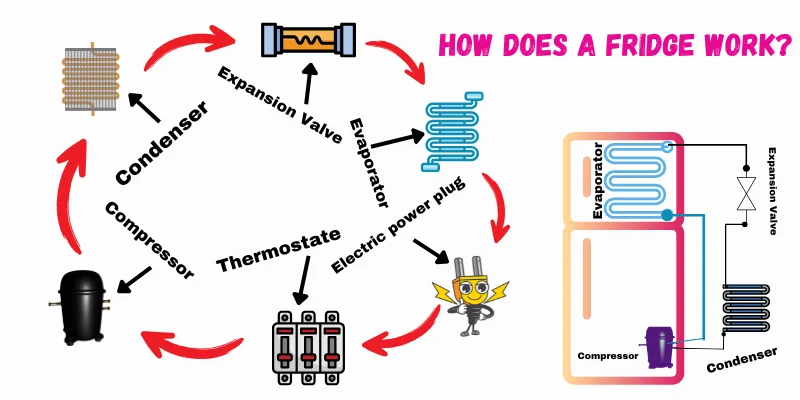
👉 Want to learn more about how refrigerators work? Check out our full guide.
First Checks That Most People Ignore
Sometimes, a refrigerator stops cooling because of small mistakes that are easy to fix. Check if the temperature is set too low or too high, make sure the door is closing properly, avoid overloading the fridge, and don’t place hot food directly inside. These simple issues can prevent your fridge from cooling efficiently.
Tip: Many cooling problems can be fixed in just a few minutes by checking these basic points.
The Main Reasons a Refrigerator Stops Cooling
Here is a list of the main reasons your fridge may not be cooling:
- Dirty condenser coils
- Cold air is not moving inside
- Airflow is blocked inside the fridge
- Temperature control failure
- Ice build-up inside the freezer
- Compressor or start device trouble
- Cooling gas problem
- Improper installation or leveling
- Overloaded fridge
- Hot food is placed inside
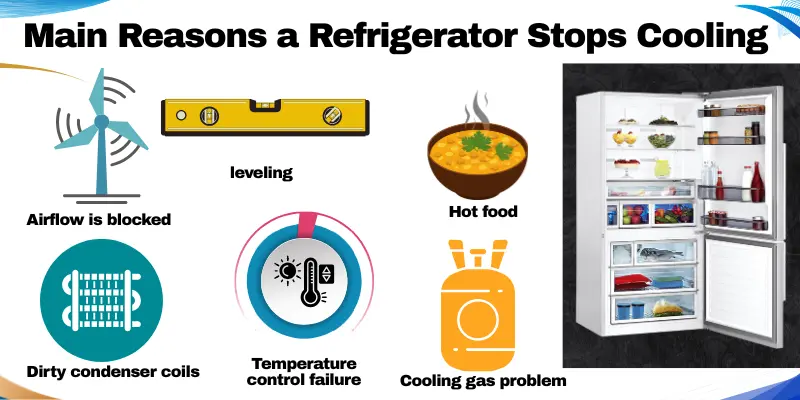
Now we will discuss each point in detail, one by one, so you can understand the problem and fix it effectively.
1. Dirty Condenser Coils
Condenser coils are an important part of your fridge. They release heat from inside so the fridge can stay cold. If these coils get dusty or dirty, heat cannot escape properly, and the fridge struggles to cool. Regular cleaning helps the fridge work efficiently and prevents many cooling problems.
Example: A family noticed their fridge was warm even though it was running. After cleaning the dusty coils at the back, the fridge started cooling normally again.
Tip: Check and clean the refrigerator condenser coils every few months using a soft brush or vacuum.
2. Cold Air Not Moving Inside
Fans inside the fridge and freezer help spread cold air evenly. If a fan stops working or is blocked, cold air cannot reach all areas, and some parts of the fridge stay warm. This can make the fridge feel like it is not cooling properly, even if the compressor is running. Checking fans regularly can prevent uneven cooling.
Example: A user found that the freezer was very cold, but the fridge section stayed warm. After checking, they discovered the evaporator fan had stopped spinning. Replacing the fan restored proper cooling.
Tip: Make sure fans are working, and nothing is blocking them. This can fix uneven cooling in most cases.
3. Airflow Is Blocked Inside the Fridge
Air needs to move freely inside your fridge to keep all areas cold. If vents are blocked by food or containers, cold air cannot circulate properly. This can make some parts of the fridge warm while others stay cold. Proper airflow is essential for your fridge to work efficiently.
Example: A user stacked large containers in front of the vent, and the fridge section stayed warm. After moving the items away from the vents, the cold air flowed freely, and the fridge cooled normally again.
Tip: Keep vents clear and avoid placing large items directly in front of them to ensure proper airflow.
4. Temperature Control Failure
The thermostat controls the fridge’s cooling cycle. It tells the compressor when to turn on and off to maintain the right temperature. If the thermostat stops working or sends wrong signals, the fridge may become too warm or too cold. This is a common reason why a fridge may stop cooling properly.
Example: A user set the temperature to the correct level, but the fridge stayed warm. Replacing the faulty thermostat fixed the problem, and the fridge cooled normally again.
Tip: If your fridge does not maintain the right temperature, check the thermostat first. Replacing it can often solve the issue.
5. Ice Build-Up Inside the Freezer
Ice can form on the freezer coils over time, especially if the defrost system is not working properly. When ice builds up, it blocks the airflow from the freezer to the fridge section. This makes the fridge warmer, even though the freezer may still feel cold. Regularly checking for ice helps keep your fridge cooling efficiently.
Example: A user noticed the fridge section was warm while the freezer was very cold. After defrosting a thick layer of ice from the freezer coils, the cold air circulated properly, and the fridge cooled normally again.
Tip: Defrost the freezer when ice builds up, and make sure the defrost system is working correctly.
6. Compressor or Start Device Trouble
The compressor is the heart of your fridge’s cooling system. It pumps the refrigerant through the coils to create cold air. If the compressor or its start device fails, the fridge may make clicking sounds or may not cool at all. Problems with these parts usually require professional attention.
Example: A user noticed their fridge kept clicking but never cooled properly. A technician replaced the start relay, and the compressor ran normally, restoring proper cooling.
Tip: If you hear repeated clicking sounds and the fridge is not cooling, have a professional check the compressor and start device.
7. Cooling Gas Problem
Refrigerant gas is what allows your fridge to produce cold air. If there is a leak or the gas level is low, the fridge may gradually stop cooling. You might notice that the fridge works at first, but it becomes warm over time. This is a serious issue that needs professional attention.
Example: A user found that their fridge was slowly losing cooling power over a few weeks. A technician checked the system, refilled the refrigerant, and the fridge started cooling normally again.
Tip: Only a trained technician should handle refrigerant. If your fridge is not cooling and the gas might be low, call a professional.
8. Improper Installation or Leveling
A fridge needs to be installed properly and placed on a level surface. If it is tilted or pushed too close to walls, cold air may not circulate correctly, and the fridge may struggle to cool. Sometimes even small adjustments can make a big difference. Proper installation ensures the fridge works efficiently and lasts longer.
Example: A user noticed their fridge section was warm even though the freezer was cold. After leveling the fridge and moving it slightly away from the wall, the cold air circulated properly, and the fridge cooled normally.
Tip: Always check that your fridge is level and has enough space around it for airflow. This can prevent many cooling issues.
9. Overloaded Fridge
A fridge needs space for cold air to move around all the food. If shelves are packed too tightly or containers block airflow, some areas may stay warm. Overloading the fridge makes it harder for cold air to reach everything inside. Keeping the fridge organized helps it cool efficiently.
Example: A user noticed the fridge section was warmer than usual. After rearranging the items and leaving space between containers, the cold air circulated properly, and the fridge cooled evenly.
Tip: Avoid overloading your fridge and leave some gaps between items for proper airflow.
10. Hot Food Placed Inside
Putting hot food directly into the fridge can raise the temperature inside. This makes the fridge work harder and can temporarily stop proper cooling. If it happens often, it can affect the overall efficiency of your fridge. Letting food cool slightly before placing it inside helps maintain the right temperature.
Example: A user put a large pot of hot soup directly into the fridge. The fridge became warm, and other items started to lose freshness. After letting the soup cool for a while before storing it, the fridge returned to normal cooling.
Tip: Always let hot food cool for a few minutes before placing it in the fridge to avoid warming up the inside.
Refrigerator Has Power but is Still Not Cooling
Sometimes your fridge has power, and everything seems normal, but it still does not cool properly. This usually means the cooling system is weak or one of the internal components is not working correctly. The fridge may hum, fans may spin, but the temperature inside is not cold enough.
👉 If your fridge not cooling but light is on, check our full guide for more details on that specific situation.
Why the Refrigerator Feels Like It Is “Not Working”
Sometimes, users say their fridge is “not working” when in fact it has power and is running. This usually happens when the cooling fails, so the fridge does not feel cold, even though the lights and fans are working. Many people misunderstand this and think the fridge is completely broken. It is important to know that why the refrigerator is not working often just means the cooling system has a problem, not that the fridge is dead.
Step-by-Step Troubleshooting (Safe & Short)
Many cooling problems can be checked and fixed at home safely. Start with simple steps before calling a technician.
- Check the temperature settings and make sure they are correct.
- Clean the condenser coils at the back or bottom of the fridge.
- Clear any vents inside the fridge so cold air can circulate.
- Make sure there is enough space behind the fridge for proper airflow.
- Listen to the sounds of the compressor and fans to see if they are running normally.
⚠️ Warning: Stop and call a professional if you suspect a gas leak or a compressor problem. These issues are not safe to handle at home.
When You Should Stop DIY and Call a Technician
Some fridge problems are not safe or easy to fix at home. Knowing when to call a professional can save your fridge and prevent accidents.
Clear signs you should stop DIY and call a technician include:
- No cooling even after checking the temperature, vents, and coils
- Repeated clicking sounds from the compressor
- Smell of gas or refrigerant
- Fridge or compressor overheating
- Touching the fridge may give an electric shock
- Unusual sparks or exposed wires
Tip: If you see any of these signs, do not try to fix the fridge yourself. It is safer and faster to get a trained technician to handle the problem.
Questions and Answers
So far, we have explained all the main reasons and fixes related to a refrigerator not cooling. Still, it is normal if a few more questions come to your mind right now. Do not worry at all. Below, we have compiled some common and frequently asked questions about fridge cooling problems. Let us first look at these questions together.
Here are the questions we will cover:
- How do I reset a refrigerator compressor?
- What is the most expensive part to replace on a refrigerator?
- How much does it cost to replace condenser coils?
- How to clean a condenser fan on a fridge?
- What is the difference between a cooling coil and a condenser coil?
- Can a cooling coil be repaired?
Now, we will discuss the answers to all these questions one by one, simply and clearly.
Most refrigerators do not have a manual reset button for the compressor. The easiest way to reset it is to unplug the fridge from the power source. Wait for about 10 to 15 minutes before plugging it back in. This allows the system to cool down and reset itself. If the compressor still does not start, the problem may be with the start relay or another internal part.
The compressor is usually the most expensive part to replace in a refrigerator. It is the main part that moves the cooling gas and keeps the fridge cold. Replacing a compressor often costs a lot because of the part price and labor costs. In some cases, buying a new fridge can be cheaper than replacing the compressor.
The cost of replacing condenser coils depends on the fridge model and brand. In many cases, condenser coils are not replaced but cleaned. If replacement is needed, the cost can be high due to labor and part availability. It is best to ask a technician for an exact price after inspection. Regular cleaning can help avoid replacement.
First, unplug the refrigerator to stay safe. Remove the back or bottom panel to reach the condenser fan. Use a soft brush or cloth to remove dust and dirt from the fan blades. Do not use water or sharp tools. After cleaning, put the cover back and plug in the fridge.
A cooling coil is inside the fridge or freezer and helps absorb heat from the food area. A condenser coil is usually at the back or bottom of the fridge and releases heat outside. Both coils work together to keep the fridge cold. If either one has a problem, cooling becomes weak or stops.
In most cases, a cooling coil cannot be repaired if it is damaged or leaking. It usually needs to be replaced by a trained technician. Repair attempts can cause gas leaks or more damage. If the coil problem is confirmed, professional replacement is the safest option. Regular care helps prevent coil damage.
Final Note
Now the time to say goodbye is almost here, friends.
So, guys, a refrigerator is one of the most important appliances in your home. When it stops cooling, food can spoil fast, money can be wasted, and daily life becomes stressful. In this article, we clearly explained why is my refrigerator not cooling, discussed all the common causes, and shared simple checks, safe troubleshooting steps, and warning signs that tell you when to call a technician. Each point was explained in easy words so you can understand the problem without confusion.
My simple expert advice is this: take care of your fridge with regular cleaning, proper loading, and basic checks. Small habits like these help your refrigerator cool better, last longer, and save electricity over time.
If this guide helped you, feel free to leave a comment below and share your experience or questions. Also, do explore our other helpful guides on refrigerators, deep freezers, and air conditioners to make smarter and safer choices for your home.