What is a Reciprocating Compressor – Full Guide for Beginners
Published: 28 Jan 2026
Have you ever come across the term and wondered what it really means or why it matters? Many people feel the same when they first hear about compressors in cooling and air systems. In this guide, we will explain everything step by step.
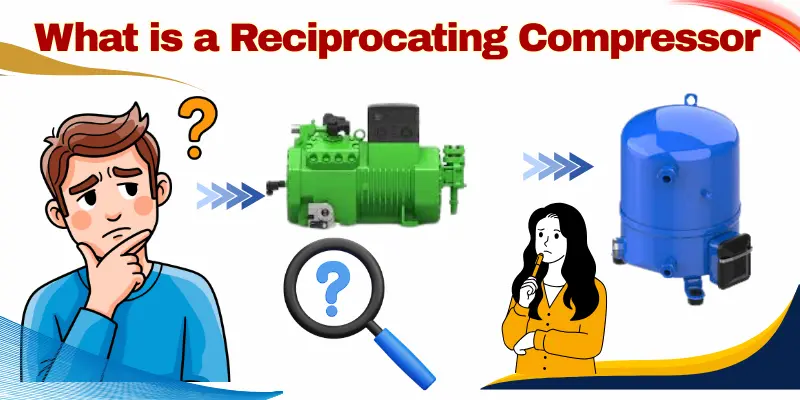
You will learn how this compressor works, where it is used, and why so many machines still depend on it. By the end, you will clearly understand what is a reciprocating compressor and how it fits into real-life systems like refrigerators and air conditioners.
So, are you ready? Let’s move on to our article without wasting any time and discuss everything in detail.
Definition of Reciprocating Compressor
A reciprocating compressor is a machine used to increase the pressure of air or gas. The word reciprocating means moving back and forth. This machine uses a piston that moves inside a closed cylinder. When the piston moves down, air or gas enters the cylinder. When it moves up, the air gets squeezed into a smaller space. This squeezing action raises the pressure. The compressed air or gas then moves out through an outlet. Many cooling and air systems use this type of compressor for steady and controlled pressure.
Importance
Reciprocating compressors may look simple, but they do a very important job behind the scenes. Many machines we use every day depend on them to work properly. Knowing their importance makes it easier to understand why they are still widely used.
- They create strong and steady pressure for air and gas.
- They help refrigerators and air conditioners cool smoothly.
- They are easy to fix and maintain when compared to complex systems.
- They work well in small and medium-sized machines used at home and in workshops.
- They last for many years when used and cared for properly.
Working of a Reciprocating Compressor
A reciprocating compressor works by moving air or gas in and out of a cylinder using a piston. The back-and-forth motion of the piston helps increase the pressure of the air. Let’s see how it works step by step.
- Air or gas enters the cylinder through the suction valve when the piston moves down.
- The piston moves up, compressing the air into a smaller space.
- The pressure inside the cylinder increases as the piston pushes the air.
- The discharge valve opens, and the compressed air leaves the cylinder.
- The piston moves down again to draw in more air, and the cycle repeats.
- This continuous motion creates a steady flow of high-pressure air for machines.

This simple process is why reciprocating compressors are widely used in fridges, air conditioners, and workshops.
Types of Reciprocating Compressors
Reciprocating compressors come in different types depending on how many times they compress the air or gas. Each type is used for different needs and pressures. Here are the main types you should know:
- Single-Stage Reciprocating Compressor – Compresses air in one step, good for low to medium pressure.
- Two-Stage Reciprocating Compressor – Compresses air in two steps, suitable for higher pressure.
- Oil-Lubricated Reciprocating Compressor – Uses oil to reduce friction and improve life.
- Oil-Free Reciprocating Compressor – Works without oil, ideal for clean air applications.
These types help you choose the right compressor based on your use and pressure requirements.
For more information on the types of reciprocating compressors, you can read our detailed guide.
Advantages and Disadvantages of a Reciprocating Compressor
In this section, we look at the pros and cons of a reciprocating compressor. These points help you understand when it is the right choice and when it is not.
Advantages of a Reciprocating Compressor
These compressors have several benefits that make them widely used.
- Provides high pressure in a compact machine.
- Works well in small to medium machines and systems.
- Easy to maintain and repair.
- Reliable and long-lasting when used properly.
- Handles changing loads without major issues.
Disadvantages of a Reciprocating Compressor
Like any machine, it also has some limitations.
- Can be noisy during operation.
- Creates vibrations that may need control.
- Needs regular maintenance and oiling in lubricated models.
- Not suitable for very large industrial systems.
- Efficiency drops if not used or maintained correctly.
Common Mistakes
In this section, we cover the most common mistakes people make while using a reciprocating compressor. Avoiding these mistakes can help the machine last longer and work better.
- Running the compressor without proper lubrication.
- Overloading the compressor beyond its capacity.
- Ignoring regular maintenance and cleaning.
- Using the wrong type of compressor for the application.
- Ignoring unusual noises or vibrations.
- Failing to check and replace worn-out parts.
- Operating in extreme temperatures without proper precautions.
These simple steps can prevent damage and keep the compressor running smoothly.
Common Misconceptions About a Reciprocating Compressor
In this section, we cover some common myths and wrong ideas people have about reciprocating compressors. Knowing the truth can help you use them better and avoid mistakes.
- A bigger compressor always means better performance.
- Reciprocating compressors are only for industrial use.
- Oil-free compressors never need maintenance.
- They cannot handle high-pressure work.
- All compressors work the same way, no matter the type.
- Noise and vibration mean the compressor is broken.
- They are not suitable for small or home systems.
Clearing these misconceptions helps you choose and use the right compressor for your needs.
Best Practices
In this section, we cover the best ways to use and maintain a reciprocating compressor. Following these tips helps the machine work efficiently and last longer.
- Always check and maintain proper oil levels (for lubricated compressors).
- Keep the compressor clean and free from dust.
- Avoid running it beyond its recommended pressure.
- Inspect valves, pistons, and other parts regularly.
- Use the right type of compressor for your specific application.
- Listen for unusual sounds or vibrations and address them quickly.
- Allow the compressor to cool down during long or heavy use.
- Store it in a dry and safe place when not in use.
These simple steps help keep your compressor safe, reliable, and long-lasting.
Future of Reciprocating Compressors
In this section, we cover how reciprocating compressors are expected to evolve and stay relevant in the coming years. New designs and technologies are making them more efficient and user-friendly.
- Improved energy efficiency to save power and reduce costs.
- Quieter operation with less vibration.
- Longer lifespan through better materials and design.
- More oil-free models for clean air applications.
- Smart monitoring systems for easier maintenance.
- Wider use in both industrial and home systems.
- Adaptation to work with eco-friendly refrigerants.
These developments will make reciprocating compressors more reliable and practical for future use.
Conclusion
In this guide, we covered what is a reciprocating compressor, how it works, where it is used, and why it still matters today. We looked at its importance, types, advantages, disadvantages, common mistakes, and future trends in a simple way. If you are choosing a compressor for home or small machines, this type is still a smart and reliable option. It offers strong performance, easy maintenance, and long life when used correctly. So guys, take your time, understand your needs, and pick the right system for your setup. Keep learning, stay curious, and stay tuned for more easy guides like this.
Alright, friends, the time to say goodbye is almost here. But before that, we know you might have some questions in your mind, so don’t worry. We’ve collected some bonus questions for you in the next section. Let’s check them out!
Common Questions and Answers
Many readers have similar doubts when learning about reciprocating compressors. These questions often come up when people try to choose the right compressor or understand how it works in real life. Below is a list of the most common questions related to this topic.
- What is another name for a reciprocating compressor?
- What is the maximum capacity of a reciprocating compressor?
- How many CFM is a reciprocating compressor?
- Is a reciprocating compressor good for home use?
- Why is a reciprocating compressor noisy?
- Does a reciprocating compressor need oil?
- Which is better for air conditioning, reciprocating or rotary?
Now, we will discuss all these questions one by one in detail.
Another common name for a reciprocating compressor is a piston compressor. This name comes from the piston that moves back and forth inside the cylinder. Some people also call it a positive displacement compressor. This is because it traps air and then compresses it. All these names point to the same working style.
The maximum capacity of a reciprocating compressor depends on its size and design. Small units are used for light work, while larger ones handle heavy tasks. In general, they are best suited for low to medium capacity needs. Very large systems usually use other compressor types. This is why reciprocating compressors are common in homes and small industries.
The CFM of a reciprocating compressor can vary a lot. Small models may deliver 2 to 10 CFM, while bigger ones can reach 30 CFM or more. The actual value depends on motor power and design. Home and workshop compressors usually fall on the lower side. Always check the rating before choosing one.
Yes, a reciprocating compressor is a good choice for home use. It works well for refrigerators, air conditioners, and small air tools. These compressors are affordable and easy to maintain. They also provide enough pressure for common household needs. This makes them practical for everyday use.
A reciprocating compressor is noisy because of its moving parts. The piston moves back and forth, which creates vibration and sound. Valves opening and closing also add noise. Poor maintenance can make the sound worse. Using proper mounting and care can reduce the noise.
Many reciprocating compressors use oil for smooth operation. Oil helps reduce friction between moving parts. This increases life and improves performance. However, some models are oil-free and designed for clean air use. The choice depends on where and how the compressor is used.
Both types work well, but the choice depends on the situation. Reciprocating compressors are strong and reliable for basic systems. Rotary compressors are quieter and more energy efficient. Modern air conditioners often use rotary compressors for comfort. Older or simpler systems may still use reciprocating types.