What is an Inverter Compressor – Beginner’s Guide Made Easy
Published: 11 Feb 2026
What is an inverter compressor, and why does it quietly work in your air conditioning system and refrigerator all day? Think about a hot summer day. Your AC cools the room without making a loud noise. Your refrigerator keeps water cold and food fresh. You do not notice anything special. But behind the scenes, an inverter compressor is doing the smart work. In this guide, we will explain how it works and why modern cooling systems trust it.
Let’s move on to our article without wasting our time and discuss everything in detail.
Definition of Inverter Compressor
An inverter compressor is a smart machine used in air conditioners and refrigerators to control cooling smoothly. The word inverter means it can change its speed. Unlike regular compressors that switch on and off, this type adjusts how fast it runs based on what the system needs. When more cooling is required, it works faster. When less cooling is needed, it slows down. This steady operation saves electricity, reduces noise, and keeps your room or fridge at a comfortable temperature. Many modern cooling systems rely on inverter compressors for quiet, energy-efficient, and reliable performance.

Example: Imagine riding a bicycle. Instead of stopping and starting all the time, you pedal steadily and change speed when needed. That is how an inverter compressor works. It keeps things smooth and saves energy.
Importance
Inverter compressors may look simple, but they do a big job behind the scenes. Many of the machines we use every day depend on them to work efficiently. Understanding their role helps us see why they are so popular in modern cooling systems.
- They adjust their speed automatically to match cooling needs.
- They help air conditioners and refrigerators keep a steady, comfortable temperature.
- They save electricity by running smoothly instead of turning on and off.
- They make machines quieter because they avoid sudden starts and stops.
- They last longer since the motor faces less stress during operation.
Example: Imagine filling a glass with water from a tap. If you turn the tap on and off quickly, water splashes and some is wasted. But if you open it gently and adjust the flow, the water fills the glass smoothly without waste. That’s how an inverter compressor keeps cooling steady while saving energy.
Working of an Inverter Compressor
An inverter compressor works by adjusting its speed to match the cooling needs of your AC or refrigerator. Unlike regular compressors that turn on and off, it keeps running continuously, but at different speeds. This smooth operation helps maintain a steady temperature and saves electricity.
Here’s how it works step by step:
- The compressor runs faster when more cooling is needed, such as on a hot day or when the fridge door is opened often.
- It slows down when less cooling is required, keeping the temperature stable without wasting energy.
- The electronic inverter controls the motor speed, ensuring smooth operation at all times.
- This continuous adjustment reduces stress on the system, making the machine last longer.
- It also keeps noise levels low since the motor avoids sudden starts and stops.
Example: Think of it like driving a car on traffic-free roads. Instead of stopping and starting at every small bump, you adjust your speed according to the road. The ride feels smooth and steady, just like an inverter compressor keeps your AC or fridge running efficiently.
Types of Inverter Compressors
Inverter compressors come in different types, and each type is designed to meet specific cooling needs. They are used in air conditioners and refrigerators to save energy, run quietly, and keep the temperature steady. Knowing the types helps you understand how modern cooling systems work efficiently.
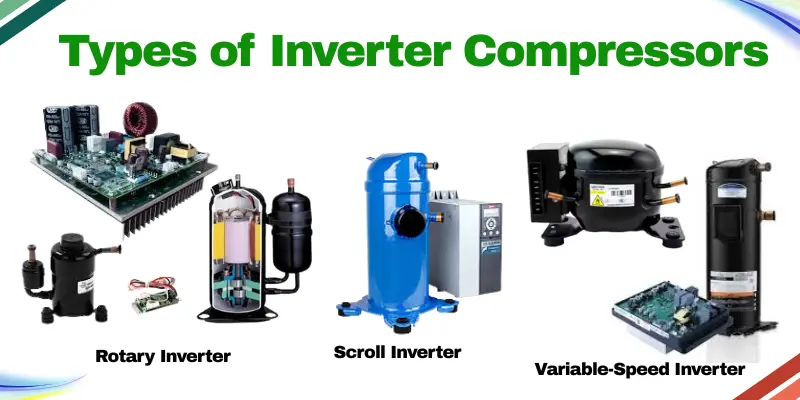
The main types of inverter compressors are:
- Rotary Inverter Compressor
- Scroll Inverter Compressor
- Variable-Speed Inverter Compressor
Now we will discuss each type in detail, one by one.
1. Rotary Inverter Compressor
Rotary inverter compressors use a simple rotating mechanism to compress refrigerant. They are small, quiet, and work very well in home air conditioners and compact refrigerators. The electronic circuit in the system controls the motor speed, allowing it to run faster when more cooling is needed and slower when less is required.
These compressors are energy-efficient because they avoid frequent start-and-stop cycles. They also produce less noise compared to traditional compressors, making them ideal for bedrooms and small living spaces. The compact design makes them easy to fit in smaller AC units and refrigerators while still providing steady cooling.
2. Scroll Inverter Compressor
Scroll inverter compressors use two spiral-shaped parts to compress refrigerant smoothly and efficiently. One part stays stationary while the other moves in a circular motion, squeezing the refrigerant step by step. This design makes them very efficient and quiet.
They are ideal for larger air conditioners and high-performance refrigerators because they can handle bigger cooling loads without losing efficiency. The electronic circuit continuously adjusts the speed of the compressor, which keeps the temperature steady and saves electricity.
Scroll compressors also last longer because their smooth motion reduces stress on the system compared to traditional compressors. This makes them a preferred choice for modern, energy-efficient cooling machines.
3. Variable-Speed Inverter Compressor
Variable-speed inverter compressors can change their speed very precisely according to the cooling needs of your air conditioner or refrigerator. They do not just run fast or slow—they adjust continuously to match the exact demand.
This precise control saves more electricity and keeps the temperature very steady. It also reduces wear and tear on the system because the compressor avoids sudden starts and stops.
These compressors are perfect for machines that run for long hours, like commercial refrigerators or large AC units. The built-in electronic circuit makes sure the cooling stays consistent while using the least amount of power.
Advantages and Disadvantages of an Inverter Compressor
In this section, we look at the benefits and limitations of an inverter compressor. These points help you understand why it is widely used in air conditioners and refrigerators, and when it works best.
Advantages of an Inverter Compressor
These compressors have several advantages that make them popular in modern cooling systems:
- Saves electricity by adjusting speed according to cooling demand.
- Maintains a steady temperature for comfortable cooling.
- Operates quietly with fewer vibrations.
- Lasts longer because the motor experiences less stress.
- Works efficiently in both small home machines and larger refrigerators or ACs.
Disadvantages of an Inverter Compressor
Like any machine, inverter compressors have some limitations:
- Higher initial cost compared to traditional compressors.
- Repairs or replacement can be more expensive.
- Requires proper installation and occasional maintenance for best performance.
- Not necessary for machines that are used very rarely.
Common Mistakes
When using an inverter compressor, people often make some common mistakes. Knowing what to avoid can help your air conditioner or refrigerator work better, stay efficient, and last longer.
- Running the compressor without proper installation or voltage protection.
- Overworking the compressor by setting very low temperatures constantly.
- Ignoring regular maintenance, such as cleaning filters or checking the system.
- Using the wrong type of compressor for the machine size or cooling need.
- Ignoring unusual noises, vibrations, or performance changes.
- Delaying replacement of worn-out or damaged parts.
- Operating the machine in extremely hot or cold conditions without precautions.
Following these simple steps keeps your inverter compressor running smoothly, saves electricity, and prevents unnecessary repairs.
Common Misconceptions About an Inverter Compressor
In this section, we look at some common myths and wrong ideas people have about inverter compressors. Knowing the truth helps you use them better and avoid mistakes.
- A bigger inverter compressor always means better cooling.
- Inverter compressors are only for industrial machines.
- They never need maintenance because they are “smart.”
- Inverter compressors cannot handle high cooling loads.
- All compressors work the same way, regardless of type.
- Noise or vibration always means the compressor is broken.
- They are not suitable for small home ACs or refrigerators.
Clearing these misconceptions helps you understand how inverter compressors work, choose the right one, and get the most out of your cooling system.
Best Practices
Here are some of the best ways to use and maintain an inverter compressor. Following these steps keeps your AC or refrigerator running smoothly and prevents unnecessary problems.
- Ensure the compressor is installed properly and connected to the right voltage.
- Keep the unit and the surrounding area clean and free from dust.
- Avoid running the compressor at extremely low temperatures for too long.
- Check electronic circuits, refrigerant levels, and moving parts regularly.
- Use the right type of inverter compressor for your specific machine.
- Listen for unusual noises or vibrations and fix issues promptly.
- Give the compressor time to rest or cool down during heavy or long use.
- Store or operate the machine in a safe, dry place to prevent damage.
These simple steps help keep your inverter compressor safe, reliable, and energy-efficient.
Future of Inverter Compressors
Inverter compressors are improving every year with new technology and smarter designs. These changes make them more energy-efficient, quiet, and long-lasting.
- Better energy efficiency to save electricity and reduce costs.
- Quieter operation with less vibration for more comfortable use at home and in offices.
- Longer lifespan thanks to stronger materials and improved designs.
- More models with oil-free operation for clean air in refrigerators and ACs.
- Smart monitoring systems for easier maintenance and performance checks.
- Wider use in both home appliances and small commercial cooling systems.
- Compatibility with eco-friendly refrigerants to reduce environmental impact.
These developments make inverter compressors more reliable, practical, and perfect for modern cooling needs, whether in your air conditioner or refrigerator.
Conclusion
In this guide, we explained what is an inverter compressor, how it works, the different types, and why it is trusted in modern air conditioners and refrigerators. We also looked at its advantages, disadvantages, common mistakes, best practices, and future trends.
If you are choosing a cooling system for your home or small machines, an inverter compressor is a smart choice. It gives steady cooling, saves electricity, works quietly, and lasts longer when used properly.
Take your time to understand your needs and pick the right compressor for your setup. Keep learning about these systems, and you’ll get the most out of your AC or refrigerator.
Frequently Asked Questions About Inverter Compressors
We have already discussed everything about inverter compressors above, but you may still have some questions in your mind. In this section, we have collected a few more questions as a bonus to help you understand these compressors even better. Let’s take a look at the variety of questions and see what makes inverter compressors special.
- Can inverter compressors be used in very large commercial AC systems?
- How long does an inverter compressor typically last compared to a normal compressor?
- Is it possible to retrofit an existing AC or refrigerator with an inverter compressor?
- Do inverter compressors require special refrigerants?
- Can inverter compressors handle frequent door openings in refrigerators?
- How does the inverter circuit prevent the compressor from overheating?
- Can inverter compressors work in extremely hot or cold climates?
- Do inverter compressors consume more electricity when cooling large spaces?
Now we will discuss each question in detail along with its answers.
Yes, inverter compressors can be used in large commercial AC systems, but it depends on the design and capacity of the compressor. Large systems often require multiple compressors working together for efficient cooling. Inverter technology allows the compressors to adjust their speed, which saves energy even in big spaces. These compressors also reduce wear and tear by avoiding constant start-and-stop cycles. This makes them suitable for offices, hotels, and other commercial buildings.
Inverter compressors usually last longer than traditional compressors. Because they run smoothly and adjust speed instead of turning on and off frequently, the motor and other parts experience less stress. With proper maintenance, they can easily last 10–15 years in home ACs or refrigerators. Traditional compressors often face more wear and tear due to frequent starts and stops. So investing in an inverter compressor often gives you a longer-lasting cooling system.
Retrofitting an existing AC or refrigerator with an inverter compressor is usually difficult. These systems are designed for a specific type of compressor, and the electronics and circuits may not support inverter technology. In some cases, it may require replacing multiple parts, which can be expensive. It is usually easier and more cost-effective to buy a new inverter-based AC or refrigerator. This ensures the system works efficiently and safely.
Most inverter compressors work with standard refrigerants, but some models are designed to be compatible with eco-friendly refrigerants. The type of refrigerant depends on the AC or refrigerator brand and model. Using the recommended refrigerant ensures optimal performance and avoids damage to the system. Always check the manufacturer’s instructions before refilling or replacing refrigerants. This keeps the compressor efficient and safe.
Yes, inverter compressors handle frequent door openings much better than traditional compressors. When the refrigerator door is opened, the compressor adjusts its speed to maintain a steady temperature. This avoids sudden bursts of cooling and saves energy. It also keeps food fresh by maintaining consistent cooling even with frequent use. That’s one reason inverter compressors are ideal for busy households.
The inverter circuit constantly monitors the motor speed and temperature. It adjusts the compressor speed to match the cooling demand, which prevents overworking. If the system detects high temperature or heavy load, it slows down the motor to reduce heat. This smooth operation keeps the compressor safe and extends its life. Traditional compressors often overheat because they always run at full speed.
Yes, most modern inverter compressors are designed to work in extreme temperatures. They adjust their speed according to the environment, keeping the cooling consistent. However, very extreme conditions may require special models designed for industrial or commercial use. Proper installation and maintenance are also important for performance in hot or cold climates. This makes inverter compressors reliable in almost any weather.
Inverter compressors do use more electricity when cooling very large spaces, but only because more cooling is needed. The advantage is that they adjust their speed rather than running at full power all the time. This makes them much more efficient than traditional compressors, which always start and stop at full load. Even in large rooms, inverter compressors save energy by running smoothly and maintaining a steady temperature.