Air Conditioner Safety Tips – Easy Ways to Avoid AC Problems
Published: 5 Nov 2025
It was a hot afternoon, and Emma finally sat down to relax after a long day. She turned on her air conditioner, expecting a cool, fresh breeze. Instead, a strange burning smell came from the unit, and the power suddenly tripped. Later, she found out that dust and loose wiring had caused the problem. Small mistakes like this are more common than we think. That’s why knowing a few air conditioner safety tips can keep your home cool, safe, and worry-free all summer long.
So, are you ready? Without wasting time, let’s discuss everything in detail.
Why Air Conditioner Safety Is Important
Many people think their air conditioner only needs cleaning once in a while. But ignoring small safety steps can lead to big problems. If wires get loose, they can cause short circuits. If the gas leaks, it can make your room smell bad and even harm your health.
Let’s take a small example. A family kept using their AC without cleaning the filter for months. Slowly, the air started feeling weak, and the room didn’t cool well. Their electricity bill also went up! When a technician came, he found the filter full of dust. Just one small cleaning could have saved their money and trouble.
So, air conditioner safety is not only about keeping your machine in good shape. It’s also about keeping your home safe and your family comfortable. A little care today can save you from big repairs tomorrow!
Air Conditioner Safety Tips
Alright, let’s have a little chat about something we all forget when the AC starts blowing that sweet cool air, safety! Yep, your air conditioner works hard all summer, so it deserves a bit of care too. If we take care of a few simple things, our AC will stay safe, happy, and cool for a long time.
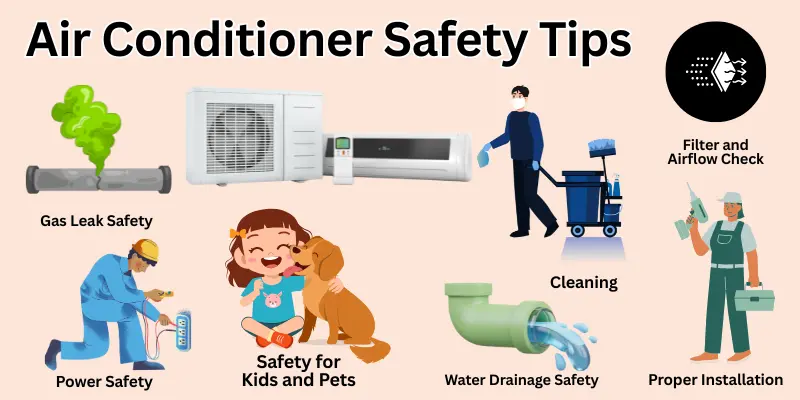
Here are all the main areas you should keep an eye on:
- Electrical and Power Safety
- Proper Installation and Placement
- Cleaning and Regular Maintenance
- Safe Daily Use and Operating Habits
- Gas and Coolant Leak Safety
- Fire and Overheating Protection
- Safety for Kids and Pets
- Remote and Control Safety
- Outdoor Unit Safety and Surroundings
- Water Drainage Safety
- Filter and Airflow Check
- Seasonal Shutdown Safety
These are the key spots where most AC problems start. We will go through each one slowly and simply, like two friends chatting about keeping our cool, safe, and sound.
1. Electrical and Power Safety
Alright, imagine this: your friend Ravi comes home after a long day, switches on his AC, and suddenly the lights flicker. He smells something weird, and the AC stops working. Turns out, the plug was loose, and the wires were a bit worn out. Small things like this can turn into big problems if we ignore them.
Here are some friendly tips to keep your AC safe:
- Always plug your AC directly into a proper wall socket. Don’t use cheap extension cords.
- Take a quick look at the wires and plug now and then. If you see damage, call a professional.
- During heavy rain or lightning, switch off and unplug your AC. Safety first!
- Avoid overloading the same socket with other devices while your AC is running.
- If your AC trips the breaker often, get an electrician to check it.
Following these small steps keeps your AC running smoothly, saves your electricity, and most importantly, keeps your home safe.
2. Proper Installation and Placement
Believe it or not, even the coolest AC can give trouble if it’s not placed right. A poorly installed AC can leak water, overheat, or even fall off the wall in some cases.
Here are some easy tips to keep in mind:
- Make sure the AC is installed by a trained professional, not just anyone with tools.
- Place the indoor unit away from direct sunlight or heat sources like stoves or heaters.
- Keep enough space around the unit so air can flow freely. Don’t block it with furniture or curtains.
- Ensure the outdoor unit is on a flat, strong surface and not near dust, dirt, or falling objects.
- Check that the unit is slightly tilted if it’s a window AC, so water drains properly.
A good installation and smart placement keep your AC working efficiently and prevent future problems. It also helps your room stay evenly cool without extra electricity bills.
3. Cleaning and Regular Maintenance
Keeping your AC clean is one of the easiest ways to avoid problems, but many people skip it. A dirty AC can blow weak air, increase electricity bills, and even make you feel unwell.
Here are some simple tips:
- Clean or replace the air filter at least once a month. Dusty filters block airflow and strain the AC.
- Wipe the indoor unit with a soft, dry cloth. Don’t use water directly on electrical parts.
- Check the outdoor unit for leaves, dust, or debris and clean it gently.
- Schedule a professional service at least once a year. They can check the cooling gas, wiring, and other hidden issues.
- Make sure the drainage pipe is not clogged. Standing water can cause leaks and bad smells.
Regular maintenance keeps your AC working well, cools your room properly, and saves money on electricity and repairs.
4. Safe Daily Use and Operating Habits
How you use your AC every day can make a big difference in its safety and performance. Simple habits can prevent problems and keep your room comfortable.
Here are some easy tips:
- Turn off the AC when you leave the room for a long time.
- Set a comfortable temperature, like 24°C, instead of making it very cold.
- Use the timer or sleep mode to avoid running the AC all night.
- Avoid plugging too many devices into the same socket while the AC is running.
- Don’t try to move or adjust the unit while it is on.
Following these daily habits keeps your AC safe, reduces electricity bills, and helps the unit last longer.
5. Gas and Coolant Leak Safety
The cooling gas in your AC is what keeps your room nice and chilly, but it needs careful handling. A leak can reduce cooling, cause strange smells, and even be harmful to health.
Here are some simple tips:
- If you notice your AC is not cooling properly, check for unusual hissing sounds or ice on the pipes.
- Smelling something chemical or unusual? Stop using the AC and call a professional immediately.
- Never try to refill or handle the gas yourself. Only trained technicians should do this.
- Schedule regular professional checks to ensure there are no leaks in the system.
- Keep the area around the outdoor unit clear so the gas pipes are not damaged.
Being careful with gas and coolant keeps your AC running efficiently and your home safe from leaks or health hazards.
6. Fire and Overheating Protection
An AC that overheats can be dangerous. It can trip the circuit, damage parts, or, in rare cases, even cause a fire. Luckily, there are simple steps to prevent this from happening.
Here are some easy tips:
- Don’t run the AC nonstop for many hours. Give it short breaks to cool down.
- Keep flammable items like papers, clothes, or curtains away from the indoor and outdoor units.
- Make sure the air filter is clean so air flows freely and the AC does not overheat.
- Check for unusual smells, sparks, or smoke. If you notice anything, turn off the AC and call a professional.
- Avoid overloading the same socket with other high-power devices while the AC is running.
Following these tips helps prevent overheating, keeps your AC safe, and protects your home from accidents.
7. Safety for Kids and Pets
Kids and pets are naturally curious, and they love exploring everything – including your AC! Without some care, they could get hurt or accidentally damage the unit.
Here are some simple tips:
- Keep the remote control and AC switches out of children’s reach.
- Don’t let pets chew on wires or play near the outdoor unit.
- Make sure the AC unit is installed at a height or in a place where kids cannot touch moving parts.
- Teach children not to hang on the AC grills or climb near the outdoor unit.
- Ensure that any covers or panels on the AC are securely fastened.
Following these steps keeps your little ones and pets safe while letting your AC do its job smoothly.
8. Remote and Control Safety
It’s easy to forget, but even the remote controls of your AC need a little care. Misusing them can cause problems or even damage the AC over time.
Here are some simple tips:
- Keep the remote in a safe place, away from children who might press buttons randomly.
- Don’t spill water or drinks on the remote or control panel.
- Replace batteries when they are low to avoid the remote malfunctioning.
- Press buttons gently; don’t slam or force them.
- Avoid using multiple remotes or apps at the same time, which can confuse the AC system.
Taking care of your remote and controls helps your AC respond properly and keeps everything working smoothly.
9. Outdoor Unit Safety and Surroundings
The outdoor part of your AC works hard in the heat, so it needs a safe spot to stay cool and perform well. Neglecting it can cause damage or reduce cooling efficiency.
Here are some simple tips:
- Place the outdoor unit on a flat, strong surface to avoid tilting or falling.
- Keep it away from dust, dirt, falling leaves, and debris.
- Ensure there is enough space around the unit for air to flow freely.
- Don’t place heavy objects on top of the unit.
- Protect the unit from rain and direct sunlight if possible, using a cover or shade.
- Check the unit regularly for signs of rust, damage, or loose parts.
Caring for the outdoor unit and its surroundings keeps your AC efficient and prevents unnecessary repairs.
10. Water Drainage Safety
Proper water drainage is very important for your AC. If the water does not drain correctly, it can leak inside your home or cause bad smells.
Here are some simple tips:
- Make sure the drainage pipe is not blocked by dust, dirt, or debris.
- Check the pipe regularly to ensure water is flowing out properly.
- For window ACs, ensure the unit is slightly tilted so water drains outside.
- Clean the drain pan if your AC has one, to prevent mold and bacteria buildup.
- Call a technician if you notice water leaking inside your home or unusual moisture around the AC.
Good drainage keeps your home dry, prevents damage, and helps your AC work efficiently.
11. Filter and Airflow Check
Clean filters and proper airflow are key to keeping your AC working efficiently. Dirty filters block air, reduce cooling, and strain the system.
Here are some simple tips:
- Check and clean your air filters at least once a month.
- Ensure vents and grills are not blocked by furniture or curtains.
- Look for dust buildup inside the unit and wipe it gently with a soft cloth.
- Make sure the fan and airflow are running smoothly; call a technician if you notice weak airflow.
Proper filter care and good airflow keep your AC cool, efficient, and long-lasting.
12. Seasonal Shutdown Safety
When the hot season ends, it’s tempting to just switch off your AC and forget about it. But a proper shutdown helps your AC stay safe and ready for the next summer.
Here are some simple tips:
- Turn off the AC and unplug it from the wall socket.
- Clean the filters, indoor unit, and outdoor unit before storing or leaving them unused.
- Cover the outdoor unit to protect it from dust, rain, and sunlight.
- Drain any remaining water from the pipes or drain pan to prevent mold or damage.
- Schedule a professional check if your AC will be unused for a long time to ensure no hidden issues remain.
Following these steps keeps your AC in good condition and ready to cool your home safely when the next season arrives.
Quick Safety Checklist
Here is a simple checklist of all the important air conditioner safety tips. You can quickly scan this anytime to make sure your AC stays safe and works well:
- Check wires, plugs, and sockets regularly for damage.
- Get your AC installed by a trained professional in the right place.
- Clean or replace filters and wipe the indoor unit regularly.
- Follow safe daily habits like using a comfortable temperature and turning off the AC when not needed.
- Watch for gas or coolant leaks and call a professional if you notice anything unusual.
- Keep the AC safe from overheating and fire hazards by cleaning and not overloading sockets.
- Ensure kids and pets cannot reach the AC or its controls.
- Take care of the remote and control panel; keep it safe and dry.
- Keep the outdoor unit clean, flat, and clear of obstacles.
- Make sure water drains properly to avoid leaks and mold.
- Filter and Airflow Check and Clean the Filters if Needed
- Follow proper seasonal shutdown steps: clean, unplug, cover, and drain water.
This checklist makes it easy to follow all the tips without missing anything important.
FAQs
Here are some common questions people have about air conditioner safety. These are different from the tips we already discussed, so you get extra guidance and answers:
- Can using an AC too often cause health problems?
- How do I know if my AC is consuming too much electricity?
- Can dust from the AC affect my allergies?
- Can running the AC with wet clothes in the room cause damage?
- Is it okay to use an AC in a very humid environment?
- Can extreme temperature changes affect my AC?
- Is it safe to sleep with the AC on all night?
- Can placing plants near the AC cause problems?
- Can turning the AC on and off frequently damage it?
Now we will discuss the answers to all the questions one by one.
Using an AC too much can sometimes cause dryness in your skin, eyes, and throat. It can also make the air feel stale if the room is not ventilated properly. To avoid this, take short breaks or open a window occasionally for fresh air. Keeping the AC filter clean also helps maintain healthy air inside your room.
If your electricity bills suddenly go up, your AC might be using more power than usual. Poor cooling, dirty filters, or a unit that is too small or too big for the room can also increase electricity use. You can check the power consumption using a plug meter or ask a technician for a detailed check. Regular maintenance helps keep your AC energy-efficient.
Yes, dust and dirt inside the AC can make allergies worse. It can release dust, pollen, and other tiny particles into the air you breathe. Cleaning or replacing the filter regularly prevents this problem. Running the AC with clean filters helps everyone breathe easier and stay healthy.
Yes, drying wet clothes under the AC can increase humidity and make the unit work harder. This extra load can reduce cooling efficiency and increase electricity use. It may also cause water buildup in the AC or create mold in the room. It’s better to dry clothes separately or use a dehumidifier if needed.
Yes, ACs can work in humid environments, but high humidity can make them less efficient. The unit may have to work longer to cool the room, which can increase electricity use. Make sure the AC’s drainage is clear so water does not collect inside. Using a dehumidifier along with the AC can also help control excess moisture.
Yes, sudden temperature changes can stress the AC system. For example, cooling a very hot room too quickly can make the compressor work too hard. It can also cause water condensation problems or frost on pipes. To prevent this, gradually adjust the temperature and avoid setting the AC too cold too fast.
Yes, but it’s better to use sleep mode or a timer to avoid running it nonstop. Running the AC all night can make the room very cold and dry, which may disturb sleep or cause mild throat or skin dryness. Keeping the temperature comfortable, around 24°C, helps you sleep safely. Also, clean filters prevent dust from circulating while you sleep.
Yes, placing plants too close can block airflow and reduce cooling efficiency. Water from plant pots might also drip onto the AC unit or the floor, creating humidity issues. Some plants might shed leaves or dust, which can enter the unit. It’s better to keep a little space between the AC and plants for safe and efficient operation.
Yes, switching the AC on and off too often can strain the compressor and other components. It can reduce the life of your AC and make it less efficient. Try to keep it running steadily and use the timer or sleep mode if you need breaks. Maintaining proper daily habits keeps your AC working smoothly for longer.
Conclusion
So, guys, in this article, we’ve covered Air conditioner safety tips in detail. Personally, I always recommend keeping an eye on your filters, wiring, and the overall condition of your AC. It takes just a few minutes, but it can save you from costly repairs later. A little regular care goes a long way in keeping your AC running smoothly, your home cool, and your family comfortable.
Don’t wait for problems to appear. Start following these simple tips today to make your AC more efficient and last longer. If you found this article helpful, drop a comment below and share your own AC safety tips or questions. We would love to hear from you.
To read more about air conditioning and how to make it greener, visit our guide on Eco-Friendly Air Conditioners. You’ll find easy and useful tips there!