Easy Ways to Fix Common Air Conditioner Problems at Home
Published: 3 Nov 2025
Did you know that nearly 70% of home air conditioners face some issue every year? From poor cooling to strange noises, these are all common air conditioner problems that homeowners deal with. Knowing what causes them can help you fix issues faster and keep your AC running smoothly.
Don’t waste any time; let’s move on to our topic and discuss everything in detail. Are you ready?
Quick Signs Your AC Might Have a Problem
Your AC usually works quietly and keeps your room comfortable. But sometimes, it shows signs that something is wrong. Noticing these early can save you money and prevent bigger issues later. Check for these warning signs and tick off what you notice:
- Warm or uneven air: The room doesn’t feel as cool as it should.
- Water leaks: Puddles or drips around the indoor unit.
- Strange noises: Buzzing, rattling, or hissing sounds.
- High electricity bills: Your power cost suddenly rises without more usage.
- Unpleasant smells: Musty or burning odors coming from the AC.
If you notice any of these signs, your AC might need attention. Some problems can be fixed easily at home, while others may require a technician. Paying attention early helps your AC run efficiently and keeps your bills low.
Common Air Conditioner Problems and How to Fix Them
ACs are great for keeping us cool, but sometimes they give trouble. Knowing the common problems and how to fix them helps you save money, stay comfortable, and avoid bigger issues later.
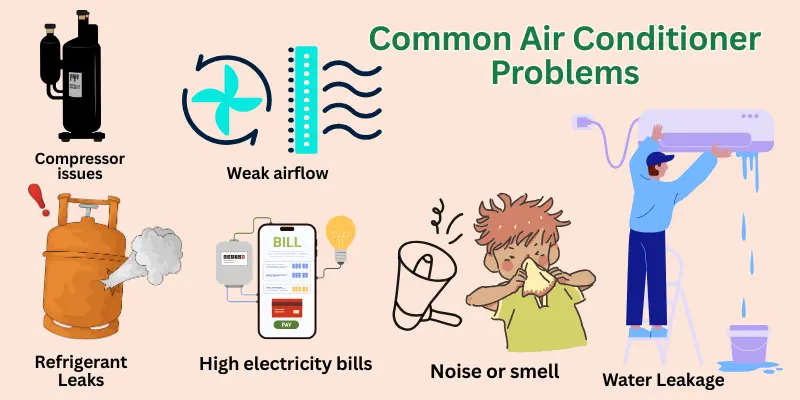
Here’s a quick list of the problems we will cover:
- Poor cooling / warm air
- Strange noises (buzzing, rattling)
- Water leakage from the unit
- AC turns on and off frequently (short cycling)
- High electricity bills
- Weak airflow
- Unpleasant smells
- Frozen coils or ice buildup
- The thermostat is not responding or is inaccurate
- AC not turning on at all
- Compressor issues (unit runs but no cooling)
- Frequent tripping of the circuit breaker
- Unusual vibrations
- Clogged or dirty condensate drain
- Refrigerant leaks
- Electrical wiring problems
- AC remote not working
- Noise or smell from the outdoor unit
- Reduced AC lifespan due to lack of maintenance
Now we will discuss each point in detail, one by one, with simple explanations, quick fixes, and guidance on when to call a professional.
1. Poor Cooling or Warm Air
Sometimes your AC blows air that is not cold enough. This makes your room uncomfortable, especially on hot days.
- What happens: The AC runs, but the room stays warm or does not reach the set temperature.
- Why it happens: Dirty filters, low refrigerant, or blocked vents can reduce cooling.
- Quick Fix: Clean or replace air filters, check that vents are open, and make sure nothing blocks airflow.
- When to Call a Professional: If the AC still blows warm air after cleaning and checking vents, a technician should check refrigerant levels or other internal issues.
2. Strange Noises (Buzzing, Rattling)
If your AC starts making unusual sounds, it can be worrying. Noises often mean something inside needs attention.
- What happens: The AC buzzes, rattles, or makes other odd sounds while running.
- Why it happens: Loose parts, debris in the unit, or a worn-out fan motor can cause noise.
- Quick Fix: Turn off the AC and check for loose screws or objects inside. Tighten parts carefully.
- When to Call a Professional: If the noise continues or seems loud, call a technician to avoid bigger problems.
3. Water Leakage from the Unit
Water dripping from your AC is a common issue that needs attention. It can damage walls or floors if ignored.
- What happens: You may see water pooling near the indoor unit or dripping onto the floor.
- Why it happens: Clogged drain pipes, frozen coils, or a tilted AC unit can cause leaks.
- Quick Fix: Clear the drain pipe, check that the unit is level, and let frozen coils thaw.
- When to Call a Professional: If the leak continues after these steps, a technician should inspect the AC to prevent damage.
4. AC Turns On and Off Frequently (Short Cycling)
If your AC keeps switching on and off quickly, it can waste electricity and reduce cooling. This usually shows that something is not working right.
- What happens: The AC runs for a short time, then stops, and starts again repeatedly.
- Why it happens: Low refrigerant, a dirty filter, or a faulty thermostat can cause short cycling.
- Quick Fix: Clean the air filters and make sure vents are open. Check the thermostat settings.
- When to Call a Professional: If the problem continues, call a technician to check refrigerant levels or repair electrical parts.
5. High Electricity Bills
If your AC suddenly increases your electricity bill, it means it is using more power than usual. This can be frustrating, but it is usually fixable.
- What happens: Your monthly bill is higher even if you use the AC the same way as before.
- Why it happens: Dirty filters, old or inefficient AC, wrong temperature settings, or frequent short cycling can increase power use.
- Quick Fix: Clean or replace filters, set the AC between 24°C and 26°C, and use Eco or Energy Saver mode.
- When to Call a Professional: If bills remain high after trying these steps, a technician can check for hidden issues like gas leaks or electrical faults.
6. Weak Airflow
If your AC is running but the air feels weak, it may not cool your room properly. This usually means something is blocking or slowing the air.
- What happens: The cool air comes out slowly or unevenly from the vents.
- Why it happens: Clogged filters, blocked vents, or a dirty blower fan can reduce airflow.
- Quick Fix: Clean or replace the air filters, remove objects near vents, and check that vents are fully open.
- When to Call a Professional: If airflow stays weak after cleaning, a technician should inspect the blower fan or ductwork for issues.
7. Unpleasant Smells
If your AC blows bad smells, it can make your room uncomfortable. The odor usually comes from dirt, mold, or bacteria inside the unit.
- What happens: The AC releases musty, burning, or sour smells when it is turned on.
- Why it happens: Dirty filters, clogged drain pans, or mold in the coils can cause bad odors.
- Quick Fix: Clean or replace filters, wipe the drain pan, and let the AC run in fan mode for a while.
- When to Call a Professional: If the smell persists, a technician can clean the coils and check for hidden mold.
8. Frozen Coils or Ice Buildup
If you notice ice forming on your AC coils, it can stop the unit from cooling properly. Ice usually forms when the airflow or refrigerant levels are not right.
- What happens: Ice builds up on the coils or pipes, and the AC may stop blowing cold air.
- Why it happens: Dirty filters, low refrigerant, or blocked airflow can cause freezing.
- Quick Fix: Turn off the AC and let the ice melt. Clean the filters and make sure vents are open.
- When to Call a Professional: If ice keeps forming, a technician should check refrigerant levels and the system for mechanical issues.
9. Thermostat Not Responding or Inaccurate
If your AC is not cooling properly or keeps turning on and off, the thermostat might be the problem. A faulty thermostat can give wrong temperature readings or fail to respond.
- What happens: The room is too hot or too cold, and the AC may run at the wrong times.
- Why it happens: Dead batteries, loose wiring, or a malfunctioning thermostat sensor can cause issues.
- Quick Fix: Replace the batteries, check the connections, and make sure the thermostat is set correctly.
- When to Call a Professional: If the thermostat still gives wrong readings, a technician may need to repair or replace it.
10. AC Not Turning On at All
When your AC does not start, it can leave your room hot and uncomfortable. This usually means there is a power or system problem.
- What happens: Pressing the power button does nothing, and the unit does not respond.
- Why it happens: Tripped breakers, blown fuses, faulty wiring, or a malfunctioning compressor can stop the AC from turning on.
- Quick Fix: Check the circuit breaker and reset it if needed. Make sure the AC is plugged in and the switch is on.
- When to Call a Professional: If the AC still does not start, a technician should inspect the wiring, compressor, and electrical components.
11. Compressor Issues (Unit Runs but No Cooling)
If your AC is running but the air is not cold, the compressor may be the problem. The compressor is the heart of your AC that pumps refrigerant to cool the air.
- What happens: The fan blows air, but it is warm instead of cold.
- Why it happens: Low refrigerant, electrical issues, or a worn-out compressor can prevent cooling.
- Quick Fix: Check for blocked airflow and clean filters. Restarting the AC can help temporarily.
- When to Call a Professional: Compressor problems are serious. A technician should inspect, repair, or replace it if needed.
12. Frequent Tripping of the Circuit Breaker
If your AC keeps tripping the breaker, it can interrupt cooling and may be dangerous. This usually happens when the AC draws more power than the circuit can handle.
- What happens: The AC shuts off suddenly, and the breaker flips repeatedly.
- Why it happens: Overloaded circuits, faulty wiring, or a short in the AC unit can cause the breaker to trip.
- Quick Fix: Turn off other heavy appliances on the same circuit and reset the breaker.
- When to Call a Professional: If the breaker trips again, an electrician or AC technician should inspect the wiring and the unit for safety.
13. Unusual Vibrations
If your AC shakes or vibrates more than usual, it can be both annoying and a sign of trouble. Vibrations often mean something inside the unit is loose or unbalanced.
- What happens: The AC makes rattling or shaking movements while running.
- Why it happens: Loose parts, an unbalanced fan, or worn-out motor mounts can cause vibrations.
- Quick Fix: Turn off the AC and check for loose screws or panels. Tighten anything that seems loose.
- When to Call a Professional: If vibrations continue or get worse, a technician should inspect the fan, motor, and other internal parts.
14. Clogged or Dirty Condensate Drain
A clogged drain can cause water to leak or even damage your AC. The condensate drain removes the moisture your AC takes from the air.
- What happens: Water pools around the AC or drips inside the house.
- Why it happens: Dirt, algae, or debris can block the drain pipe.
- Quick Fix: Use a wet-dry vacuum or a long brush to clear the blockage. Pour a small amount of vinegar or bleach to prevent algae growth.
- When to Call a Professional: If water keeps backing up or you cannot reach the clog, a technician should clean or repair the drain system.
15. Refrigerant Leaks
Refrigerant leaks can make your AC less effective and increase electricity use. They need quick attention because low refrigerant can damage the compressor.
- What happens: The AC blows warm air or takes longer to cool the room.
- Why it happens: Pipes or coils can develop cracks, or connections may loosen over time.
- Quick Fix: There is no full DIY fix for leaks. You can top up refrigerant temporarily, but it will not solve the leak.
- When to Call a Professional: Always call a certified AC technician to locate and repair leaks safely and refill refrigerant properly.
16. Electrical Wiring Problems
Faulty wiring can make your AC unsafe or stop it from working properly. It can also increase the risk of short circuits or fire.
- What happens: The AC may not turn on, trip the circuit breaker, or work intermittently.
- Why it happens: Worn-out wires, loose connections, or old electrical systems can cause problems.
- Quick Fix: Turn off the AC and check for obvious loose connections if safe to do so.
- When to Call a Professional: Always call a licensed electrician or AC technician for wiring issues to prevent accidents and ensure safe operation.
17. AC Remote Not Working
A remote that does not work can make it hard to control your AC and change settings.
- What happens: The AC does not respond when you press buttons or change settings incorrectly.
- Why it happens: Dead batteries, dust in the remote, or sensor issues on the AC unit.
- Quick Fix: Replace the batteries, clean the remote, and make sure you are pointing it at the AC sensor.
- When to Call a Professional: If the AC still does not respond, the unit’s sensor or remote system may need repair by a technician.
18. Noise or Smell from the Outdoor Unit
Unusual sounds or smells from the outdoor unit can signal a problem that needs attention.
- What happens: You may hear buzzing, grinding, or rattling noises, or notice a burning or musty smell.
- Why it happens: Dirt, debris, loose parts, or electrical issues can cause noise; overheating or burning wires can cause a smell.
- Quick Fix: Turn off the AC and remove visible debris like leaves or branches. Tighten loose panels if safe to do so.
- When to Call a Professional: If the noise or smell persists, call a technician to inspect the motor, wiring, and other components safely.
19. Reduced AC Lifespan Due to Lack of Maintenance
Neglecting regular care can make your AC wear out faster and cost more in repairs.
- What happens: The AC cools less efficiently, uses more electricity, and may break down more often.
- Why it happens: Dirt, dust, clogged filters, and worn-out parts stress the system over time.
- Quick Fix: Clean filters, wipe coils, and check for debris regularly.
- When to Call a Professional: Schedule yearly servicing with a technician to inspect all parts, recharge refrigerant if needed, and ensure the AC runs smoothly for longer.
Extra Tips to Save Money and Extend AC Life
Keeping your AC in good shape not only saves electricity but also helps it last longer. Follow these simple tips every month or season.
| Tip | Why It Helps | How to Do It |
| Clean Filters Regularly | Improves airflow and cooling efficiency | Remove filters every 2–3 weeks, wash gently with water, let dry completely before reinstalling |
| Keep the Outdoor Unit Shaded | Prevents overheating and reduces energy use | Place the unit under shade or use a small cover (without blocking airflow) |
| Use Ceiling Fans | Helps cool the room faster and reduces AC workload | Turn on the fans along with the AC to spread cool air evenly |
| Check Wiring and Insulation | Avoids electricity wastage and potential hazards | Inspect for loose wires, damaged insulation, and repair or call a technician |
| Set the Right Temperature | Saves power and maintains comfort | Keep the AC between 24°C and 26°C |
| Use a Timer or Smart Thermostat | Prevents unnecessary running and lowers bills | Set a timer to turn off the AC when not needed or use a smart thermostat to adjust automatically |
Common Questions and Answers About AC Problems
Many people have questions when their AC is not working properly. These questions help you understand why problems happen and how to fix them quickly. Here are the most common queries and answers people search for on Google.
AC filters should usually be replaced every 3 to 6 months, depending on usage and air quality. If you have pets or dusty surroundings, check more often. Clean or replace them on time to keep airflow strong and your AC cooling efficiently.
Yes, setting the AC a few degrees higher can still keep the room comfortable, especially if you use fans to circulate air. It also reduces electricity bills and puts less strain on your AC.
Yes, thick or dark curtains can block sunlight and heat, helping your AC cool the room faster. Light-colored blinds can reflect heat outside, which also supports efficient cooling.
Frequent power cuts can stress your AC’s compressor and electrical components. Using a stabilizer or turning off the AC during cuts helps protect the unit.
High humidity makes it harder for ACs to cool the room and can cause water leaks or mold buildup. Low humidity may make the room feel cooler but drier. Using a dehumidifier or proper AC settings helps maintain balance.
Yes, you can use the AC in winter if it has a heating mode, or you can run it on fan mode. Avoid using the cooling mode in cold weather to prevent damage to the compressor and coils.
Conclusion
So guys, in this article, we have discussed the most common air conditioner problems, why they happen, and simple ways to fix them at home. From poor cooling and strange noises to leaks and high electricity bills, knowing these tips can save you money and prevent bigger issues. Personally, my advice as an expert is to clean your filters regularly, check airflow, and schedule yearly maintenance to keep your AC running smoothly and extend its life.
If you liked this article, check out more guides about air conditioners. Have questions? Ask them in the comment section, and we will reply.