Deep Freezer vs Refrigerator – Which One Is Better for Your Home?
Published: 25 Dec 2025
When it comes to keeping food fresh at home, two appliances often come to mind. The deep freezer and the refrigerator. Both help store food, but they serve very different purposes. A refrigerator is perfect for daily use, keeping fruits, vegetables, and cooked meals fresh. A deep freezer, on the other hand, is designed for long-term storage, keeping meat, frozen food, and bulk items safe for weeks or even months.
Many people wonder which one to choose for their home, kitchen space, or family needs. In this article, we will compare Deep Freezer vs Refrigerator in detail, covering important points like ease of use, storage capacity, temperature control, energy use, and more. By the end, you’ll have a clear idea of which appliance fits your lifestyle best.
Let’s see which one suits you better. So, are you ready?
What is a Deep Freezer

A deep freezer is an appliance that stores food at very low temperatures to keep it frozen for long periods. It is used for storing meat, frozen vegetables, and bulk food. It suits families or businesses that need long-term storage.
What is a Refrigerator
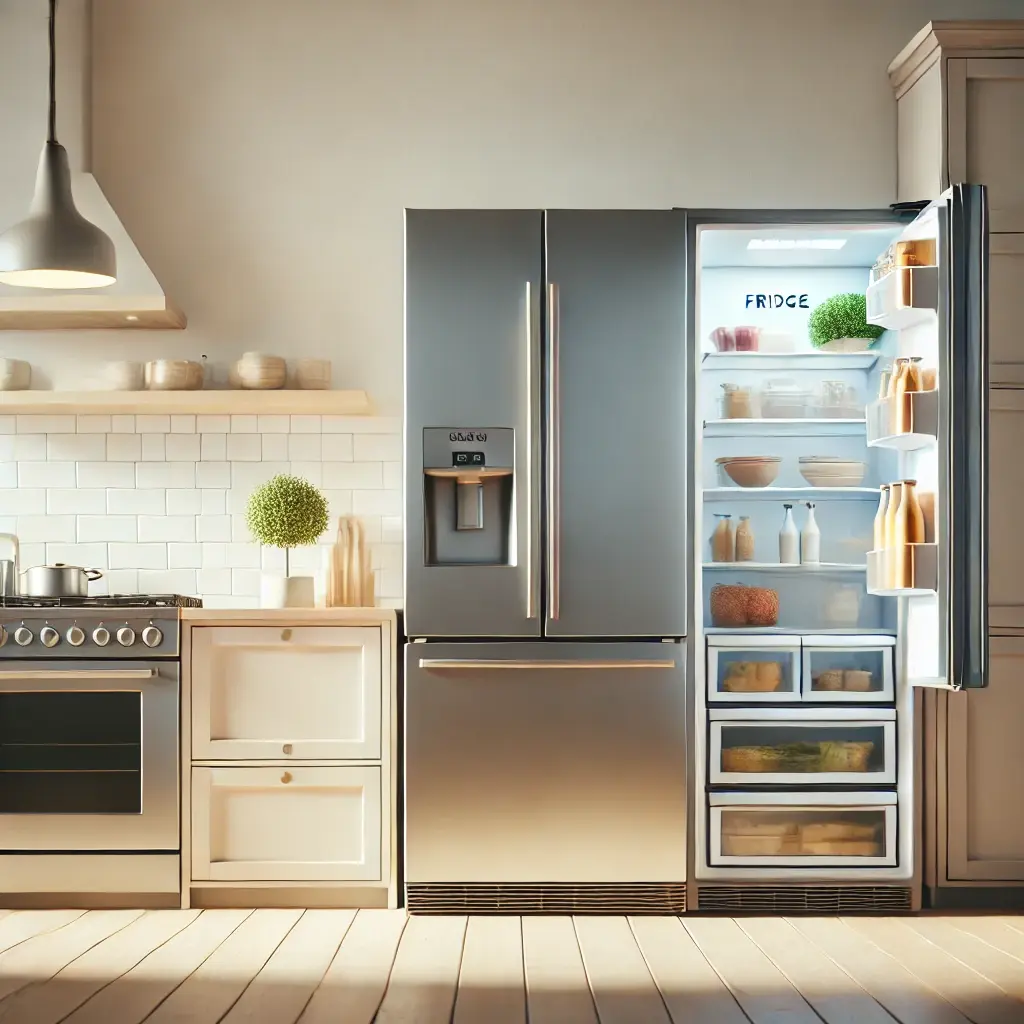
A refrigerator is an appliance that keeps food cool to preserve freshness for daily use. It stores fruits, vegetables, dairy, and cooked meals. It is ideal for households that need easy access to fresh food every day.
Difference Between a Deep Freezer and a Refrigerator
Now that you have read the definitions of both a deep freezer and a fridge, it’s time to compare them. Below is a simple table that helps you easily understand the differences. You can scan it and keep it in mind to make a choice that suits your needs.
Comparison Table:
| Aspects | Deep Freezer | Refrigerator |
| Purpose | Long-term food storage | Daily food use |
| Working | Freezing mechanism | Cooling + freezing mechanism |
| Features | Freezing only | Cooling + small freezer |
| Storage | Large, holds lots of food | Medium, enough for daily use |
| Food Types | Meat, bulk frozen food | Fruits, vegetables, cooked food |
| Size & Space | Bigger, needs more floor area | Compact to medium, fits kitchens |
| Energy Use | Efficient | Moderate |
| Price | Moderate | Varies |
| Maintenance | Simple | Easy, sometimes auto defrost |
| Noise | Low | Low to moderate |
| Support | Standard | Standard |
After reviewing this table, we will now discuss each of these points in detail to better understand their differences.
So, are you ready? Let’s learn together!
1. Purpose
The purpose tells us why each appliance is used and what it is designed for. Let’s see how a deep freezer and a refrigerator differ:
Deep Freezer
- Keeps food frozen for a long time.
- Stores meat, frozen vegetables, and bulk items.
- Good for families who buy in large quantities or from small shops.
Refrigerator
- Keeps food fresh for daily use.
- Stores fruits, vegetables, dairy, and cooked meals.
- Ideal for households that cook regularly and need easy access.
So, if you want long-term storage, choose a deep freezer. For fresh food daily, a refrigerator is better.
2. Working
Working explains how each appliance keeps food fresh or frozen. Let’s see the difference:
Deep Freezer
- Uses very low temperatures to freeze food completely.
- Keeps food solid for weeks or months.
- Chest or upright models maintain cold efficiently.
Refrigerator
- Uses moderate cooling to keep food fresh.
- Has separate cooling and small freezer sections.
- Maintains a temperature suitable for daily food use.
For strong freezing and long-term storage, the deep freezer works best. For daily cooling and fresh food, the refrigerator is ideal.
3. Features
Features tell us what each appliance can do and what makes it useful.
Deep Freezer
- Mainly designed for freezing food.
- Some models have baskets or dividers to organize items.
- Focused on storing large quantities at very low temperatures.
Refrigerator
- Cool food for daily use, and it has a small freezer section.
- Comes with shelves, drawers, and vegetable crispers.
- Some models have auto-defrost, temperature control, or extra features like water dispensers.
If you want simple bulk storage, the deep freezer is enough. For daily convenience and more features, the refrigerator is better.
4. Storage
Storage shows how much food each appliance can hold and what it is suitable for. Understanding this helps you decide which one fits your family or business needs better.
Deep Freezer
- Large internal space to store bulk food.
- Ideal for meat, frozen vegetables, and extra groceries.
- Works well for families who buy in large quantities.
Refrigerator
- Medium storage suitable for daily food needs.
- Perfect for fruits, vegetables, dairy, and cooked meals.
- Fits households that cook regularly and need easy access.
If you need to store a large amount of food for weeks or months, the deep freezer is more suitable. For everyday meals and easy access to fresh food, the refrigerator works best.
5. Food Types
Food types show what kind of items each appliance can store safely and efficiently. Knowing this helps you pick the right appliance for your food habits.
- Best for meat, seafood, and poultry.
- Great for frozen vegetables and fruits.
- Can store bulk or pre-cooked meals for long periods.
Refrigerator
- Ideal for fresh fruits and vegetables.
- Perfect for dairy products like milk, cheese, and yogurt.
- Stores cooked meals, beverages, and daily-use items.
Deep freezers are suited for keeping food frozen for long-term storage, while refrigerators are designed to keep fresh food ready for daily use.
6. Size & Space
Size and space show how much room each appliance takes and where it can fit. This helps you decide what works best for your kitchen or storage area.
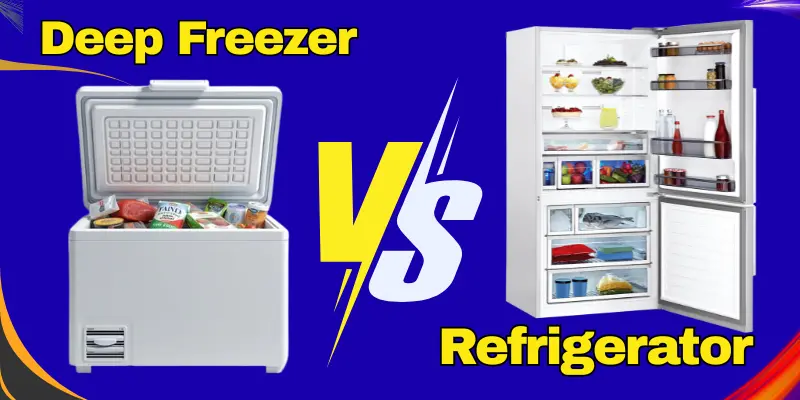
Deep Freezer
- Larger in size and needs more floor space.
- Often placed in garages, utility rooms, or basements.
- It can hold a lot of food, but it may be harder to move.
Refrigerator
- Compact to medium size, fits most kitchens.
- Easy to place near countertops for daily access.
- It can be moved relatively easily if needed.
If you have plenty of space and need to store bulk food, a deep freezer is suitable. For small or medium kitchens with daily food access, a refrigerator is a better fit.
7. Energy Use
Energy use tells us how much electricity each appliance consumes, which can affect your monthly bills and long-term costs.
Deep Freezer
- Usually energy-efficient for storing large amounts of food.
- Uses less electricity per kilogram of frozen food.
- Runs steadily to maintain very low temperatures.
Refrigerator
- Moderate energy consumption for daily cooling.
- Runs continuously to keep food fresh.
- Energy usage can increase with extra features like ice makers or dispensers.
Deep freezers are more efficient for bulk storage over time, while refrigerators use moderate energy suitable for everyday food storage and quick access.
8. Price
Price helps you understand how much you need to spend to buy each appliance and plan your budget accordingly.
Deep Freezer
- Usually comes at a moderate initial cost.
- Offers good value for storing large quantities of food.
- Prices vary depending on size and model type.
Refrigerator
- Price varies widely depending on features and brand.
- Basic models are affordable, and advanced models can be costly.
- Extra features like auto-defrost, ice makers, or water dispensers can increase cost.
Deep freezers are cost-effective for bulk storage, while refrigerators can be inexpensive or pricey depending on the features you choose.
9. Maintenance
Maintenance shows how easy it is to clean and take care of each appliance, which affects its durability and convenience.
Deep Freezer
- Simple to clean, usually just wipe the inside occasionally.
- Some models require manual defrosting.
- Less frequent maintenance because it mainly stores frozen food.
Refrigerator
- Easy to clean, with shelves and drawers removable.
- Some models have auto-defrost features, reducing effort.
- Requires regular checking of temperature and compartments for freshness.
Deep freezers are low-maintenance for long-term storage, while refrigerators are easy to maintain daily, especially with auto-defrost models.
10. Noise
Noise tells us how loud each appliance is during operation, which can affect comfort in your home or kitchen.
Deep Freezer
- Usually very quiet during operation.
- Minimal humming sound, barely noticeable.
- It can be placed in living areas without causing disturbance.
Refrigerator
- Low to moderate noise, depending on the model.
- Some make humming or clicking sounds occasionally.
- Advanced models may be quieter, but still audible in small kitchens.
Deep freezers are generally quieter, making them ideal for quiet areas, while refrigerators have low to moderate noise suitable for everyday kitchen use.
11. Support
Support tells us what kind of after-sales service and help you can get if something goes wrong with the appliance.
Deep Freezer
- Standard appliance support from manufacturers.
- Warranty usually covers parts and repairs for a limited time.
- Service centers are available in most areas.
Refrigerator
- Standard support, sometimes extended for advanced models.
- Warranty covers parts and repairs depending on the brand and features.
- Many brands have easy access to service centers and customer support.
Both deep freezers and refrigerators offer standard support, making them easy to service if needed.
Pros and Cons of Deep Freezer and Refrigerator
When choosing between a deep freezer and a refrigerator, it helps to know their main advantages and disadvantages. Below are clear, easy-to-read points to help you decide which fits your needs better.
Deep Freezer:
Before choosing a deep freezer, it helps to know its main advantages and disadvantages.
Pros:
- Stores large quantities of food for a long time.
- Very energy-efficient for bulk storage.
- Keeps meat and frozen items at very low temperatures.
- Quiet operation, hardly noticeable.
Cons:
- Takes up more floor space.
- Harder to organize small or daily-use items.
- Manual defrost may be needed for some models.
- Not suitable for daily access to fresh food.
For a more detailed look at deep freezers, check out our full guide on the Advantages and Disadvantages of Deep Freezers.
Refrigerator:
Knowing the pros and cons of a refrigerator helps you decide if it suits your daily needs.
Pros:
- Easy access to fresh food daily.
- Multiple compartments and shelves for organized storage.
- Compact, fits kitchens easily.
- Some models have auto-defrost and extra features.
Cons:
- Moderate energy use, runs continuously.
- Limited space for bulk storage.
- It can be noisy in small kitchens with certain models.
- Some advanced features increase the price.
To explore everything about refrigerators, including pros and cons, visit our guide: Advantages and Disadvantages of a Refrigerator.
Which One Should You Choose?
When it comes to choosing between a deep freezer and a refrigerator, it really depends on how you use food and what your space allows.
- Deep Freezer: Best for families who buy in bulk, small business owners, or anyone needing long-term food storage. It keeps meat, frozen vegetables, and large quantities safe for weeks or months. Perfect if you plan meals and want efficiency.
- Refrigerator: Ideal for daily food use, small kitchens, and households that cook regularly. It keeps fruits, vegetables, dairy, and cooked meals fresh and easy to reach. Great for casual users and families who need daily access.
Both appliances are reliable, but each serves a different purpose. Think about your food habits, space, and storage needs before deciding.
FAQs
Even after reading everything above, you may still have some questions in your mind. Don’t worry, we have collected some common questions for you as a bonus in this section. Let’s see them.
List of Questions:
- Which foods should never be stored in a deep freezer or refrigerator?
- How do temperature fluctuations affect food in a deep freezer or refrigerator?
- Can using both a deep freezer and a refrigerator together help save money and reduce food waste?
- Can a deep freezer keep food frozen during a power cut?
- What is the ideal temperature for a deep freezer and a refrigerator?
- How long can cooked meals last in a deep freezer vs a refrigerator?
- Can a deep freezer be used as a refrigerator?
- Can using a deep freezer reduce food waste?
- How to safely store food in a deep freezer and refrigerator?
- What happens if a deep freezer or refrigerator is too full or too empty?
Now we will discuss each question in detail and give you clear answers.
Some foods do not freeze or chill well. Leafy vegetables like lettuce and cucumbers can become soggy and lose texture. Eggs in their shells may crack in the freezer. Soft cheeses and cream can separate and taste different. It’s better to keep these foods fresh and use them quickly.
When temperatures change often, food can spoil faster. In a deep freezer, small temperature changes may form ice crystals on food. In a refrigerator, fluctuating temperatures can make fruits and vegetables go soft. Keeping the appliance closed often helps keep the temperature stable. Stable temperatures help food stay fresh longer.
Yes, using both can be very helpful. You can store daily-use food in the refrigerator and bulk or long-term items in the deep freezer. This prevents frequent grocery trips and reduces food waste. Buying in bulk often saves money. It also helps organize food better at home.
Yes, a deep freezer can keep food frozen for some time during a power cut. Full freezers stay cold longer than empty ones. Chest freezers usually keep food frozen longer than upright freezers. Avoid opening the freezer during a power cut to keep the cold air inside. This helps food stay safe until the power comes back.
A deep freezer should be kept around -18°C (0°F) for safe long-term storage. A refrigerator should stay around 3–5°C (37–41°F) to keep daily food fresh. The freezer should not be warmer than -15°C, or food may thaw. The fridge should not be colder than 0°C, or some fruits and vegetables can freeze.
Cooked meals last longer in a deep freezer, usually 2–6 months, depending on the food. In a refrigerator, cooked meals are safe for 3–4 days. Always store food in airtight containers to keep it fresh. Labeling food with the date helps track freshness. Freezing extends storage safely, while refrigeration is for short-term use.
A deep freezer is not designed to keep food just cool like a refrigerator. It keeps food frozen at very low temperatures. Using it as a fridge may make some items too cold or freeze them unintentionally. For daily-use food like fruits or milk, a regular refrigerator is better. Deep freezers are best for long-term frozen storage only.
Yes, a deep freezer helps reduce food waste by keeping food frozen for weeks or months. You can store bulk groceries, leftovers, or pre-cooked meals safely. This means you can use food later instead of throwing it away. Planning meals and freezing extra portions is a good way to save money and avoid waste. It works best when food is stored properly in airtight containers.
Always use airtight containers or freezer bags to prevent freezer burn or odors. Label each item with the date so you know how long it has been stored. Keep raw and cooked food separate to avoid contamination. Arrange items so air can circulate for even cooling. Regularly check the temperature to ensure food stays fresh and safe.
If a freezer or fridge is too full, cold air cannot circulate properly, and some food may not stay at the right temperature. If it’s too empty, the appliance works harder to maintain temperature, using more energy. Keeping it moderately filled is ideal. Use baskets or shelves to organize food for better airflow. This keeps all items fresh and saves electricity.
Final Note
So guys, it’s time to say goodbye.
Deep Freezer vs Refrigerator. Both help keep your food safe, but they are made for different needs. A deep freezer is best for long-term storage and bulk food. A refrigerator is best for daily use and easy access to fresh food. In this article, we compared their purpose, working, features, storage, energy use, price, maintenance, noise, support, pros and cons, and also answered common questions to help you decide.
As an expert, my simple advice is this. Choose a deep freezer if you buy food in bulk and want long-term storage with better energy savings. Choose a refrigerator if you need fresh food every day and want quick and easy access in your kitchen.
If this article helped you, feel free to leave a comment below and share your thoughts or questions. Also, don’t forget to explore more of our guides on refrigerators, air conditioners, and deep freezers to make better choices for your home.