How the Environmental Impact of Air Conditioners Affects Us.
Published: 31 Oct 2025
Your air conditioner keeps you cool. But do you know what it does outside your window?
Today, almost every home, office, and shop has an air conditioner. It makes our summers easier and helps us sleep better at night. For many of us, it feels like something we can’t live without.
But here’s the truth we often forget. While our AC gives us comfort, it also adds to the environmental impact of air conditioners around the world. Every time it runs, it uses power, gives off heat, and increases its air conditioner’s carbon footprint. These small actions, when multiplied by millions of users, slowly harm our planet.
In this article, we’ll talk about how air conditioners affect the environment, what causes this problem, and how you can switch to eco-friendly AC usage at home. You’ll also learn simple steps to save energy, lower your bills, and keep your home cool in a smarter way.
Are you ready? Let’s explore this together and find out how we can enjoy cool comfort without hurting our planet.
Quick Fix First: How You Can Reduce the Impact Right Now
Let’s start with something simple. You don’t have to wait to make a difference! Many people want to help the environment, but they don’t know where to begin. The good news is, small changes in how you use your air conditioner can really help reduce your AC energy bill and make your cooling more planet-friendly.
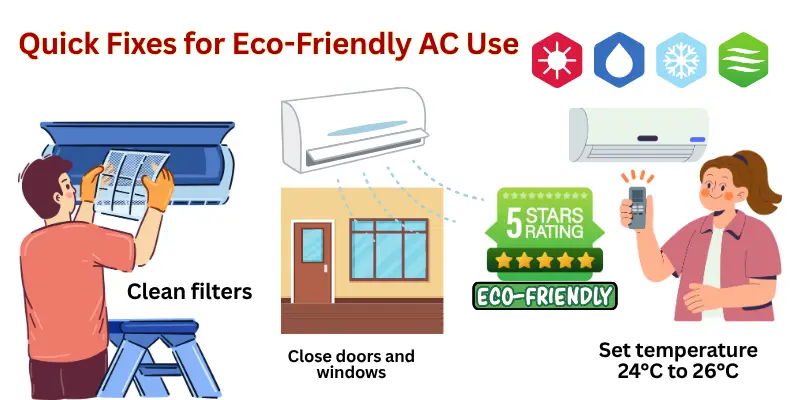
Here are a few quick and easy fixes you can try today:
- Clean your filters every month. Dusty filters make your AC work harder and use more power.
- Set the temperature between 24°C and 26°C. This range keeps your room cool and saves energy at the same time.
- Close doors and windows properly. Don’t let cool air escape-it wastes both power and money.
- Choose an inverter or 5-star-rated ACs. These models are more energy efficient and reduce electricity use.
- Avoid overcooling your room. Even one degree lower can increase power use by around 6%.
Here’s a real example: One homeowner cleaned their AC filters regularly and noticed about a 20% drop in their electricity bill. Small steps can make a big difference!
Making these small changes means you’re already practicing eco-friendly air conditioner usage. You stay cool, save money, and help the planet-all at the same time.
We’ll explore more daily habits later in the article.
Why It Matters: What Happens Behind the Cooling
Your air conditioner feels like a magic box that turns hot air into cool comfort. But behind that cool breeze, a lot happens that we don’t see. Each time you switch on your AC, it uses energy, releases heat, and affects the air around us. Let’s see how.
1. Energy Consumption and Carbon Emissions
Every air conditioner needs electricity to run. The more we use, the more power plants have to burn fuel to create that electricity. And that fuel burning releases harmful gases into the air.
So, more air conditioner energy use means more carbon emissions from air conditioning, and more harm to the planet.
Think about this: millions of ACs running on a hot summer day. That’s a lot of electricity being used at once! It adds up fast and increases pollution day by day.
By using our ACs wisely, we can reduce AC electricity consumption and help lower this invisible pollution.
2. Refrigerants and Greenhouse Gases
Inside every AC, there’s a special gas called a refrigerant. It helps your AC make the air cold. But some of these gases, like CFCs and HCFCs, are very harmful to the Earth. They damage the ozone layer and trap heat in the atmosphere.
Newer gases, such as R32 and R290, are safer and cause less harm. These are known as eco-friendly refrigerants for ACs.
Many companies are now shifting from harmful HFCs in air conditioners to these better gases. Choosing such models helps reduce the global warming potential of AC refrigerants.
3. Heat Release and the Urban Heat Island Effect
Have you ever stood near the outdoor unit of an AC? It blows hot air, right? That’s because while cooling your room, the AC releases warm air outside.
Now imagine this happening in every house and building around you. All that heat makes cities even hotter. This is called the urban heat island effect, a fancy name for when cities stay warmer than nearby areas.
The more ACs we use, the more AC exhaust heat grows. It’s like fighting heat with more heat!
4. Waste and Disposal Problems
When old air conditioners are thrown away, they can leak leftover gases and oils. These leaks harm the air and soil. Many ACs are not recycled properly, which adds to pollution and waste.
Proper air conditioner disposal and recycling help reduce this problem. Always get old units handled by certified technicians so harmful gases don’t escape.
If we don’t, those leaks can cause serious AC refrigerant leak environmental impacts, adding to the same problem we’re trying to solve.
Even though we don’t see it, every bit of cooling has a hidden cost. But don’t worry—understanding this is the first step to making better choices for the environment.
The Science Made Simple: What’s Inside Your AC
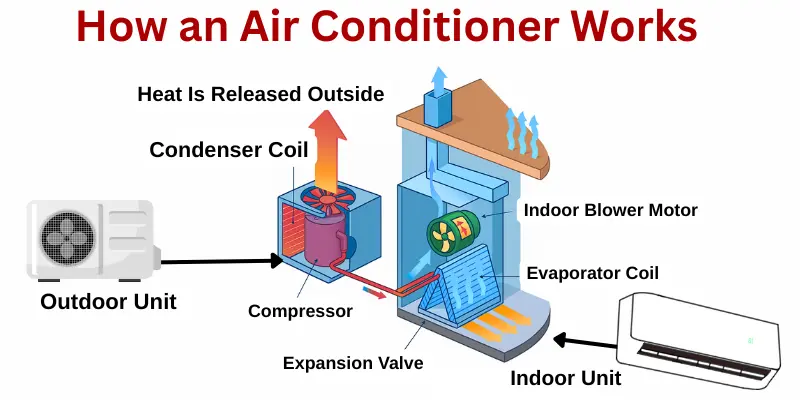
Have you ever wondered how your air conditioner really works? Let’s keep it simple! An AC has a few main parts that work together to turn hot air into cool comfort.
Compressor – The Heart of the AC
The compressor is like the heart of your air conditioner. It pushes the cooling gas (called the refrigerant) around the system. When this gas is squeezed by the compressor, it becomes very hot and moves to the next part of the AC.
But here’s the thing – the compressor uses a lot of power. That means high AC compressor energy usage, which leads to more electricity use and more pollution from power plants.
Condenser – Letting the Heat Go
Next comes the condenser, which is usually in the outdoor unit. The hot refrigerant gas passes through coils, and the fan blows air over it. This helps the gas release its heat to the outside.
So when you feel that warm air near the outdoor unit, that’s the heat being thrown out! This step is needed for cooling, but it also adds to the heat in the environment.
Evaporator – Making the Air Cool
Now the refrigerant moves indoors to the evaporator coil. Here, it absorbs the heat from your room’s air, making the air cool. The fan then blows this cool air around your room.
This process repeats again and again – hot air goes out, and cool air comes in. That’s how your AC keeps your room comfortable.
Refrigerant – The Cooling Hero and Sometimes the Villain
The refrigerant in AC is a special gas that keeps moving between hot and cold states. Older refrigerants were harmful to the ozone layer, but newer ones, like R32 and R290, are safer for the planet.
Still, if the refrigerant leaks, it can harm the environment. So, it’s always good to get your AC checked and serviced regularly.
Smart Choices: How to Choose and Use an Eco-Friendly AC
If you are planning to buy a new air conditioner or want to use your current one more wisely, this part is for you. Making smart choices can help you save money, reduce electricity use, and protect the planet-all at the same time!
1. Energy Efficient Models and Star Ratings
When you buy an air conditioner, you might see star labels on it. These stars tell you how much energy the AC uses. The more stars it has, the less power it needs to cool your room.
A 5-star AC means high energy efficiency. It saves more power compared to a 2-star or 3-star model. In fact, a 5-star AC can save up to 25% energy compared to a 2-star model. That means lower bills and fewer carbon emissions.
So, if you are looking for long-term savings, go for a 5-star AC. The extra cost at first will pay you back through lower electricity bills. That’s one of the best energy-efficient air conditioner benefits you can enjoy.
Also, try choosing an inverter AC, which adjusts its speed automatically. It cools your room smoothly and saves even more energy-this is called inverter AC energy saving.
2. Eco-Friendly Refrigerants and New Technologies
Refrigerants are the gases that make your AC cool the air. Some older gases like R22 and R410A are not very kind to the planet. They have a high “GWP,” which means Global Warming Potential.
Newer gases like R32 and R290 have a low GWP, which makes them better for the environment. If you are buying a new AC, look for models that use these gases-they are part of next-generation cooling technology.
Another great feature to look for is inverter technology. In simple words, it lets your AC run at different speeds. Instead of turning on and off again and again, it adjusts smoothly. This helps in saving electricity and gives you a quieter, more comfortable cooling experience. These are some of the best inverter technology AC benefits you can get.
3. Smart Usage and Daily Habits
Even the most efficient AC can waste energy if not used properly. Let’s focus on smart daily habits that make the biggest difference:
- Keep filters clean. Dusty filters block air and make the AC work harder.
- Use curtains or blinds to block sunlight and reduce room heat.
- Set the temperature wisely-try 24°C to 26°C for comfort and savings.
- Turn on a fan with the AC to spread cool air better.
- Schedule regular maintenance to keep your AC in top shape.
Remember, just one degree higher can save up to 6% energy. Small habits lead to big results!
Smart Cooling Tips for Every Home
No matter where you live, a few smart habits can make your cooling more efficient and eco-friendly.
These small actions help lower your bills and protect the planet at the same time.
Handle Power Cuts and Peak Hours Smartly
Hot weather often comes with power cuts or high electricity demand. Here’s how you can stay comfortable without wasting energy:
- Use ceiling or table fans when the AC is off.
- Keep doors closed to trap cool air.
- Open windows only when the outdoor air is cooler than indoors.
- During peak hours, raise your AC temperature slightly to reduce load on the grid.
Keep Outdoor Units Shaded
Just like cities get hotter from the heat released by air conditioners, your own AC can overheat if its outdoor unit sits in direct sunlight.
Here’s how to prevent that:
- Place it under a roof or shade to protect it.
- Leave enough space for proper airflow.
- Shading your unit can improve efficiency by up to 10% and reduce strain on the system.
Block Heat from Entering Your Home
Keep the heat outside before it even reaches your AC.
Try these simple steps:
- Close curtains or blinds during the hottest hours of the day.
- Use light-colored curtains to reflect sunlight.
- Open windows in the evening for fresh, cooler air.
Set the Right Temperature
Comfort doesn’t mean cold air. The right temperature keeps you cool and saves energy, too:
- Stay between 24°C and 26°C for the best comfort-to-efficiency balance.
- Every degree higher can cut electricity use by up to 6%.
- This small step helps you save both money and the environment.
Global & Policy Efforts: What the World Is Doing
The world is waking up to the impact of air conditioners on our planet.
Countries, scientists, and companies are now working together to make cooling safer and smarter for the environment.
Here’s What We’ll Explore:
- International agreements that protect our air and climate
- The future of cooling with new and sustainable technologies
International Agreements
Many nations have already joined hands to reduce the damage caused by harmful refrigerants.
Here’s how the world is taking action together:
- The Montreal Protocol is one of the biggest global agreements to protect the ozone layer.
- Countries promised to stop using harmful gases like CFCs and HCFCs that damage the ozone layer.
- New updates to the agreement also include cutting down HFCs, which are greenhouse gases that trap heat.
- These changes are helping the planet slowly heal while promoting eco-friendly refrigerants in air conditioners.
Simple idea: Countries agreed to stop using gases that harm the ozone layer – and it’s already making a difference.
The Future of Cooling
The future of air conditioning is exciting and full of promise.
Inventors are now designing new ways to stay cool without harming the Earth.
- Solar-powered air conditioners are being tested that can run all day using sunlight instead of grid electricity.
- Natural cooling designs, such as smart building layouts and better ventilation, reduce the need for mechanical cooling.
- Passive cooling systems use materials and airflow to keep rooms cool naturally.
- These new ideas are shaping the future of sustainable air conditioner technology.
Example: Some companies are already testing solar-powered air conditioners that can run all day without grid power.
Final Note
So guys, in this article, we talked about the environmental impact of air conditioners-how they use energy, release heat, and increase pollution around us. We also learned about eco-friendly air conditioner usage, energy-efficient models, and smart daily habits that can reduce this harm. From cleaning filters and setting the right temperature to choosing an inverter or 5-star ACs, every small step helps protect our planet.
My recommendation is simple: start with these small actions today. Use your AC wisely, keep it well-maintained, and make energy-saving choices. This way, you’ll stay cool, save money, and help the environment at the same time. Remember, comfort should never come at the cost of our planet-let’s make our cooling habits clean, green, and responsible.
Find out more about air conditioning. Our guide is below.
Common Questions About AC and the Environment
Here are some common questions people often ask about air conditioners and their impact on the planet. These are topics we haven’t covered in this article, but are worth exploring further:
- What is the difference between R32 and R410A refrigerants?
- How can solar energy be used to power home air conditioners?
- What are some signs of a refrigerant leak in an air conditioner?
- How often should you service your AC to keep it energy efficient?
- Can old air conditioners be recycled safely?
Now we discuss the answers to all the questions one by one.
R32 and R410A are both gases used in air conditioners to cool the air. R32 is newer and more eco-friendly because it causes less harm to the environment. It also uses less energy and cools faster. R410A works well, too, but it has a higher global warming impact. That’s why more new ACs now use R32 gas.
Solar energy comes from sunlight. With solar panels on your roof, you can make electricity to run your air conditioner. This helps you save money on bills and reduces pollution. Some solar-powered ACs can even work during the day without using grid power. It’s a clean and smart way to stay cool.
If your AC isn’t cooling well, makes a hissing sound, or the electricity bill suddenly goes up, it may have a refrigerant leak. Sometimes, you can also see ice forming on the pipes. A leak is not safe for the environment and needs quick repair. Always call a trained technician to fix it properly.
You should service your air conditioner at least once or twice a year. Cleaning filters and checking parts keep it working smoothly. Regular service also helps prevent leaks and keeps energy use low. A well-maintained AC cools better and lasts longer.
Yes, old air conditioners can be recycled safely if handled by experts. They remove the gases and parts carefully before recycling the metal and plastic. This stops harmful gases from escaping into the air. Always contact an authorized service center for disposal. It helps protect both people and the planet.