How to Organize a Refrigerator Step by Step Simply
Published: 9 Jan 2026
Do you ever open your fridge and feel unsure where things should go? Leftovers mixed with sauces, fruits on top of vegetables, and no space for new groceries can make it frustrating and confusing. A messy fridge can also waste food and money because food goes bad, spills happen, and it becomes hard to find what you need when cooking.
Do not worry. This guide will show you how to organize a refrigerator step by step so that everything is easy to find, stays fresh longer, and your fridge stays neat without any stress.
So, are you ready? Let’s get started and organize your fridge the smart way.
What You Need Before You Start
Before you start organizing your refrigerator, it helps to have a few things ready. Having the right tools and knowledge will make the process faster, easier, and more effective.
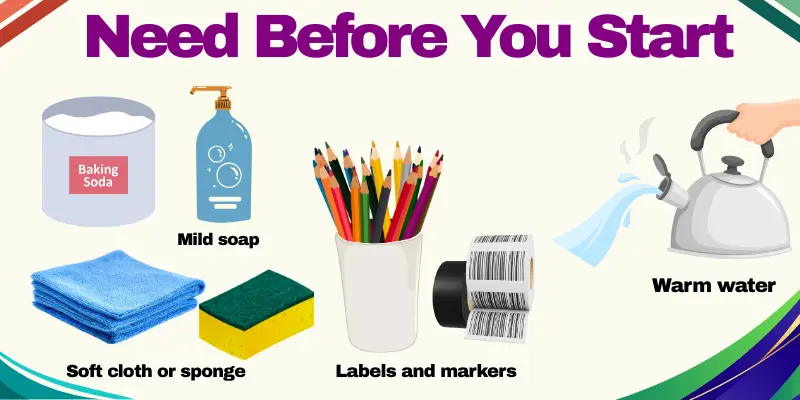
Here are the basics you should have:
- Soft cloth or sponge – For wiping shelves and drawers without scratching surfaces.
- Mild soap or baking soda – Helps remove stains and odors safely.
- Warm water – For easily cleaning shelves and containers.
- Clear storage containers or bins – Makes it easy to group food and see what you have at a glance.
- Labels and markers – Helps you mark dates and food types so everyone in the family knows where things belong.
- Knowledge of fridge zones – Understanding where to store fruits, vegetables, dairy, and meat helps keep food fresh longer and prevents contamination.
Understand Refrigerator Zones
Knowing where to place different foods in your fridge is key to keeping everything organized and easy to find. Each part of the refrigerator has a slightly different temperature, and storing items in the right zone helps them last longer and stay in good condition.
Here are the main zones we will cover:
- Top Shelves
- Middle Shelves
- Bottom Shelves (Coldest Area)
- Crisper Drawers
- Refrigerator Door
We will now discuss each zone in detail so you can use your fridge efficiently.
Top Shelves
Best for ready-to-eat foods and leftovers.
- Store snacks, sandwiches, and small packs here for easy access.
- Place cooked meals together so you can quickly grab them.
- Avoid heavy or liquid items that could spill and make a mess.
- Keep frequently used items at eye level for convenience.
Middle Shelves
Perfect for dairy products and similar items.
- Keep milk, yogurt, and cheese together so they are easy to find.
- Store eggs here if your fridge doesn’t have a dedicated egg compartment.
- Avoid placing raw meat or seafood on these shelves.
- Organize by type to make it easier to see what you have.
Bottom Shelves (Coldest Area)
Ideal for raw meat, fish, and seafood.
- Store raw meat in closed containers to prevent leaks.
- Keep meat separate from ready-to-eat foods.
- Use the coldest shelf for items that need the lowest temperature.
- Place larger or heavier items here to avoid crushing other foods.
Crisper Drawers
Designed for fruits and vegetables.
- Use one drawer for fruits and another for vegetables.
- Avoid mixing fruits and vegetables to prevent faster spoilage.
- Keep delicate items like leafy greens in drawers with humidity control.
- Use small bins for berries or other small produce to keep them organized.
Refrigerator Door
Suitable for sauces, condiments, and drinks.
- Store items that are less sensitive to temperature changes, like jams and beverages.
- Avoid keeping milk, eggs, or other temperature-sensitive items here.
- Place frequently used condiments at the front for easy access.
- Use door shelves for bottles and jars to save space on main shelves.
Step-by-Step Guide: How to Organize a Refrigerator Properly
Organizing a refrigerator becomes easy when you follow clear and simple steps. A proper system helps you save time, reduce food waste, and keep everything easy to find. This guide will walk you through the process simply and practically.
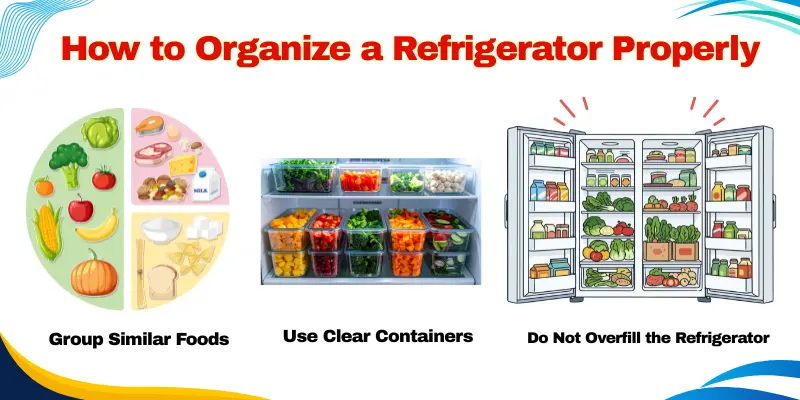
Here are the main steps we will cover:
- Step 1: Group Similar Foods Together
- Step 2: Use Clear Containers and Storage Bins
- Step 3: Create a “Use First” Zone
- Step 4: Follow the First-In, First-Out Rule
- Step 5: Do Not Overfill the Refrigerator
- Step 6: Label Food and Containers
Now, we will discuss each step in detail, one by one, so you can organize your fridge the right way.
Step 1: Group Similar Foods Together
Grouping similar items makes it easier to find what you need and keeps your fridge tidy. When items are together, you can quickly see what you have and plan meals better.
- Keep snacks like juice boxes, yogurt cups, and small packs in one area.
- Store all dairy items such as milk, cheese, and butter together.
- Place leftovers and cooked meals in a single spot for easy access.
- Keep breakfast items on one shelf so mornings are quicker and smoother.
Organizing by type makes your fridge simple to use every day.
Step 2: Use Clear Containers and Storage Bins
Clear containers and bins let you see what’s inside without opening everything. They also keep your fridge clean and make it easy to group similar foods.
- Use clear containers so you can spot leftovers and fresh items quickly.
- Store similar items together in the same bin to reduce clutter.
- Containers help prevent spills from spreading across shelves.
- Covered bins can also keep odors from mixing with other foods.
Clear containers make your fridge look neat and make it easier to manage your food.
Step 3: Create a “Use First” Zone
A “Use First” zone is a special area for food that needs to be eaten soon. This helps you prioritize items that won’t last long.
- Place leftovers and food close to expiration in this zone.
- Keep perishable items like soft fruits or dairy in the same area.
- Use a dedicated shelf or bin for these items to make them easy to see.
- Make it obvious so everyone in the family knows which food to eat first.
This step ensures items that need attention are easy to find and use.
Step 4: Follow the First-In, First-Out Rule
The First-In, First-Out (FIFO) rule is a system for using older items before new ones. It keeps all shelves organized and helps prevent food from sitting too long.
- Put older items at the front of the shelf.
- Place newly bought items behind older ones.
- Check dates regularly to make sure older food gets used first.
- Encourage family members to follow this habit consistently.
Using FIFO helps keep food rotation smooth and prevents surprises from forgotten items.
Step 5: Do Not Overfill the Refrigerator
Too many items in your fridge can block air circulation and make it harder to reach what you need. Leaving space allows cold air to flow and keeps items at the right temperature.
- Leave gaps between containers for proper airflow.
- Avoid stacking items too high on shelves.
- Keep frequently used items at the front for easy access.
- Remove any excess or expired items regularly.
A little extra space keeps your fridge organized and makes it easier to find things quickly.
Step 6: Label Food and Containers
Labeling your food helps everyone in the household know what’s inside and when it was stored. It reduces confusion and saves time when cooking or preparing meals.
- Write the food name clearly on each container or bag.
- Add the storage date so you know how long it has been there.
- Use waterproof or fridge-safe markers for labels that last.
- Encourage family members to check labels before using food.
Labeling containers makes it simple to track what’s in your fridge and keeps everything organized.
Easy Daily, Weekly, and Monthly Maintenance Habits
Keeping your fridge organized doesn’t stop after the first setup. A few simple daily, weekly, and monthly habits make sure everything stays neat, fresh, and easy to find.
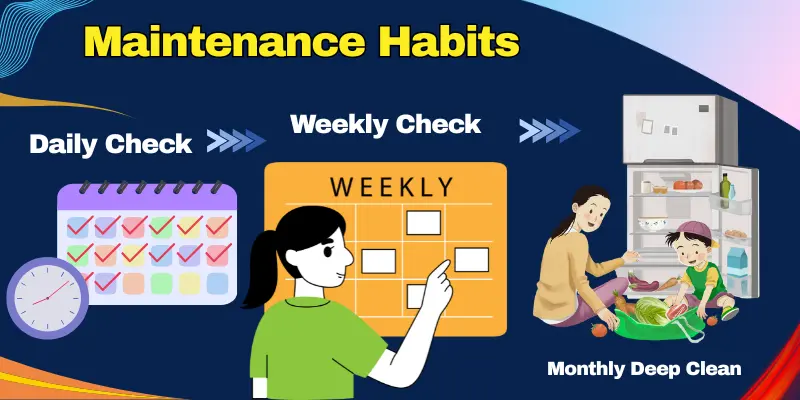
Here are the main maintenance steps we’ll cover:
- Daily Check
- Weekly Check
- Monthly Deep Clean
We will now discuss each habit in detail so you can maintain a perfectly organized fridge.
Daily Check
A few minutes each day keeps things under control.
- Quickly glance at the shelves before closing the fridge.
- Toss any obviously spoiled food or spills.
- Make sure frequently used items are easy to reach.
Weekly Check
A little attention each week prevents surprises.
- Review leftovers and check expiry dates.
- Reorganize items if they have shifted or gotten crowded.
- Wipe down any small spills or sticky spots.
Monthly Deep Clean
A monthly routine keeps your fridge hygienic and fresh.
- Remove all food, shelves, and drawers for thorough cleaning.
- Check for hidden crumbs, mold, or stuck liquids.
- Reorganize zones and restock items neatly.
Extra Tips and Best Practices
Here are some simple tips to make your fridge even more organized and efficient.
- Keep a small trash or compost container nearby – Makes it easy to toss wrappers or spoiled food while cleaning or storing items.
- Use fridge-safe bags for leafy greens – Keeps them crisp longer and prevents moisture buildup.
- Store cheese in paper, not plastic – Helps it breathe and stay fresh longer.
- Keep frequently used condiments at eye level – Saves time when cooking or making snacks.
- Avoid storing hot food immediately – Let cooked food cool down before placing it in the fridge to maintain temperature.
- Check the fridge temperature regularly – Ideal is around 37–40°F (3–4°C) for most items.
- Keep raw and cooked foods separate – Prevents contamination and keeps everything safe.
- Use small bins for tiny items – Helps avoid clutter and stops things from getting lost.
- Rotate snacks for kids – Put new items behind old ones so older snacks are eaten first.
- Wipe spills immediately – Prevents stains and keeps the fridge smelling fresh.
- Don’t overpack the freezer section – Ice and frozen items need space for air to circulate properly.
- Keep an inventory list on the fridge door – A glance helps you know what’s inside without constantly opening the fridge.
Common Problems and Fixes
Organizing a fridge can sometimes be tricky. Here are the common issues people face and simple ways to fix them.
- Overcrowded shelves
- Problem: Too many items block airflow and make it hard to find things.
- Fix: Remove excess items and leave space between containers.
- Problem: Too many items block airflow and make it hard to find things.
- Food goes bad quickly
- Problem: Some items spoil faster than expected.
- Fix: Store perishable items in the coldest zone and use airtight containers.
- Problem: Some items spoil faster than expected.
- Leftovers get forgotten
- Problem: Food is hidden at the back and expires unnoticed.
- Fix: Keep a “Use First” zone for soon-to-expire items.
- Problem: Food is hidden at the back and expires unnoticed.
- Spills and leaks
- Problem: Juices or sauces spill and make a mess.
- Fix: Store liquids in closed containers and clean spills immediately.
- Problem: Juices or sauces spill and make a mess.
- Condiments and sauces clutter the door
- Problem: Door shelves get crowded and disorganized.
- Fix: Keep only frequently used items in the door and group them by type.
- Problem: Door shelves get crowded and disorganized.
- Fruits and vegetables spoil too soon
- Problem: Mixing produce in the wrong drawers causes faster spoilage.
- Fix: Separate fruits and vegetables and use humidity-controlled drawers if available.
- Problem: Mixing produce in the wrong drawers causes faster spoilage.
- Hard-to-reach items
- Problem: Items get pushed to the back and forgotten.
- Fix: Use clear bins or rotate older items to the front regularly.
- Problem: Items get pushed to the back and forgotten.
- The fridge smells bad
- Problem: Strong odors from open containers or spoiled food.
- Fix: Store strong-smelling items in sealed containers and clean the fridge regularly.
- Problem: Strong odors from open containers or spoiled food.
- Kids or family disrupt the system
- Problem: Items get moved or mixed up by others in the household.
- Fix: Use labels, bins, and a clear system so everyone knows where things belong.
- Problem: Items get moved or mixed up by others in the household.
- Too many small items are scattered
- Problem: Tiny packages or snacks get lost or clutter shelves.
- Fix: Group small items in bins or baskets to keep them organized.
- Problem: Tiny packages or snacks get lost or clutter shelves.
Conclusion
By following this guide on how to organize a refrigerator, you now know exactly where each food item should go, how to group similar foods, and how to keep everything neat and easy to find. You’ve learned practical steps to reduce spills, prevent food spoilage, and save time every day.
With daily, weekly, and monthly habits, plus extra tips and solutions to common problems, your fridge can stay fresh, clean, and well-organized all year round.
Now it’s time to put what you’ve learned into practice. Start by arranging your fridge today, try out the “Use First” zone, and experiment with clear containers and bins to see what works best for your family. Once you feel confident, explore more advanced tips like humidity control for fruits and vegetables or organizing your freezer.
A well-organized fridge makes cooking easier, meals healthier, and your kitchen a more enjoyable place.
If you’ve read everything so far and still have a few questions about organizing your fridge, don’t worry. We’ve prepared a simple question-and-answer section to clear up any confusion and give you extra tips. Let’s take a look!
Common Questions and Answers About Organizing a Refrigerator
Keeping your fridge organized can sometimes raise extra questions. Many people want to know the best way to store certain foods, manage small fridges, or make things easy for the whole family. Below, we’ve collected some of the most common questions that people ask when organizing a refrigerator.
Here’s a quick list of the questions we’ll cover:
- What is the warmest part of a fridge?
- What is the quarter trick in the freezer?
- Which food should not be frozen?
- Which vegetable cannot be frozen?
- How do you organize a small fridge efficiently?
- What is the best way to organize a fridge with kids?
- How do you organize a fridge for easy access during cooking?
Now we will discuss the answers to all the questions one by one. Are you ready?
The warmest part of a fridge is usually the top shelf or the door compartments. These areas are farthest from the cold air vents, so they are slightly warmer than the bottom shelves. They are good for storing ready-to-eat foods like leftovers, drinks, or condiments that do not need the coldest temperature. Avoid putting highly perishable items like raw meat or milk here, as they need colder areas to stay fresh longer. Knowing this helps you place foods in the right spot to prevent spoilage.
The quarter trick is a simple way to check if your freezer is keeping a consistent temperature. You place a quarter on top of a small piece of ice in the freezer and leave it overnight. If the quarter is still on top of the ice in the morning, the freezer is cold enough to keep items frozen properly. If the ice has melted and the quarter has fallen, the freezer may be too warm, and you should adjust the temperature. This trick is a quick and easy way to make sure your freezer is working efficiently.
Some foods do not freeze well because freezing changes their texture, taste, or quality. Examples include lettuce, cucumbers, radishes, soft cheeses, and cooked pasta. Foods with high water content, like watermelon or oranges, also become mushy after thawing. Avoid freezing these items to keep your fridge and freezer organized and reduce waste. Instead, eat them fresh or store them in the fridge in airtight containers.
Vegetables with high water content or delicate leaves usually do not freeze well. Examples are lettuce, celery, cucumbers, and radishes. Freezing these vegetables makes them soft, watery, and unappetizing after thawing. For these items, it’s better to store them in crisper drawers with proper humidity settings. You can also use airtight containers or fridge-safe bags to keep them fresh longer.
In a small fridge, every inch of space counts. Use clear containers and bins to group similar items and keep shelves tidy. Place frequently used items at eye level and less-used items at the back or in drawers. Avoid overfilling the fridge, as crowded shelves block airflow and make it hard to find things. Rotating items regularly and labeling containers also helps you manage space efficiently.
When organizing a fridge for kids, keep things simple and accessible. Place snacks, drinks, and easy-to-grab items at their level so they can reach them safely. Use clear bins for fruits, yogurt, and other small items to prevent clutter. Make a “Use First” zone for items that may spoil soon, so kids know what to eat first. This system encourages independence while keeping your fridge neat and organized.
To make cooking easier, keep frequently used ingredients at eye level or in the front. Group items by type, such as dairy, condiments, or prepped vegetables, so you can grab what you need quickly. Use clear containers to see everything at a glance, and keep heavier items on the bottom to avoid accidents. Having a dedicated zone for leftovers also saves time. Planning your fridge layout with cooking in mind reduces hassle in the kitchen.
Now it’s time to say goodbye, friends!
We hope this guide has made organizing your fridge easier and more practical.
If you liked our article, you can also read our other articles about deep freezers, air conditioners, and refrigerators. If you have any questions in your mind, you can discuss them with us in the comments section.