How to Use a Deep Freezer for Safe and Easy Food Storage
Published: 16 Dec 2025
Are you tired of opening your deep freezer only to find food partially thawed or buried under a mess of frozen items? Many people struggle with keeping their freezers organized and efficient. Don’t worry, this guide will show you exactly how to use a deep freezer in a simple, step-by-step way. By the end, you’ll feel confident storing your food properly, saving space, and keeping everything fresh for longer.
So, are you ready? Let’s move on to our article in detail without wasting any time.
What You Need Before You Start
Before you start using your deep freezer, it’s important to have a few things ready. These will make the process easier, safer, and more efficient. Getting organized first saves time.
- Deep Freezer Manual – Knowing how your specific freezer works helps you set it up correctly and avoid mistakes.
- Thermometer – To check the temperature inside the freezer and make sure it stays at the ideal level.
- Storage Containers or Baskets – Keep food organized and make it easy to access items quickly.
- Labels and Marker – Helps you mark dates and contents so nothing gets forgotten or goes bad.
- Clean Cloth or Sponge – Useful for wiping spills or moisture to keep the freezer hygienic.
- Basic Knowledge of Food Safety – Understanding which foods need freezing and how to store them properly prevents spoilage and maintains quality.
This preparation ensures you start right and make the most of your deep freezer.
Step-by-Step Guide to Using a Deep Freezer
Using a deep freezer the right way can save you money and keep your food fresh for a long time. By following simple steps, you can store food safely and keep the freezer working efficiently. Here’s a quick list of the steps we will cover:
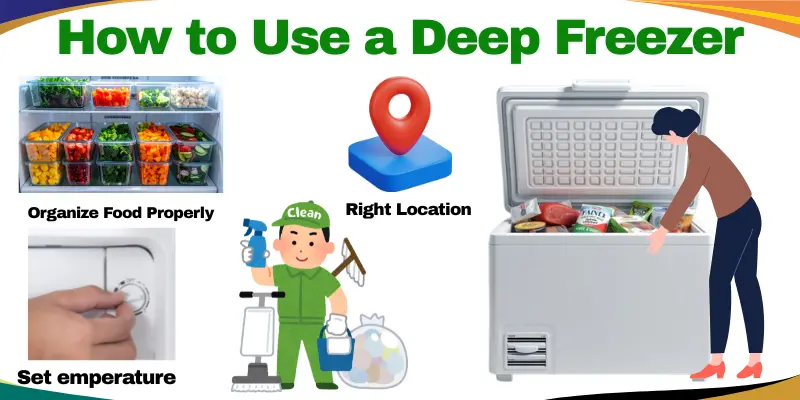
- Choose the right location for your freezer
- Clean the freezer before use
- Set the correct temperature
- Organize food properly
- Load food carefully
- Label and date everything
- Check and maintain regularly
Now, let’s discuss each step in detail.
Step 1: Choose the Right Location
Pick a spot that is cool and well-ventilated for your deep freezer. Avoid placing it near ovens, heaters, or direct sunlight because heat forces the freezer to work harder and may raise energy costs. Make sure there is enough space around the unit so air can circulate freely. For example, leave at least 5–10 cm of space at the back and sides. A good location helps the freezer keep food evenly frozen and runs efficiently.
Step 2: Clean the Freezer Before Use
Before adding any food, wipe the inside of the freezer with a clean, dry cloth. Remove dust, dirt, or leftover moisture from previous use. This prevents unwanted odors and keeps the food safe from contamination. For example, if you see ice or frost buildup, scrape it gently before storing food. Starting with a clean freezer makes storing food easier and safer.
Step 3: Set the Correct Temperature
Turn on the freezer and set it to the recommended temperature, usually around -18°C (0°F). This keeps your food properly frozen and preserves its taste and texture. You can use a thermometer to check if the temperature is accurate. For example, ice cream stays smooth, and meat stays fresh at this temperature. The correct temperature prevents food from thawing or getting freezer burn.
Step 4: Organize Food Properly
Sort food by type and use containers or baskets to separate items. Keep meat, vegetables, and ready-to-eat meals in different sections. Place items you use frequently at the top so you can grab them without digging through other food. For example, store weekly essentials like frozen fruits in a basket near the front. Organized storage helps you save time and reduces the chance of forgetting items.
Step 5: Load Food Carefully
Do not overfill the freezer because crowded items block airflow, causing uneven freezing. Leave some space between packages for cold air to circulate. Never put hot or warm food directly inside; wait for it to cool down to room temperature first. For example, let leftover soup cool before freezing it in containers. Careful loading keeps all your food frozen evenly and prevents spoilage.
Step 6: Label and Date Everything
Use labels and a marker to write the name of the food and the date it was frozen. This helps you know what is inside without opening every container. It also makes it easy to use older items first, reducing waste. For example, label chicken as “Chicken – Jan 10” to track how long it has been stored. Proper labeling saves time and keeps your freezer organized.
Step 7: Check and Maintain Regularly
Check your freezer regularly to make sure the temperature is steady, and everything is frozen properly. Open the door only when needed and close it quickly to maintain the cold. Defrost when ice builds up, and clean spills immediately to avoid odor or contamination. For example, clear out ice every few months to keep the freezer running efficiently. Regular maintenance prolongs the life of your freezer and keeps food fresh longer.
Following these steps will make using your deep freezer simple, safe, and effective. You’ll always have fresh food ready for your meals or business needs.
Extra Tips and Best Practices
Here are some simple tips and best practices to get the most out of your deep freezer. Follow these to save energy, keep food fresh, and make your freezer last longer.
- Keep it closed. Open the freezer only when needed to keep the cold air inside.
- Avoid overloading. Do not stuff too many items; leave space for air to circulate.
- Cool food first. Let hot or warm food reach room temperature before freezing.
- Use airtight containers. This prevents freezer burn and keeps food fresh.
- Label and date. Write the name and date on every package for easy rotation.
- Clean spills immediately. Prevent stains, odors, and frost buildup.
- Defrost regularly. Remove ice when it builds up to maintain efficiency.
- Check temperature. Make sure it stays around -18°C 0°F for best results.
- Organize food by type. Keep similar items together for easy access.
- Place in a cool area. Avoid sunlight or heat sources to reduce energy use.
These tips are simple to follow but make a big difference in keeping your freezer working well and your food safe.
Common Problems and Fixes
Here are some common problems people face with a deep freezer and simple ways to fix them. These tips will help you keep your freezer running smoothly.
- Freezer not cold enough. The temperature may be set too high. Check the settings and adjust to around -18°C 0°F.
- Ice buildup. Frost or ice can block airflow and reduce efficiency. Defrost the freezer regularly and wipe out excess moisture.
- Food is freezing unevenly. Items may be packed too tightly or placed incorrectly. Leave space between food and organize it so cold air can circulate.
- Strange odors. Old or uncovered food can cause smells. Clean the freezer regularly and use airtight containers.
- High electricity bills. The freezer may be working too hard. Keep it away from heat sources and avoid leaving the door open for long periods.
- The freezer is making a noise. Sometimes compressors or fans make sounds. Ensure the freezer is level and not touching walls or objects, and check for loose parts.
- The door won’t close properly. Items or ice may be blocking it. Remove obstacles and make sure seals are clean and intact.
These fixes are easy to follow and can prevent small problems from turning into bigger issues.
Final Note
By following this guide on How to Use a Deep Freezer, you now know how to organize, store, and maintain your freezer properly. You’ve learned the right temperature settings, how to arrange food, label it, and keep your freezer clean and efficient. These simple steps will help your food stay fresh longer, save energy, and make your kitchen work easier.
Now, it’s time to put these tips into practice. Try organizing your freezer, check your temperature regularly, and explore more ways to store different types of food. With regular care and attention, you’ll feel confident using your deep freezer every day and enjoy fresh, safe food without stress. Keep learning and improving your freezer habits, and you’ll see great results in no time.
FAQs About Using a Deep Freezer
In this section, we have answered some common questions people often ask but feel unsure about. Think of this as a bonus part where we clear small doubts in a simple and friendly way.
Common Questions We Will Cover
- How do I choose the best deep freezer size for my needs?
- Does overloading slow down freezing speed?
- Should I pre-freeze food before long-term storage?
- How long does it take for food to freeze properly in a deep freezer?
- What should I do before freezing cooked food in a deep freezer?
- Can I refreeze food that has partially thawed in a deep freezer?
Now, let’s go through each question one by one.
Start by thinking about how much food you store each week or month. A small family may need a smaller freezer, while bulk buyers need more space. Measure the place where you plan to keep the freezer before buying. Also, think about future needs, like seasonal storage. Choosing the right size helps avoid crowding and saves electricity.
Yes, overloading can slow down freezing. When food is packed too tightly, cold air cannot move properly. This causes uneven freezing and longer freezing time. Leave some space between items so air can circulate. A well-arranged freezer works faster and keeps food safer.
Pre-freezing is a good idea for many foods. It helps keep the shape and quality of items like berries or cooked meals. Spread food on a tray and freeze it first, then pack it in containers. This stops food from sticking together. It also makes portioning easier later.
Most foods freeze within 4 to 6 hours, but large items take longer. Thick meat or big containers may need up to 24 hours. The freezing time also depends on temperature and food size. Keeping the freezer at the right setting helps speed up the process. Avoid opening the door during this time.
Let cooked food cool down to room temperature first. Hot food raises the freezer temperature and affects other items. Divide food into small portions for faster freezing. Use airtight containers to lock in freshness. Label each container with the date before storing.
You can refreeze food if it still feels cold and shows no spoilage. However, quality may drop, especially for meat or seafood. Do not refreeze food that smells bad or feels soft for a long time. Cooking thawed food before refreezing is safer. Always check the food condition before deciding.