Parts of a Refrigerator Explained: Easy Step-by-Step Guide
Published: 1 Jan 2026
A refrigerator is one of the most important appliances in our home. We use it every day. It keeps food fresh. It keeps water cold. It helps us save food and money. Life feels hard without a fridge, right?
Knowing the parts of a refrigerator is very useful. It helps you understand how your fridge works. It helps you find small problems early. It also helps when you talk to a technician. You feel more confident and informed.
This guide is different and easier than others. I use simple words only. I explain each part step by step. I also give real-life examples. You do not need technical knowledge to understand this guide.
So, let me ask you a simple question. Do you know which part actually makes your refrigerator cold?
If you are ready to learn everything, let’s discuss it in detail without wasting time.
How a Refrigerator Keeps Things Cold
A refrigerator does not create cold air. It removes heat from inside and releases it outside. When the heat goes out, the inside space becomes cold. This simple process helps keep food fresh and safe every day.
Step-by-Step: How Cooling Happens
- The refrigerator pulls heat from inside
- Heat moves to the outside of the fridge
- Cold air stays inside the closed space
- The cooling process runs all the time
Think about an air conditioner in your room. An AC does not create cold air. It removes heat from the room and throws it outside. A refrigerator works in the same way, but inside a closed box.
You can read this simple guide on how refrigerators work:
Main Parts of the Refrigerator
A refrigerator has many parts that work together to keep your food fresh and drinks cold. These parts can be grouped into five main categories to make them easier to understand. Knowing these groups helps you identify problems, do basic maintenance, and understand how your fridge works.
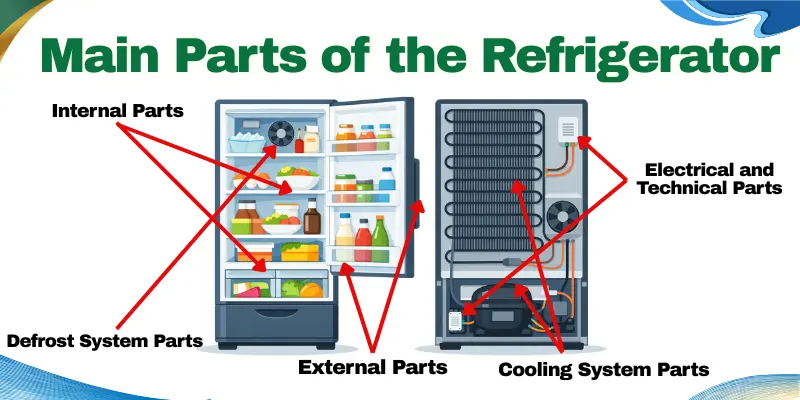
The Five Main Groups
- Internal Parts
- External Parts
- Core Cooling System Parts
- Electrical and Technical Parts
- Defrost System Parts
Now, we will discuss each part individually.
Internal Parts of a Refrigerator
The internal parts of a fridge are the parts you see and use every day. These parts help store food, spread cold air, and keep items fresh for a longer time. Understanding these parts makes daily use easier and helps you avoid common mistakes.
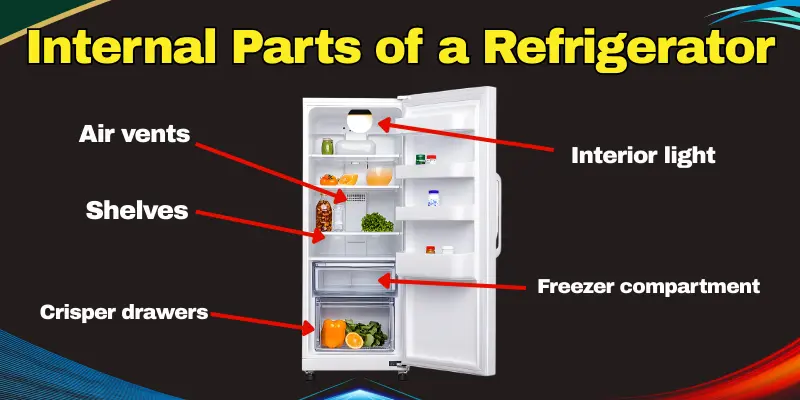
Internal Parts You See and Touch
- Shelves
- Crisper drawers
- Freezer compartment
- Interior light
- Air vents
Now, let’s discuss each of these parts in detail, one by one.
Shelves
Shelves are one of the most used parts inside a refrigerator. They hold food items like bowls, bottles, leftovers, and containers. Strong and well-placed shelves help air move freely, which keeps food cool and fresh for a longer time.
- Shelves support and organize food items
- They help cold air reach all stored food
- Most shelves are made of glass or wire
Tip:
Place heavy items on lower shelves. Leave some space between items so cold air can flow easily. This helps your refrigerator cool food evenly.
Crisper Drawers
Crisper drawers are special compartments inside a refrigerator designed for fruits and vegetables. They keep produce fresh longer by controlling humidity and preventing moisture loss. Using these drawers correctly can reduce food waste and keep your fruits and vegetables crisp.
- Crisper drawers store fruits and vegetables separately from other food
- They help maintain the right humidity for freshness
- Some drawers have adjustable settings for different types of produce
Tip:
Keep fruits and vegetables in separate drawers. Use the high-humidity drawer for leafy greens and the low-humidity drawer for fruits. This helps them stay fresh longer.
Freezer Compartment
The freezer compartment is the part of a fridge that keeps food frozen. It helps store meat, ice, and other items for a long time. The freezer works at a much lower temperature than the fridge section to stop bacterial growth and keep food safe.
- A freezer stores items at very low temperatures
- It helps preserve food for weeks or months
- Freezers can be separate or combined with the fridge section
Tip:
Do not overload the freezer. Leave space between items so cold air can circulate properly. This keeps food frozen evenly and prevents frost buildup.
Interior Light
The interior light is a small but important part of a refrigerator. It turns on when you open the door, helping you see all your food clearly. A working light makes it easier to find items quickly, especially at night or in dim kitchens.
- The interior light turns on automatically when the door opens
- Helps you see food and drinks clearly
- Usually, a small LED or bulb inside the fridge
Tip:
Replace the light bulb if it stops working. A bright interior helps you organize food and prevents items from getting forgotten or spoiled.
Air Vents
Air vents are small openings inside a refrigerator that let cold air flow throughout the compartments. They help keep the temperature even, so all food stays fresh. Blocking these vents can cause some areas to be too warm or too cold.
- Air vents spread cold air inside the fridge
- They help maintain a consistent temperature
- Proper airflow prevents frost buildup and keeps food fresh
Tip:
Do not block the vents with food or containers. Keep space around the vents so cold air can circulate freely. This helps your refrigerator cool efficiently and evenly.
External Parts of a Refrigerator
The external parts of a fridge are the parts you touch and see from the outside. These parts help you open and close the fridge, control temperature, and use additional features like water dispensers or ice makers. Understanding these parts makes daily use easier and prevents common problems.
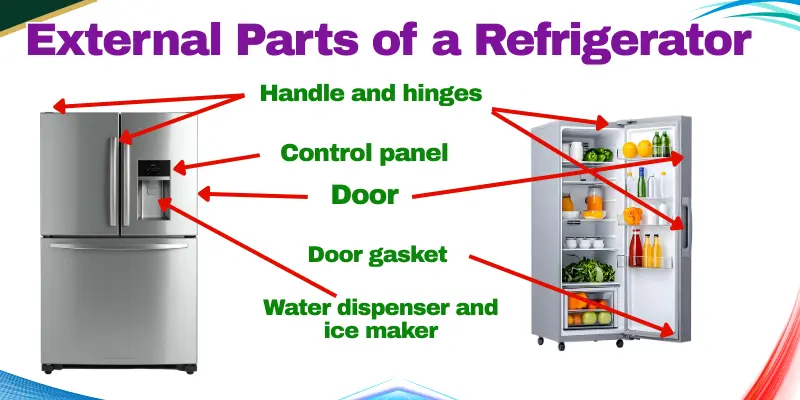
External Parts You See and Touch
- Door
- Door gasket (rubber seal)
- Control panel or knobs
- Handle and hinges
- Water dispenser and ice maker (if available)
Now, let’s discuss each of these external parts in detail, one by one.
Door
The door is a key part of a refrigerator that keeps the cold air trapped inside. It protects your food from warm air and helps the fridge work properly. A door that closes well prevents energy waste and keeps items fresh longer.
- Keeps the cold air from escaping
- Helps maintain the right temperature inside the fridge
- Frequent opening or not closing fully can make the fridge work harder
Tip:
Always make sure the door shuts completely. Avoid forcing it open or keeping items in the way. A well-sealed door keeps food fresh and reduces electricity use.
Door Gasket (Rubber Seal)
The door gasket is a soft rubber strip that lines the edge of the refrigerator door. It creates a tight seal when the door is closed, stopping cold air from leaking out. A good gasket helps the fridge stay efficient and keeps food fresh longer.
- Forms a seal between the door and the fridge body
- Prevents cold air from escaping
- Worn-out gaskets can cause uneven cooling and higher electricity use
Tip:
Check your gasket by closing the door over a piece of paper. If the paper slides out easily, the gasket may need cleaning or replacement. A tight seal keeps your fridge working well and food fresh.
Control Panel or Knobs
The control panel or knobs let you set and manage the temperature and other functions of your refrigerator. Some fridges have simple manual knobs, while others use digital panels with buttons and displays. Proper use of these controls ensures your fridge runs efficiently and keeps food at the right temperature.
- Allows you to adjust the fridge and freezer temperature
- Some models have digital displays for easy monitoring
- Helps manage additional functions like fast cooling or vacation mode
Tip:
Check the temperature settings regularly. Use the recommended settings for fridge (around 37–40°F) and freezer (0°F) to keep food fresh and safe.
Handle and Hinges
The handle and hinges are important parts that help you open and close your refrigerator smoothly. Strong hinges keep the door aligned, while the handle makes it easy to pull the door open. Misaligned hinges or a loose handle can cause the door to close improperly, letting cold air escape.
- Hinges keep the door aligned and stable
- Handles provide a firm grip for opening the fridge
- Worn hinges can lead to uneven closing or noise
Tip:
Check the hinges occasionally and tighten them if needed. Make sure the door swings smoothly.
Water Dispenser and Ice Maker
Some refrigerators come with a water dispenser and ice maker for added convenience. These parts allow you to get cold water or ice without opening the fridge. They need clean water filters to work efficiently and prevent bad taste or clogging.
- Provides cold water or ice quickly
- Requires regular filter replacement for clean water
- Built-in ice makers need proper maintenance to avoid jams
Tip:
Replace the water filter as recommended by the manufacturer. Clean the ice tray or dispenser regularly to ensure fresh, safe water and ice.
Core Cooling System Parts
The core cooling system parts are the heart of a refrigerator. These parts work together to create cold air and keep food fresh. Understanding them helps you know how your fridge cools and what might go wrong if something stops working.
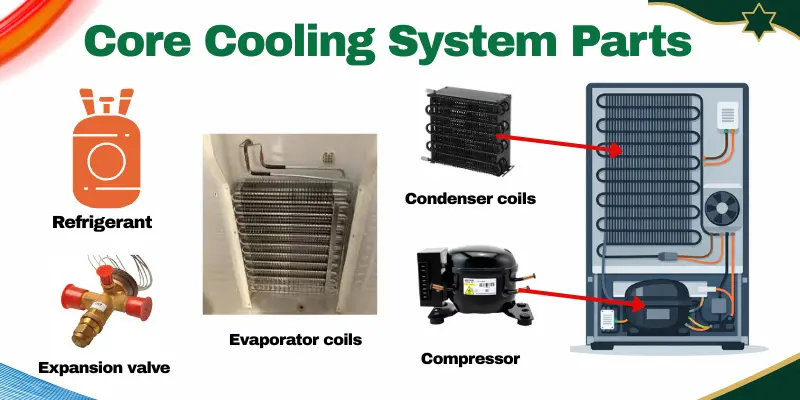
Core Cooling System Parts
- Compressor
- Condenser coils
- Evaporator coils
- Expansion valve or capillary tube
- Refrigerant
Now, let’s discuss each of these core cooling parts in detail.
Compressor
The compressor is often called the heart of a refrigerator because it pumps refrigerant through the cooling system. It compresses the gas and moves it through coils to release heat outside. Without a working compressor, the fridge cannot cool properly.
- Pumps refrigerant through the system
- Compresses gas to help remove heat
- Keeps the cooling cycle running continuously
Tip:
If your fridge is not cooling well or makes loud noises, the compressor could be the problem. Regularly check for unusual sounds and call a technician if needed.
Example:
Think of the compressor like a pump pushing cold gas through the fridge, similar to how water is pumped through pipes in your home.
Condenser Coils
Condenser coils are a key part of a refrigerator that release heat from the refrigerant into the air outside. They are usually located at the back or bottom of the fridge. When these coils work well, the fridge cools efficiently and uses less electricity.
- Release heat from the refrigerant to the surrounding air
- Usually found at the back or underneath the fridge
- Help maintain proper cooling inside the refrigerator
Tip:
Clean refrigerator condenser coils regularly using a brush or vacuum. Dust and dirt can reduce efficiency and increase electricity use.
Evaporator Coils
Evaporator coils are inside the refrigerator and freezer compartments. They absorb heat from the air inside, which makes the interior cold. These coils are also where frost can form if moisture is not managed properly.
- Absorb heat from inside the fridge and freezer
- Help create cold air to keep food fresh
- Frost may form on the coils if the humidity is high
Tip:
Do not block the evaporator coils with food. Regularly defrost your fridge if it is not frost-free to keep it cooling efficiently.
Expansion Valve or Capillary Tube
The expansion valve or capillary tube is a small but important part of a refrigerator. It controls the flow of refrigerant into the evaporator coils. By regulating the amount of refrigerant it helps maintain the right cooling inside the fridge.
- Controls the flow of refrigerant into the evaporator
- Ensures proper cooling throughout the fridge
- Prevents the evaporator from getting too much or too little refrigerant
Tip:
Think of it as a thin pipe that controls speed. If the cooling is uneven or the fridge is not cold enough, this part might need checking by a technician.
Refrigerant
Refrigerant is the special fluid that carries heat out of the refrigerator. It moves through the compressor, coils, and expansion valve to create cold air inside. The refrigerant must stay sealed in the system to work properly and keep the fridge running efficiently.
- Transfers heat from inside the fridge to the outside
- Moves continuously through the cooling system
- Must remain sealed to prevent leaks and maintain cooling
Tip:
Never try to refill or handle refrigerant yourself. If there is a leak, call a certified technician. Proper refrigerant levels are essential for keeping food fresh and the fridge efficient.
Electrical and Technical Parts
The electrical and technical parts of a refrigerator control its functions and make sure it works efficiently. These parts manage temperature, air circulation, and the operation of the compressor.
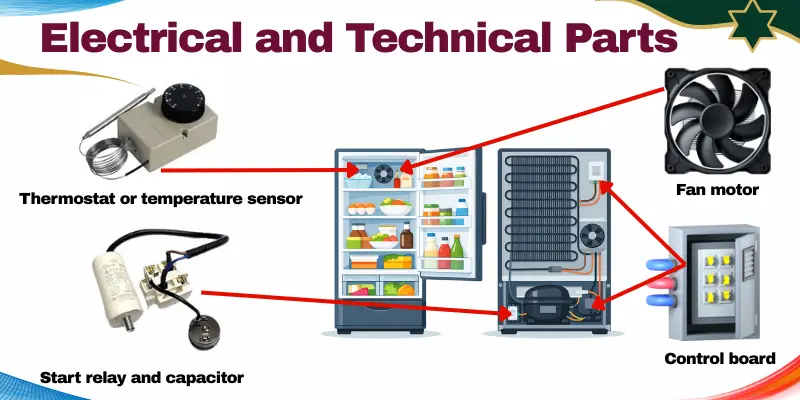
Electrical and Technical Parts
- Thermostat or temperature sensor
- Fan motor
- Control board
- Start relay and capacitor
Now, let’s go through each of these parts in detail.
Thermostat or Temperature Sensor
The thermostat or temperature sensor helps a refrigerator maintain a steady temperature. It detects how warm or cold the inside is and tells the fridge when to turn the compressor on or off. This keeps food at the right temperature and prevents freezing or spoilage.
- Measures the fridge and freezer temperature
- Controls when the compressor starts and stops
- Keeps the internal temperature stable for food safety
Tip:
Check that the thermostat is set to the recommended temperature, around 37–40°F for the fridge and 0°F for the freezer.
Fan Motor
The fan motor helps circulate cold air inside the refrigerator. It moves air from the evaporator coils to all parts of the fridge and freezer, ensuring even cooling. Without a working fan, some areas may be too warm while others are too cold.
- Circulates cold air throughout the fridge and freezer
- Ensures all food stays evenly cooled
- Prevents frost buildup on evaporator coils
Tip:
If you notice uneven cooling or unusual noises, the fan motor might need cleaning or replacement. Keep vents clear so the fan can work efficiently.
Control Board
The control board is like the brain of a refrigerator. It manages all the electrical functions, including the compressor, fans, defrost system, and temperature settings. A working control board ensures the fridge runs smoothly and efficiently.
- Controls the compressor, fans, and other electrical parts
- Manages defrost cycles and temperature settings
- Keeps the refrigerator running properly
Tip:
If your fridge is acting strangely, like not cooling properly or showing error codes, the control board may need inspection by a technician. A healthy control board keeps all systems working together.
Start Relay and Capacitor
The start relay and capacitor help the refrigerator’s compressor start smoothly. Without them, the compressor might struggle to run or fail to start, which stops the fridge from cooling properly. These small parts are essential for the fridge to work efficiently.
- The start relay helps the compressor begin running
- The capacitor provides the extra energy needed to start the compressor
- Problems with these parts can make the fridge noisy or stop cooling
Tip:
If the fridge is not cooling or makes clicking noises, the start relay or capacitor could be faulty. Call a technician to check and replace them if needed.
Defrost System Parts
The defrost system parts of a refrigerator help prevent frost buildup and keep the freezer working efficiently. Many guides skip these parts or confusingly explain them. Understanding them helps maintain proper cooling and avoid common freezer problems.
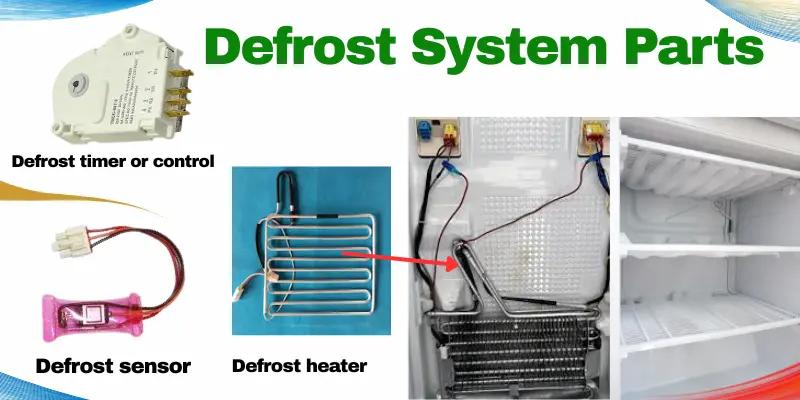
List of Defrost System Parts
- Defrost heater
- Defrost timer or control
- Defrost sensor
Now, let’s discuss each defrost part in detail.
Defrost Heater
The defrost heater is a small but important part inside the refrigerator. Its job is to melt any frost that forms on the evaporator coils. Without it, frost can build up, blocking cold air and making the fridge work harder.
- Melts frost on the evaporator coils
- Prevents ice buildup that can reduce cooling efficiency
- Helps maintain proper airflow inside the freezer
Tip:
If you notice frost building up quickly in your freezer, the defrost heater may need checking or replacement. Regular maintenance keeps your fridge running smoothly.
Defrost Timer or Control
The defrost timer or control manages when the refrigerator starts its defrost cycle. It turns on the defrost heater at regular intervals to melt frost on the evaporator coils. This ensures the freezer stays efficient and prevents frost from blocking airflow.
- Starts the defrost cycle at set times
- Keeps frost from building up too much
- Helps maintain even cooling in the fridge and freezer
Tip:
If frost keeps accumulating or the fridge cools unevenly, the defrost timer or control might need inspection by a technician.
Defrost Sensor
The defrost sensor protects the refrigerator during the defrost cycle. It detects the temperature of the evaporator coils and ensures the defrost heater turns off once frost is melted. This prevents overheating and keeps the system safe.
- Monitors coil temperature during defrost
- Turns off the heater when frost is gone
- Protects the fridge from damage
Tip:
Think of it like a safety switch. If your fridge is overheating during defrost or frost isn’t melting properly, the sensor may be faulty and needs checking.
Tips to Solve Common Refrigerator Problems
Knowing a few simple tips can help you avoid issues and keep your refrigerator running smoothly. Regular checks and small fixes often prevent bigger problems later.
- Fridge Not Cooling – Check the compressor, fan motor, and evaporator coils. Clean coils and make sure vents are not blocked.
- Water Leaking – Inspect the water dispenser, ice maker, and drain pan. Clear any clogs and make sure connections are tight.
- Loud Noise – Look at the compressor, fan motor, and door hinges. Tighten loose parts and clean the fan if needed.
- Frost Buildup – Check the defrost heater, defrost sensor, and defrost timer. Make sure the defrost system is working properly.
FAQs
Many people have simple questions about their refrigerator. Understanding these answers can help you maintain your fridge better, prevent problems, and save money on repairs.
Here are some common questions readers often ask:
- What destroys a fridge compressor?
- How to tell if the fridge compressor is overworked or stressed?
- How often should I clean my refrigerator coils?
- Why is my freezer making ice too slowly?
- What should I do if my fridge door gasket is leaking?
- How can I reduce electricity use for my refrigerator?
Now, we will discuss each question individually.
A fridge compressor can get damaged if it has to work too hard or too long. Blocked condenser coils, dirt buildup, or poor ventilation make the compressor overwork. Frequent power cuts or voltage problems can also harm it. Overloading the fridge with too much food can put extra strain on the compressor. Regular cleaning and proper maintenance help keep it safe and working efficiently.
A stressed compressor often makes unusual loud noises, like humming or clicking. The fridge may run continuously without cooling properly. You might notice warm spots inside the fridge or freezer. Frequent turning on and off is another sign of stress. If these happen, it is a signal to check the coils, vents, and other components for dirt or blockage.
Condenser coils should be cleaned every 6 months to 1 year. Dirty coils make the compressor work harder and use more electricity. You can use a brush or vacuum to remove dust and debris. Cleaning coils keeps the fridge cooling efficiently. It also helps prevent expensive repairs and extends the life of the fridge.
Slow ice production is usually caused by blocked or dirty evaporator coils or a weak compressor. Low water supply or a clogged ice maker filter can also slow down ice making. Make sure the freezer is at the correct temperature, around 0°F. Regular cleaning and proper maintenance improve ice production. Checking the water supply line can fix the problem if it is blocked or frozen.
A leaking door gasket lets cold air escape, making the fridge work harder. First, clean the gasket with warm water and mild soap to remove dirt. If it is cracked or worn out, replace it with a new gasket. Make sure the door closes fully without any obstruction. A good seal helps keep food fresh and saves electricity.
Keep the fridge away from heat sources like ovens or direct sunlight. Make sure the door gasket is tight, and the door is closed properly. Avoid overloading the fridge, but leave space for air to circulate. Clean condenser coils regularly to improve efficiency. Set the temperature correctly: around 37–40°F for the fridge and 0°F for the freezer.
Final Note
Now the time to say goodbye is almost here, friends.
So, guys, in this article, we’ve covered Parts of a refrigerator in detail. Understanding these parts helps you use your fridge better and spot small problems early. My personal recommendation is to regularly clean the coils, check door gaskets, and keep vents clear to make your refrigerator run efficiently and last longer. If this guide helped you, leave a comment below with your questions or experiences, and don’t forget to explore our other guides to learn more about refrigerators, deep freezers, and air conditioners.