Pros and Cons of Mini-Split Air Conditioners – Full Overview
Published: 10 Nov 2025
It was another warm afternoon, and Sara wanted to cool her small study room without installing big ducts or making big changes to her home. After checking different options, she found a mini-split air conditioner that looked perfect for her space.
A mini-split air conditioner is a type of AC that cools rooms without using ducts. It has an indoor unit and an outdoor unit, making it easy to install in small or separate spaces.
Tip: A mini-split is actually a type of split air conditioner, but it doesn’t use ducts like regular split ACs. It’s smaller, more flexible, and ideal for single rooms or areas without ductwork.
Knowing the pros and cons of mini-split air conditioners is important because it helps you decide if this system fits your home, budget, and needs. In this article, you will learn the main advantages, disadvantages, and useful tips to make the right choice for your space.
Let’s discuss everything in detail without wasting time. Are you ready?
Advantages of Mini-Split Air Conditioners
Mini-split air conditioners are becoming a popular choice for homes and offices. They are known for their efficiency and convenience.
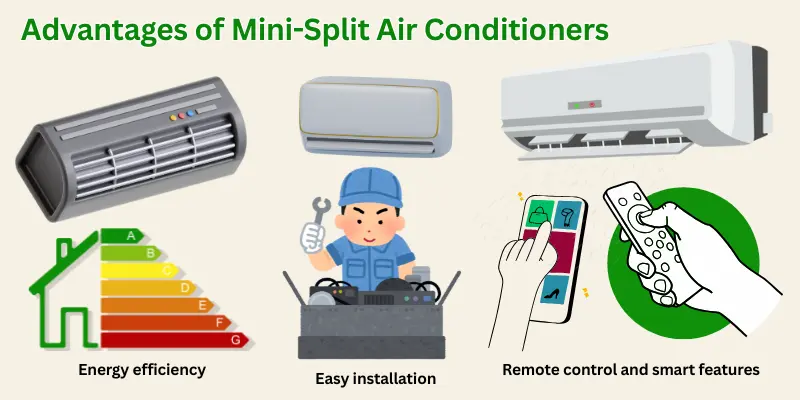
Here are the main pros of mini-split air conditioners:
- Energy efficiency
- Easy installation
- Zoning ability (cool only the rooms you need)
- Quiet operation
- Compact and stylish design
- Better air quality
- Remote control and smart features
- Flexible temperature control
- No ductwork required
- Long-term cost savings
Now we discuss all the benefits in detail, one by one.
| Pros |
|---|
1. Energy efficiencyMini-split ACs use less electricity than central ACs or window units. They cool only the rooms you use, saving energy. This means lower electricity bills. Many units have Energy Star ratings for extra savings. You can enjoy cool rooms without wasting power. 2. Easy installationMini-splits don’t need ducts, so installation is simpler and faster. The indoor and outdoor units are connected by a small pipe. You don’t need major renovations. This makes them ideal for apartments or older homes. Professionals can usually install them in a few hours. 3. Zoning ability (cool only the rooms you need)You can control each unit separately in different rooms. This means one room can be cool while others stay warmer. It’s great for families with different preferences. You don’t waste energy cooling empty rooms. It also adds comfort to every space. 4. Quiet operationMini-split units are much quieter than window ACs or central systems. You can sleep, work, or watch TV without noise disturbance. Only a soft sound comes from the indoor unit. This makes them perfect for bedrooms or offices. Quiet cooling improves comfort. 5. Compact and stylish designIndoor units are small and sleek. They don’t take up much space on walls. They look modern and fit any room style. Unlike window ACs, they don’t block windows. This makes your room look neat. 6. Better air qualityMany mini-splits have filters that remove dust and allergens. Some units even reduce bacteria or odors. This improves indoor air quality. Cleaner air is healthier for kids, pets, and adults. You breathe easier while staying cool. 7. Remote control and smart featuresMost units come with remote controls or apps. You can adjust temperature, fan speed, or mode from anywhere. Some models work with smart home systems. This makes cooling convenient and flexible. You don’t have to get up to change settings. 8. Flexible temperature controlMini-splits allow precise temperature settings. You can set the exact level you want in each room. Some units even have timers or eco modes. This avoids overcooling or wasting energy. Everyone in the house can stay comfortable. 9. No ductwork requiredUnlike central ACs, mini-splits work without ducts. Ducts can be expensive and take up space. No ducts mean easier installation and lower costs. There is also less chance of dust or energy loss. Your cooling system becomes simpler and more efficient. 10. Long-term cost savingsThough mini-splits can cost more initially, they save money over time. Energy-efficient cooling lowers electricity bills. Less maintenance and no duct repairs reduce extra costs. You get comfort without high long-term expenses. It’s a smart investment for your home. |
Disadvantages of Mini-Split Air Conditioners
Mini-split air conditioners have many advantages, but they also have some drawbacks. Knowing the cons of mini-split air conditioners helps you make a smart decision before buying.
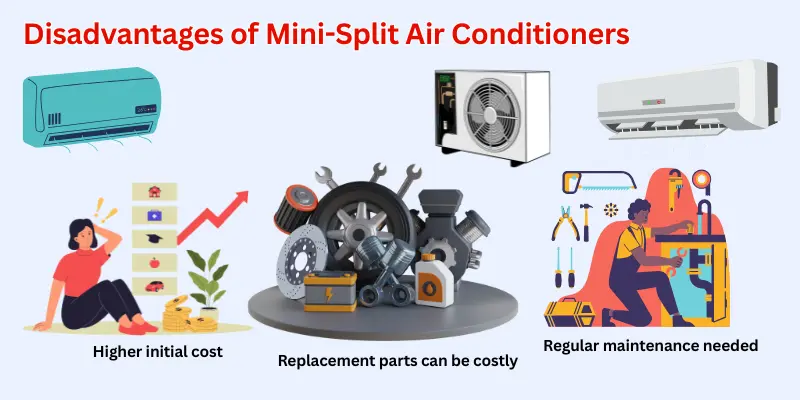
Here are the main limitations:
- Higher initial cost
- Regular maintenance needed
- Limited cooling for very large spaces
- Visible indoor units on walls
- Potential refrigerant leaks
- Dependence on electricity (no cooling during power outages)
- Occasional noise from the outdoor unit
- Complexity in multi-zone setups
- Replacement parts can be costly
Now we discuss all the limitations in detail, one by one.
| Cons |
|---|
1. Higher initial costMini-split ACs usually cost more than window or portable units. The price of the unit and installation adds up. This can be a concern for people on a tight budget. However, the higher cost can be offset by long-term energy savings. It’s important to plan your budget before buying. 2. Regular maintenance neededFilters need to be cleaned or replaced regularly. Outdoor units should be checked for dirt or debris. Lack of maintenance can reduce efficiency and lifespan. Some parts may need occasional professional service. Staying on top of maintenance keeps the AC working well. 3. Limited cooling for very large spacesMini-splits are designed for single rooms or small areas. They may struggle to cool large homes or open spaces efficiently. Multiple units may be needed for bigger areas, which increases the cost. It’s important to match the unit size with the room size. Using the wrong size can lead to uneven cooling. 4. Visible indoor units on wallsIndoor units are mounted on walls and are visible. Some people may not like the look of these units. They can affect room aesthetics. Unlike central ACs, they are not hidden in ceilings or ducts. Choosing a sleek design can help it blend with the room. 5. Potential refrigerant leaksMini-splits use refrigerant to cool the air. Leaks can reduce cooling efficiency and harm the environment. Fixing leaks requires professional service. Regular checks help prevent major problems. Proper installation reduces the risk of leaks. 6. Dependence on electricityMini-splits need electricity to run. During power outages, they won’t provide cooling. This can be inconvenient in very hot weather. Some people pair them with backup power solutions. Being aware of this limitation helps with planning. 7. Occasional noise from the outdoor unitThe outdoor unit makes some noise when running. It’s louder than the indoor unit but usually less than window ACs. Noise can be noticeable if the unit is near windows or bedrooms. Choosing a quieter model can help. Placement also reduces disturbance. 8. Complexity in multi-zone setupsIf you want to cool many rooms, multiple mini-split units may be needed. This can complicate installation and control. Managing several units may feel tricky at first. Smart controllers can help simplify operation. Planning makes multi-zone cooling easier. 9. Replacement parts can be costlySome parts, like compressors or controllers, can be expensive to replace. Repairs may require professional service. This adds to long-term costs. Regular maintenance can reduce the chance of part failure. It’s important to consider this before buying. |
If you want to learn more about split air conditioners, read our detailed guide on the Pros and Cons of Split Air Conditioner.
Fun Facts
Did you know mini-split air conditioners have some surprising benefits and drawbacks? Here are 15 fun and easy facts about the advantages and disadvantages of mini-split AC that you might not know!
- Mini-splits don’t need ducts, which saves space and installation costs.
- They can cool or heat a single room efficiently.
- Many mini-splits are Energy Star rated for low electricity use.
- Indoor units are very quiet compared to window ACs.
- Some mini-splits have smart controls or apps for easy temperature management.
- You can control different rooms separately with multiple units.
- They improve indoor air quality with built-in filters.
- Mini-splits are ideal for apartments or homes without ductwork.
- Initial costs are higher than those of window or portable ACs.
- Professional installation is recommended to prevent leaks or damage.
- They may struggle to cool very large open spaces efficiently.
- Wall-mounted indoor units are visible and may affect room aesthetics.
- Outdoor units make some noise, though usually less than window ACs.
- Maintenance, like cleaning filters, is required regularly.
- Replacement parts, like compressors, can be expensive if damaged.
Conclusion
So guys, in this article, we covered the main advantages, disadvantages, and useful tips about Pros and Cons of Mini-Split Air Conditioners. We talked about energy efficiency, easy installation, zoning, quiet operation, and also the drawbacks like higher costs, regular maintenance, and limits for large spaces. Knowing both the pros and cons can help you make a smart choice for your home.
As an expert, I recommend thinking carefully about your room size, budget, and comfort needs before picking a unit. If you have any questions or experiences with AC, please comment below. I would love to hear from you. Also, check out our other articles to learn more about cooling solutions and home appliances.
FAQ
If you still have any doubts in your mind, don’t worry. As a bonus, we have listed some common questions related to the benefits and drawbacks of mini-split AC that people often ask.
Here is the list of questions:
- How long does a mini-split air conditioner usually last?
- Can mini-split ACs also work as heaters?
- Are mini-splits safe for homes with pets or children?
- How often should the refrigerant be checked or refilled?
- Can one mini-split unit cool multiple small rooms effectively?
- Are mini-split air conditioners better than portable ACs for energy savings?
Now we will discuss each question with its answers.
A mini-split air conditioner can last about 10 to 20 years with proper care. Regular maintenance, like cleaning filters and checking the outdoor unit, helps it last longer. The lifespan also depends on how often it is used. High-quality brands usually last longer than cheaper models. Taking care of your AC can save money in the long run.
Yes, many mini-split ACs can also work as heaters. These are called heat pump mini-splits. They can warm your room in winter and cool it in summer. This makes them very useful for homes in places with cold winters. You get both cooling and heating in one system.
Yes, mini-splits are safe for homes with pets and children. The indoor units are mounted on the wall, out of reach from kids and pets. There are no sharp edges or open vents. Some units also have air filters that keep the air cleaner. Always supervise pets around the outdoor unit to avoid damage.
Refrigerant in a mini-split usually does not need frequent refilling. You should have it checked by a professional every few years or if the cooling is weak. Leaks are rare but need to be fixed quickly. Proper installation reduces the chances of refrigerant problems. Checking it occasionally ensures the AC works efficiently.
Generally, one mini-split unit is best for one room or a small area. Cooling multiple rooms with one unit can be less effective. You might need more than one unit for bigger spaces. Some advanced models have multi-zone systems for multiple rooms. Always match the AC capacity with the room size for best results.
Yes, mini-splits usually save more energy than portable ACs. They cool only the room you use, so less electricity is wasted. Portable ACs often need more power to cool the same space. Mini-splits also have energy-saving modes and better efficiency ratings. This makes them cheaper to run in the long term.
So friends, if you want to learn more about the different types of air conditioners, our full guide is ready for you. If you have any questions or ideas, feel free to share them in the comments below!