Pros and Cons of Split Air Conditioner Explained Clearly
Published: 10 Nov 2025
It was a hot summer day, and Younis’s living room felt uncomfortable for his family. He wanted a cool room without making big changes to his home. After some research, he decided to consider a split air conditioner.
A split air conditioner has two parts: an indoor unit that cools the room and an outdoor unit that stays outside. It does not need ducts, so installation is easier than central ACs.
Note: A split air conditioner is not the same as a mini-split system. A mini-split is a smaller, ductless version used for single rooms, while a regular split AC is meant for larger areas or whole rooms.
Knowing the pros and cons of split air conditioner is important. This helps you understand its benefits, like energy savings and quiet operation, and its limitations, like higher cost or maintenance needs.
In this article, you will learn the main advantages, disadvantages, and useful tips to choose the right split AC for your home and comfort.
Are you ready? Let’s learn everything in detail.
Advantages of a Split Air Conditioner
Split air conditioners are a popular choice for homes and offices because they offer comfort and efficiency. They cool rooms quickly, use less energy than some other AC types, and often run quietly. Many units also provide features that make controlling temperature easy and convenient. Overall, they combine style, performance, and flexibility.
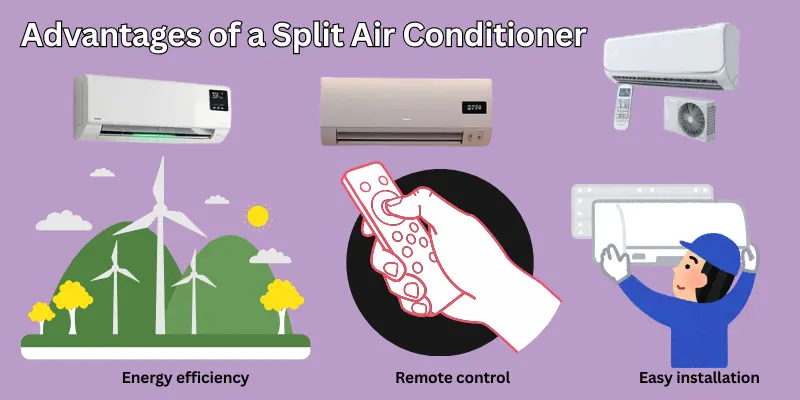
Main Advantages:
- Energy efficiency – Saves electricity by cooling only the rooms you use.
- Quiet operation – Indoor units are much quieter than window or central ACs.
- Easy installation – No need for ducts; indoor and outdoor units are connected by a small pipe.
- Zoning ability – Control different rooms separately with multiple units.
- Compact and stylish design – Indoor units are sleek and don’t take up much space.
- Better air quality – Built-in filters remove dust and allergens.
- Remote control and smart features – Adjust temperature and modes easily.
- Flexible temperature control – Precise cooling for comfort in each room.
- No ductwork required – Reduces installation hassle and maintenance costs.
- Long-term savings – Energy-efficient cooling lowers electricity bills over time.
Now we discuss all the benefits in the list one by one in detail.
| Pros |
|---|
1. Energy EfficiencySplit air conditioners use less electricity than window or central ACs. They cool only the rooms you need. This helps save money on electricity bills. Many units have Energy Star ratings for extra savings.
2. Quiet OperationIndoor units of split ACs run quietly. You can sleep, work, or watch TV without disturbance. The outdoor unit makes some noise, but it is usually far from your living space. This makes split ACs perfect for bedrooms and offices.
3. Easy InstallationSplit ACs don’t need ducts, making installation simple. Indoor and outdoor units are connected by a small pipe. There is no major renovation required. Professionals can usually set it up in a few hours.
4. Zoning AbilityYou can control each AC unit separately in different rooms. This means one room can be cooler while others stay warmer. It saves energy and adds comfort for every family member. You don’t waste cooling empty rooms.
5. Compact and Stylish DesignIndoor units are sleek and modern. They take up little wall space and fit any room style. Unlike window ACs, they don’t block windows or light. This makes your room look neat and organized.
6. Better Air QualitySplit ACs have filters that remove dust and allergens. Some models reduce bacteria and odors, too. This keeps your indoor air cleaner and healthier. It is especially helpful for kids, pets, and people with allergies.
7. Remote Control and Smart FeaturesMost split ACs come with a remote or app control. You can adjust temperature, fan speed, or mode from anywhere. Some models work with smart home systems. This makes cooling convenient and easy.
8. Flexible Temperature ControlSplit ACs allow precise temperature settings. You can set the exact level you want in each room. Some units even have timers or eco modes. This avoids overcooling and energy waste.
9. No Ductwork RequiredUnlike central ACs, split ACs work without ducts. Ducts can be expensive and take up space. No ducts mean easier installation and lower costs. It also reduces dust buildup and energy loss.
10. Long-Term SavingsAlthough split ACs may cost more initially, they save money over time. Energy-efficient operation lowers electricity bills. Less maintenance and no duct repairs reduce extra costs. It is a smart investment for your home.
|
Disadvantages of a Split Air Conditioner
Split air conditioners are efficient and convenient, but they also have some drawbacks. The initial cost can be high compared to window or portable ACs. Professional installation is usually required, and regular maintenance is needed to keep the system running well. Some models may not cool very large spaces effectively, and the indoor units are visible on the walls.
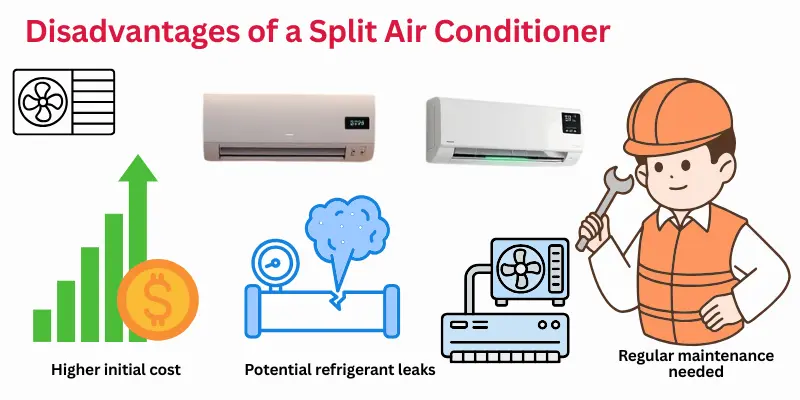
Main Disadvantages:
- Higher initial cost
- Regular maintenance needed
- Limited cooling for very large spaces
- Visible indoor units on walls
- Potential refrigerant leaks
- Dependence on electricity (no cooling during power outages)
- Occasional noise from the outdoor unit
- Complexity in multi-zone setups
- Replacement parts can be costly
We now discuss all the disadvantages on the list in detail.
| Cons |
|---|
1. Higher Initial CostSplit ACs usually cost more than window or portable units. The price of the unit and professional installation add up. This can be a concern for people on a tight budget. However, the long-term energy savings can offset the cost.
2. Regular Maintenance NeededFilters and outdoor units need regular cleaning. Lack of maintenance reduces efficiency and lifespan. Some parts may need occasional professional servicing. Regular checks help the AC work better and last longer.
3. Limited Cooling for Very Large SpacesSplit ACs are designed mainly for single rooms or small areas. They may not cool very large homes efficiently. Multiple units may be needed for bigger spaces. Choosing the wrong size can lead to uneven cooling.
4. Visible Indoor Units on WallsThe indoor units are mounted on walls and are visible. Some people may not like how they look. Unlike central ACs, they cannot be hidden in ceilings or ducts. Choosing a sleek design can help blend with the room.
5. Potential Refrigerant LeaksSplit ACs use refrigerant to cool the air. Leaks reduce cooling efficiency and can harm the environment. Fixing leaks requires professional help. Proper installation reduces the risk of leaks.
6. Dependence on ElectricitySplit ACs need electricity to run. During power outages, they cannot cool your room. This can be inconvenient in hot weather. Some people pair them with backup power solutions.
7. Occasional Noise from the Outdoor UnitThe outdoor unit makes some noise when running. It is louder than the indoor unit but usually quieter than window ACs. Noise may be noticeable if installed near windows or bedrooms. Choosing a quiet model helps reduce disturbance.
8. Complexity in Multi-Zone SetupsCooling multiple rooms requires multiple split AC units. Installation and control become more complex. Managing several units may feel tricky at first. Smart controllers can make the operation easier.
9. Replacement Parts Can Be CostlySome parts, like compressors or controllers, are expensive to replace. Repairs usually need professional help. Long-term maintenance costs can add up. Regular care reduces the chance of part failure.
|
If you want to know about ductless mini-split systems, read our detailed guide on the Pros and Cons of Mini-Split Air Conditioners.
Quick Facts about Split Air Conditioner
Here are some interesting and easy-to-remember facts about split ACs that can help you understand them better:
- Split ACs don’t need ducts, so they save space and look neat on your wall.
- Many models have energy-saving modes, which help lower electricity bills.
- Some split ACs can cool and heat a room, perfect for all seasons.
- Indoor units are usually very quiet, so you can sleep or work comfortably.
- You can control the temperature in each room separately with multi-zone systems.
- Regular filter cleaning keeps the air fresh and healthy for everyone in the house.
Helpful Tips for Understanding Split AC
Follow these simple tips to get the best performance and comfort from your split AC:
- Always check the room size before buying a split AC. The right size gives better cooling and saves energy.
- Clean the filters regularly to keep the air fresh and the AC working efficiently.
- Use energy-saving modes or timers to reduce electricity bills.
- Place the indoor unit where air can flow freely for even cooling.
- Schedule yearly maintenance to avoid small problems turning into big repairs.
- Compare brands and models to find one that fits your budget and comfort needs.
Common Questions and Answers
Here are some simple answers to common questions people often ask about split and multi-split air conditioners.
The most common problem is poor cooling due to dirty filters or low refrigerant levels. Sometimes, improper installation or lack of maintenance causes issues, too. Cleaning filters and scheduling yearly service can easily fix this. Regular care keeps your split AC working well.
A split AC is generally better for long-term use. It cools faster, looks stylish, and makes less noise than a window AC. Though it costs more at first, it saves electricity and gives better comfort. It’s a smart choice for homes and offices.
Not really. Split ACs are designed to be energy-efficient. They cool only the room you need instead of the whole house. Using eco mode and maintaining the unit regularly can reduce electricity bills even more.
Multi-split systems can be costly to install and repair. If the outdoor unit fails, all indoor units may stop working. The setup is also more complex, and adding new indoor units later can be tricky. However, they are still great for homes with many rooms.
A well-maintained split AC can last 10 to 20 years. Regular servicing, filter cleaning, and proper installation help extend its life. High-quality brands often last longer. Taking care of your unit saves money and keeps it efficient.
The biggest advantage is convenience. You can connect several indoor units to one outdoor unit. It saves space, looks neat, and lets you control different rooms separately. It’s perfect for homes with many small rooms.
Poor cooling often happens due to clogged filters or incorrect refrigerant levels. Overloading the system with too many indoor units can also reduce performance. Regular servicing helps keep cooling strong. Always ensure each unit is properly balanced.
Yes, it’s a good option for large homes or offices. You can cool multiple rooms using one outdoor unit. It saves outdoor space and gives flexible temperature control. Just make sure it’s installed by a professional for the best results.
A mini-split system cools one room using one outdoor and one indoor unit. A multi-split system cools several rooms using one outdoor unit and multiple indoor units. Both are efficient, but multi-splits are better for bigger homes.
Conclusion
So, friends, now you know both the pros and cons of a split air conditioner. We talked about how it saves energy, looks stylish, and cools rooms quietly. But we also learned about its higher cost, need for maintenance, and limits for large spaces.
Understanding both sides helps you make a smart and balanced choice. Every home is different, so what works for one may not work for another.
Think smart before choosing – pick the split AC that fits your comfort, budget, and lifestyle best.
If you found this guide helpful, don’t forget to share your thoughts in the comments below. I’d love to hear your experience! And if you want to keep your AC running perfectly, check out our detailed post on How to Clean an Air Conditioner for easy cleaning steps and tips.