Types of Deep Freezers – Complete Guide for Home & Business
Published: 12 Dec 2025
Imagine coming home after a big grocery trip, carrying bags full of meat, vegetables, and frozen treats, only to realize your small freezer can’t hold everything. Frustrating, right? Choosing the right deep freezer can prevent this problem and make storing food easier, saving you time, money, and stress. Understanding the different types of deep freezers helps you pick the one that fits your home, lifestyle, and storage needs. In this guide, we’ll explore all the main types in simple language, so even beginners can understand and choose with confidence.
So, are you ready? Let’s discuss everything in the article in detail.
Types of Deep Freezers
Knowing the different types of deep freezers makes it easier to choose the right one for your home or business. Each type has its own design, features, and benefits. Understanding them helps you save space, energy, and keep your food fresh for longer.
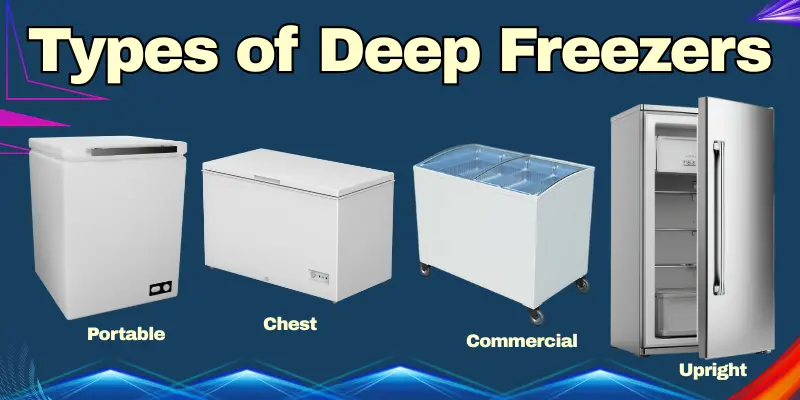
Here are the major types of D freezers:
- Chest Freezer
- Upright Freezer
- Portable / Compact Freezer
- Drawer / Under-Counter Freezer
- Commercial Deep Freezer
- Frost-Free Deep Freezer
- Manual Defrost Deep Freezer
- Solar-Powered / Off-Grid Deep Freezer
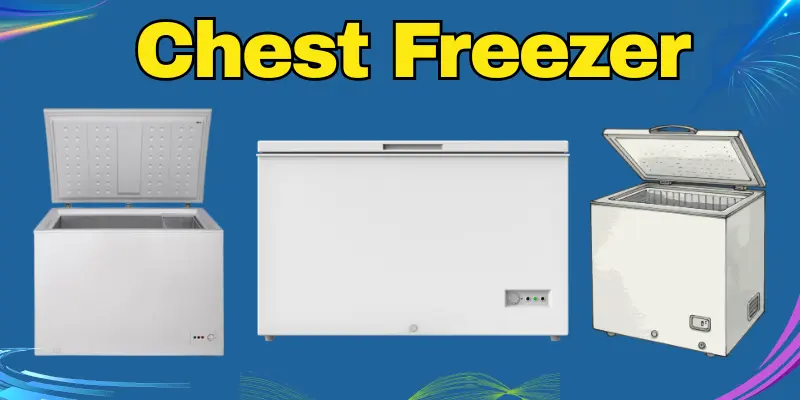
1. Chest Freezer
A chest freezer is a deep freezer that opens from the top, like a large box. It is designed to store a big amount of food at once and keeps items frozen for a long time. Chest freezers are energy-efficient and perfect for bulk storage.
Key Features:
- Large storage capacity for meat, vegetables, and frozen goods
- Energy-efficient compared to upright freezers
- Keeps food frozen longer during power outages
- Simple design with fewer moving parts
- Removable baskets or dividers for easy organization
Examples:
- A family of five storing weekly groceries and frozen meat
- Hunters or fishermen keep large catches frozen for months
- Small restaurants storing bulk vegetables and frozen items
Who Should Choose It:
Chest freezers are ideal for people who need to store large amounts of food and don’t mind bending down to access items. As an expert, I recommend it for families, bulk buyers, and anyone who values energy savings and long-term storage.
Comparison:
Compared to an upright freezer, a chest freezer usually stores more food for less energy, but it can be harder to organize quickly.
2. Upright Freezer
An upright freezer is a deep freezer that stands like a regular refrigerator with a front-opening door. It has shelves and compartments, making it easy to organize and access food. Upright freezers are convenient for frequent use and smaller spaces.
Key Features:
- Vertical design with multiple shelves and drawers
- Easy access to items without bending
- Smaller footprint, ideal for tight spaces
- Quick organization and visibility of stored food
- Some models come with frost-free technology for low maintenance
Real-World Examples:
- A small family storing ready-to-eat frozen meals for daily use
- Apartment dwellers with limited floor space but regular grocery needs
- Office kitchens keep frozen snacks and ingredients organized
Who Should Choose It:
Upright freezers are perfect for people who want easy access to food and prefer organization over bulk storage. As an expert, I recommend it for small families, apartments, and anyone who checks their freezer often.
Comparison:
Compared to a chest freezer, upright freezers are easier to organize and reach items quickly, but they usually store less food and use slightly more energy.
3. Portable / Compact Freezer
A portable or compact freezer is a small, lightweight deep freezer that can be moved easily. It is designed for limited spaces, travel, or temporary use while still keeping food frozen efficiently. These freezers are convenient for people on the go or with small storage needs.
Key Features:
- Small and lightweight, easy to carry or move
- Energy-efficient and space-saving
- Can be powered by household electricity or a car battery in some models
- Quick freezing for short-term storage
- Simple design with easy-to-clean interior
Real-World Examples:
- Camping trips to store meat, vegetables, or ice packs
- Apartment kitchens with limited space for a full-size freezer
- Road trips or long drives where frozen food is needed
Who Should Choose It:
Portable freezers are ideal for travelers, small households, or anyone needing temporary frozen storage. As an expert, I recommend it for people who value convenience and mobility over large capacity.
Comparison:
Unlike chest freezers, portable freezers store less food but are easy to move and use anywhere, making them perfect for temporary or outdoor needs.
4. Drawer / Under-Counter Freezer
A drawer or under-counter freezer is built into kitchen counters or cabinets, opening like a drawer. It keeps food organized and accessible while saving floor space. These freezers are perfect for small kitchens or homes that want a clean, integrated look.
Key Features:
- Fits neatly under counters or in cabinets
- Opens like a drawer for easy access to stored items
- Space-saving design, ideal for small kitchens
- Maintains consistent freezing temperatures
- Some models offer separate compartments for different types of food
Real-World Examples:
- Small apartments storing daily frozen groceries
- Homes with minimal kitchen space but frequent freezer use
- People who prefer hidden appliances for a clean kitchen look
Who Should Choose It:
Drawer freezers are ideal for anyone with limited space who wants easy access to frozen food. As an expert, I recommend them for small households, apartment kitchens, or anyone who wants an organized, hidden freezer.
Comparison:
Compared to upright freezers, drawer freezers save floor space and blend into the kitchen, but they usually offer less storage capacity.
5. Commercial Deep Freezer
A commercial deep freezer is a large, high-capacity freezer designed for businesses, restaurants, or stores. It can store massive amounts of food while keeping it frozen safely for long periods. These freezers are built for heavy-duty use and frequent access.
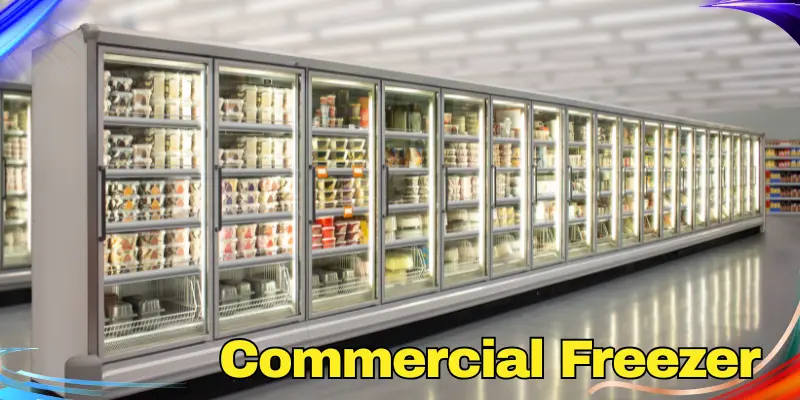
Key Features:
- Large storage capacity for bulk items
- Durable design for frequent opening and closing
- Adjustable temperature controls for different types of food
- Energy-efficient models are available despite their large size
- Easy-to-clean interior for hygiene and safety
Real-World Examples:
- Restaurants storing meat, seafood, and frozen ingredients for daily use
- Grocery stores keep frozen products for sale
- Catering services manage large orders for events
Who Should Choose It:
Commercial freezers are perfect for businesses or anyone needing to store a lot of food reliably. As an expert, I recommend them for restaurants, shops, and catering services that require both capacity and durability.
Comparison:
Compared to a chest freezer, commercial freezers offer far more storage and frequent access, but they take up more space and cost more to operate.
6. Frost-Free Deep Freezer
A frost-free deep freezer is a type of freezer that prevents ice buildup automatically. It circulates cold air evenly, so you don’t have to manually defrost it. This feature makes it low-maintenance and convenient for daily use.
Key Features:
- No need for manual defrosting
- Even cooling for all stored items
- Easy to organize with shelves or baskets
- Saves time and effort on maintenance
- Some models include fast-freeze settings
Real-World Examples:
- Busy families storing frozen meals and groceries
- Offices keep snacks and ingredients ready for employees
- Home cooks who freeze large amounts of prepared food regularly
Who Should Choose It:
Frost-free freezers are ideal for anyone who wants convenience and low maintenance. As an expert, I recommend them for busy households or people who check their freezer often and want hassle-free use.
Comparison:
Compared to manual defrost freezers, frost-free models save time and effort, though they may use slightly more electricity.
7. Manual Defrost Deep Freezer
A manual defrost deep freezer is a type of freezer that requires occasional defrosting by hand. It has a simple design, uses less electricity, and is often more affordable. This type is reliable and ideal for long-term storage of bulk food.
Key Features:
- Requires manual defrosting to remove ice buildup
- Simple, durable design with fewer parts
- Very energy-efficient
- Often more affordable than frost-free models
- Can store large amounts of food for long periods
Real-World Examples:
- Families storing bulk meat and frozen vegetables for the month
- Small restaurants keep seasonal ingredients frozen
- People who prefer a low-maintenance, cost-effective freezer
Who Should Choose It:
Manual defrost freezers are perfect for those who prioritize energy savings and long-term storage over convenience. As an expert, I recommend them for families, bulk buyers, or anyone comfortable with occasional defrosting.
Comparison:
Compared to frost-free freezers, manual defrost models save electricity and cost less, but they require more effort to maintain.
8. Solar-Powered / Off-Grid Deep Freezer
A solar-powered or off-grid deep freezer is designed to operate without a constant electrical connection. It uses solar panels or battery power to keep food frozen, making it perfect for remote areas or places with unreliable electricity.
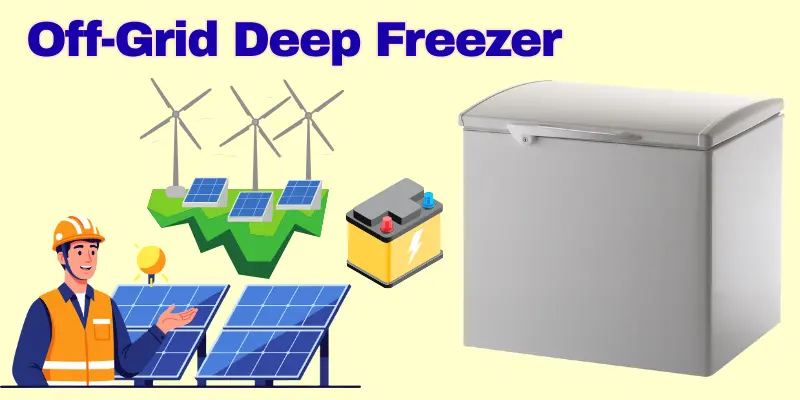
Key Features:
- Runs on solar energy or battery power
- Energy-efficient and eco-friendly
- Maintains consistent freezing even during power outages
- Portable or semi-permanent setups available
- Some models include temperature control and fast-freeze options
Real-World Examples:
- Homes in rural areas with frequent power cuts
- Remote cabins or vacation homes
- Outdoor events or mobile food businesses needing frozen storage
Who Should Choose It:
Solar-powered freezers are ideal for anyone living off the grid or wanting a backup freezer during power outages. As an expert, I recommend them for rural households, outdoor enthusiasts, or eco-conscious users.
Comparison:
Compared to standard chest or upright freezers, solar-powered freezers provide energy independence but usually have smaller storage and higher upfront costs.
Comparison of Types of Deep Freezers
Comparing the types of deep freezers helps you quickly see which one fits your space, storage needs, and budget. It makes choosing easier and saves time. The table below summarizes the main types, their features, and who they are best for.
| Type | Best Use | Pros | Cons | Price Range* |
| Chest Freezer | Bulk storage at home | Long storage, energy saving | Harder to access items | $200–$800 |
| Upright Freezer | Small families, easy access | Easy to organize, space-saving | Less storage, higher energy use | $250–$900 |
| Portable / Compact | Travel, apartments, camping | Portable, convenient | Small storage | $150–$500 |
| Drawer / Under-Counter | Small kitchens, hidden storage | Saves space, organized | Limited capacity | $300–$700 |
| Commercial | Restaurants, stores | Stores lots of food, heavy-duty | Expensive, large space | $500–$3000 |
| Frost-Free | Busy households | Low maintenance | Slightly higher electricity use | $300–$1000 |
| Manual Defrost | Bulk storage, cost-conscious | Saves electricity, affordable | Requires defrosting | $200–$800 |
| Solar / Off-Grid | Remote areas, unreliable electricity | Energy-independent, eco-friendly | Smaller storage, higher upfront cost | $400–$1500 |
Prices are approximate and vary by brand and region.
How to Choose the Right Type of Deep Freezer
Choosing the right deep freezer comes down to your space, how much food you store, and how often you need access. Thinking about these factors first makes buying easier and saves money in the long run.
Match Freezer Type to Your Needs
- Large storage for families or bulk buyers: A chest freezer is best. It can hold lots of food, keeps items frozen longer, and is energy-efficient.
- Easy access and organized storage: An upright freezer works well. Shelves make it simple to see and reach items quickly.
- Small spaces or portable needs: A compact or portable freezer is perfect for apartments, travel, or outdoor use.
- Low maintenance and energy savings: A manual-defrost freezer is simple, uses less electricity, and stores food reliably.
- Business or large-scale storage: A commercial freezer offers durability, large capacity, and frequent access for shops or restaurants.
Expert Recommendation
For most home users, a chest freezer is the best choice if you store bulk food. For smaller households or apartments, an upright freezer makes daily access easy and keeps things organized.
Common Questions and Answers
In this section, we have hidden some bonus questions for you, which we will now share with you. These questions cover practical tips and important points about types of deep freezers that can help you choose, maintain, and use your freezer better.
- Which type of deep freezer is easiest to clean?
- Can I install a deep freezer in a garage or basement?
- Which type of deep freezer is quietest?
- Which type of deep freezer is best for emergency or backup food storage?
- Can I convert a manual defrost freezer into a frost-free freezer?
- Are solar-powered deep freezers practical for urban use?
- How do warranty and maintenance differ across different types of deep freezers?
Now we will discuss each question in detail with its answer.
Drawer, under-counter, and upright freezers are usually the easiest to clean because they have shelves, drawers, or compartments that can be removed. Chest freezers can be harder to clean since you need to reach inside and move items around. Frost-free freezers also stay cleaner longer because they prevent ice buildup. Using removable baskets and wiping the interior regularly makes cleaning easier for any type.
Yes, most deep freezers can be placed in garages or basements, but you need to check the temperature range. Freezers work best in moderate temperatures, usually between 10°C and 32°C. Extremely cold or hot areas can affect performance or damage the freezer. Make sure there’s enough space around the unit for airflow and easy access.
Chest freezers are usually the quietest because they have a simple design and fewer moving parts. Manual defrost models are also quieter than frost-free freezers, which have fans to circulate air. Upright and commercial freezers can be slightly noisier due to compressors and fans. Placing the freezer on a stable surface away from living areas can help reduce noise.
Chest freezers and manual defrost freezers are best for emergency storage. They keep food frozen longer during power outages and are energy-efficient. Frost-free freezers are convenient but use slightly more electricity, which might matter during emergencies. Make sure you have enough capacity to store essential food items for your family.
No, a manual defrost freezer cannot be converted into a frost-free freezer. Frost-free freezers have special fans and air circulation systems built into their design. Manual freezers are simple boxes without these features. If you want a frost-free freezer, you need to buy a model designed for it.
Solar-powered freezers can work in urban areas, but they are most useful where electricity is unreliable. They need enough sunlight or a battery system to operate efficiently. For most city homes with stable electricity, a regular chest or upright freezer is more practical. Solar freezers are great if you want an eco-friendly backup option.
Warranty and maintenance vary by type and brand. Chest and manual defrost freezers are simpler, so they usually require less maintenance and have fewer parts to repair. Frost-free and upright freezers have fans and extra parts, which may need servicing and can affect warranty terms. Always check the warranty period and maintenance instructions before buying.
Conclusion
In this article, we have explored all the main types of deep freezers, including chest, upright, portable, drawer, commercial, frost-free, manual defrost, and solar-powered models. We discussed their key features, best uses, and how to choose the right one for your home or business.
As your guide, I recommend picking a freezer that fits your space, storage needs, and lifestyle. The right deep freezer can save you time, energy, and money while keeping your food fresh for longer.
So, folks, take your time to decide, think about what works best for you, and keep learning about smart ways to store your food efficiently. Stay tuned for more practical tips on home appliances!