What Is a Chest Freezer – How It Works and Why You Need One
Published: 12 Dec 2025
Ever looked at that big box in the store and wondered what it really does? Many folks feel the same, and that’s why this guide is here to help. We will walk through what is a chest freezer, how it works, why people use it, and what makes it so useful in daily life. By the end, you will feel clear, confident, and ready to choose the right one for your home.
So are you ready? Let’s discuss in detail.
What Is a Chest Freezer
A chest freezer is a large, box-shaped freezer that opens from the top. It is built to store food for a long time and keep it safe at a steady cold temperature. Most people use it when they need more space than a normal fridge freezer can offer. The wide, deep body lets you keep big items without trouble. It also holds the cold air well because the lid stays closed tightly. This helps the freezer use less power while keeping food fresh for many months. Many homes, shops, and small businesses depend on it for bulk storage. It is simple to use and easy to fit in many spaces.
Importance
A chest freezer matters a lot when you want extra space for food. It helps you store more, save more, and plan better. Many homes find it useful for daily life and long-term storage.
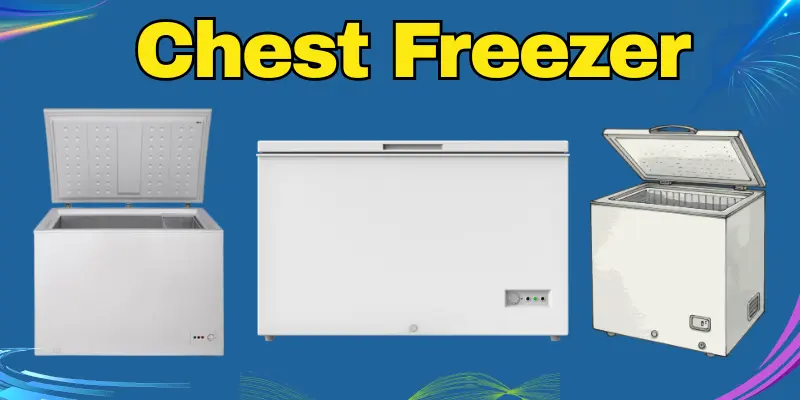
Here is why it is important:
- Gives you more space for frozen food.
- Helps you store bulk items for many months.
- Saves money because you can buy food in large packs.
- Keeps food safe during power cuts for longer hours.
- Uses less energy than many upright freezers.
- Reduces food waste by letting you organize and save extra meals.
- Supports small businesses that need steady cold storage.
How a Chest Freezer Works
A chest freezer may look simple from the outside, but inside, it follows a clear and steady cooling process. Once you understand the basics, you will see how it keeps your food safe for a long time. Here is an easy breakdown for beginners.
- The freezer has a cooling coil that becomes very cold when the machine starts.
- A special gas moves through this coil and pulls heat away from the inside.
- The heat then moves out of the freezer and gets released into the room.
- As the inside loses heat, the temperature drops and stays low for many hours.
- Thick insulation around the body keeps the cold air locked inside.
- The lid seals tightly so the cool air does not escape.
- A small motor turns on and off to keep the temperature steady.
- All these steps work together to keep your food frozen and fresh.
Types of Chest Freezers
Chest freezers come in a few clear styles, and each one is made for a different need. Knowing these types helps you pick the right freezer for your home, shop, or storage room. Here are the main ones in simple words.
- Standard Chest Freezer – A basic freezer with deep storage space for daily use.
- Large-Capacity Chest Freezer – A bigger model for storing bulk food and big family supplies.
- Compact Chest Freezer – A small freezer that fits well in tight spaces or small homes.
- Dual-Zone Chest Freezer – A freezer with two sections so you can freeze and chill food separately.
- Convertible Chest Freezer – A freezer you can switch between cooling and freezing modes when needed.
- Energy-Efficient Chest Freezer – A model built to use less electricity and lower your power bill.
Advantages and Disadvantages of Chest Freezers
In this section, we will look at the pros and cons simply. This will help you decide if a chest freezer is right for your home or not. Let’s break it down clearly.
Advantages of Chest Freezers
Here are the main benefits:
| Pros |
|---|
|
Disadvantages of Chest Freezers
Here are the common downsides:
| Cons |
|---|
|
Mistakes
In this section, we cover the common mistakes people make when buying or using a chest freezer. Knowing these points will help you avoid problems and take better care of your freezer. Keep these in mind before you choose or set up your unit.
- Picking the wrong size and running out of space later.
- Placing the freezer in a very hot or tight area.
- Forgetting to defrost when ice builds up.
- Storing warm food that raises the inside temperature.
- Not using baskets or dividers to keep food organized.
- Opening the lid too often and losing cold air.
- Ignoring the user manual and missing useful tips.
- Skipping regular cleaning and letting odors build up.
Misconceptions
In this section, we cover some common misconceptions about chest freezers. Knowing the truth will help you make better choices and use your freezer more effectively.
- Chest freezers are only for big families, but even small homes can use them.
- They use too much electricity, yet many models are energy-efficient.
- Organizing food is hard, but baskets and dividers make it simple.
- Manual defrost is difficult, yet it is easy and quick if done regularly.
- They are noisy, but most chest freezers run very quietly.
- They are only for meat, but you can store fruits, vegetables, and meals too.
- They are hard to move, yet compact models can be shifted easily.
Best Practices
In this section, we cover some simple best practices for using a chest freezer. Following these tips will help you keep food fresh, save energy, and extend the life of your freezer.
- Keep the freezer in a cool, dry, and ventilated area.
- Do not overload the freezer and leave space for air circulation.
- Use baskets or dividers to organize food for easy access.
- Defrost regularly to prevent ice build-up.
- Store food in airtight containers or freezer bags to avoid odors.
- Avoid putting hot food directly inside the freezer.
- Close the lid quickly to keep the cold air inside.
- Clean the interior regularly to maintain hygiene.
- Check the temperature setting to ensure it stays at the right level.
Future
In this section, we cover what to expect from chest freezers in the coming years. Technology and design are changing to make them more efficient and user-friendly.
- Energy-efficient models will use even less electricity.
- Smart freezers may offer temperature control and alerts via apps.
- Compact designs will save more space in small homes.
- Eco-friendly refrigerants will reduce environmental impact.
- Noise levels will continue to decrease for quieter operation.
- Long-lasting materials will make freezers more durable.
- Advanced insulation will keep food frozen longer during power cuts.
Trends
In this section, we cover the latest trends in chest freezers. These trends show how people’s needs and technology are shaping modern freezers.
- More energy-efficient models to save electricity.
- Smart features like digital temperature controls and alarms.
- Compact and space-saving designs for small homes and apartments.
- Dual-purpose freezers that can switch between fridge and freezer modes.
- Eco-friendly refrigerants that are safer for the environment.
- Stylish designs that fit modern kitchens and spaces.
- Faster freezing options for quick food storage.
Conclusion
In this guide, we covered everything about what is a chest freezer, including how it works, the different types, advantages and disadvantages, common mistakes, best practices, future trends, and more. Knowing all this helps you make a smart choice and use your freezer effectively.
As a personal recommendation, guys, choose a chest freezer that fits your space and storage needs. It can save you money, keep your food fresh longer, and make life much easier at home or for small businesses.
Keep learning, buddies, and make the most out of your freezer!
FAQs About Chest Freezer
In this section, we have collected some bonus questions about chest freezers that many people often search for. These questions focus on practical points and tips that we haven’t covered in the main article.
Here is a list of useful questions:
- How long can a chest freezer keep food frozen during a power outage?
- What is the ideal temperature setting for a chest freezer?
- Can a chest freezer be used as a fridge in summer or warm climates?
- How often should I clean and defrost a chest freezer?
- Are chest freezers safe to use in garages or outdoor areas?
Now we discuss the answers to all the questions one by one.
A chest freezer can usually keep food frozen for 24 to 48 hours if it is full and the lid stays closed. A full freezer keeps cold better than a half-empty one. Try not to open the lid during a power cut. Adding ice packs or blocks of ice can help maintain the temperature. Always plan for longer outages when possible.
The best temperature for a chest freezer is around 0 degrees Fahrenheit or -18 degrees Celsius. This keeps food frozen safely for a long time. Many freezers have a dial or digital control to set the temperature. Check it regularly to ensure it stays steady. Avoid setting it too cold as it uses extra electricity.
Some chest freezers have a convertible feature to switch to fridge mode. Standard freezers do not work well as fridges. Using a normal freezer as a fridge can spoil food or damage the machine. Always check the manufacturer’s instructions first. Convertible freezers give more flexibility for hot weather.
You should clean and defrost a chest freezer every 3 to 6 months. If ice builds up faster, do it sooner. Always empty the freezer and unplug it before cleaning. Use a soft cloth and mild soap for cleaning. Regular maintenance keeps the freezer working longer and food fresh.
Yes, chest freezers can work in garages or semi-covered outdoor spaces if the temperature stays in the recommended range. Avoid areas that get very hot or very cold. Make sure the space is dry and well-ventilated. Keep the freezer away from direct sunlight and water. This helps it run safely and efficiently.