What Is a Commercial Deep Freezer: Complete Guide for Businesses
Published: 16 Dec 2025
Are you confused about which freezer suits your business needs? Many shop owners and restaurant users face this problem every day. For example, a small ice cream shop might lose money if the ice cream melts before customers buy it. This guide will help you feel confident. We will cover uses, types, key features, and buying tips in clear steps. By the end, you will understand what Is a Commercial Deep Freezer and how to choose the right one for your needs.
So, are you ready? Let’s move on to our article in detail without wasting any time.
What Is a Commercial Deep Freezer?
A commercial deep freezer is a strong cooling machine made for businesses. It stores large amounts of food at very low temperatures for a long time. Shops, restaurants, and cafes use it to keep meat, ice cream, and other perishable items safe and fresh.
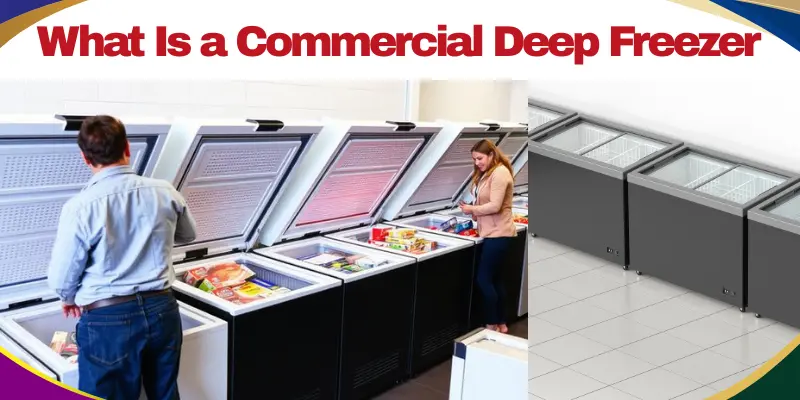
It can hold much more than a regular home freezer and runs continuously without losing performance. The body is built to handle daily heavy use, making it reliable for busy kitchens. Many food businesses depend on it to keep operations smooth and prevent spoilage.
How a Commercial Deep Freezer Works
A commercial deep freezer keeps food frozen throughout the day in a simple way anyone can understand. You do not need any technical knowledge to operate it.
- Place the food inside the freezer.
- The machine starts cooling the interior quickly.
- Cold air flows evenly around the items from all sides.
- Heat from the food is removed and pushed out of the freezer.
- The temperature stays steady without fluctuation.
- Food remains frozen, fresh, and ready for use whenever needed.
Types of Commercial Deep Freezers
Commercial deep freezers come in different shapes and designs to suit various business needs. Each type has its own benefits, and choosing the right one makes food storage easier and more efficient. Here’s a simple list of all common types:
- Chest Deep Freezer – Opens from the top and is good for storing large quantities of food.
- Upright Deep Freezer – Stands vertically, making it easy to organize and access items.
- Display Deep Freezer – Has a glass top or door so customers can see products, often used in shops and supermarkets.
- Drawer Deep Freezer – Comes with pull-out drawers for easy organization and quick access to food.
- Undercounter Deep Freezer – Compact unit that fits under counters, ideal for small kitchens or bars.
- Modular or Walk-In Freezer – Large units designed for very big storage needs in hotels, supermarkets, or food warehouses.
This list covers all the main types that businesses usually use, from small shops to large restaurants or supermarkets.
Advantages and Disadvantages of a Commercial Deep Freezer
In this section, we will look at the pros and cons of using a commercial deep freezer. Knowing the advantages and disadvantages can help you decide which type is right for your business.
Advantages of a Commercial Deep Freezer
A commercial deep freezer offers many benefits for businesses that store food.
| Pros |
|---|
|
Disadvantages of a Commercial Deep Freezer
There are a few drawbacks to consider before buying.
| Cons |
|---|
|
Common Mistakes
Many business owners make small errors that affect how well their commercial deep freezer works. One frequent mistake is filling it with too much food at once, which stops cold air from moving freely and can freeze some items unevenly. Skipping regular cleaning is another problem. Dust, dirt, and ice build-up make the freezer work harder and may shorten its lifespan.
Some users also set the wrong temperature for their food. If it’s too high, items may go bad; if it’s too low, electricity costs rise. Placing the freezer in a hot spot or moving it too often can also reduce its efficiency. Paying attention to these points helps the freezer stay reliable and keeps food stored safely and properly.
Common Misconceptions About Commercial Deep Freezers
Many people have the wrong idea about commercial deep freezers. Some think they are only for large businesses, but even small shops or cafes can benefit from them. Others believe they use too much electricity, but modern models are energy-efficient and designed to save power. These freezers are also not just for meat or ice cream-they can store fruits, vegetables, and ready-to-eat items safely.
Another common misconception is that all freezers are the same. A home freezer cannot handle heavy daily use like a commercial unit. Some users think they don’t need maintenance, but even the best freezer works better and lasts longer when cleaned regularly. Understanding these points can help business owners make smarter choices and get the most from their freezer.
Best Practices for Using a Commercial Deep Freezer
Using a commercial deep freezer the right way can make a big difference for your business. Always keep the freezer clean and defrost it regularly to maintain strong cooling. Organize food properly so cold air can reach every item, and avoid overloading it.
Check the temperature often and set it according to the type of food you store. Place the freezer in a cool, ventilated area away from direct sunlight or heat sources. Handle the freezer carefully when moving it, and follow the manufacturer’s instructions for maintenance. These simple habits help the freezer run efficiently and keep food fresh for longer.
Future
The future of commercial deep freezers looks smart and energy-efficient. New models are coming with better cooling technology, lower electricity use, and digital temperature controls. Some freezers even have smart features that alert you if the temperature changes or if maintenance is needed.
Businesses will also see more eco-friendly designs with refrigerants that are safer for the environment. Compact and modular options will make it easier for small shops and large warehouses to choose the right size. Overall, future freezers will be more reliable, cost-effective, and easier to manage for any business.
Conclusion
In this guide, we have covered everything you need to know about what is a Commercial Deep Freezer. We looked at how it works, the different types available, its advantages and disadvantages, common mistakes to avoid, misconceptions, best practices, and what the future holds. Understanding these points helps you make the right choice for your business and keep your food safe and fresh.
My recommendation, guys, is to always choose a freezer that fits your business size and daily needs. Pay attention to maintenance, proper storage, and temperature settings, because these small steps make a big difference in keeping your operations smooth and avoiding food waste.
So, buddies, keep learning and exploring the best ways to store your food efficiently. Your business and your customers will thank you!
FAQs About Commercial Deep Freezers
As a bonus, we have included some useful questions that many business owners often wonder about but rarely ask. These FAQs cover practical tips and hidden insights to help you get the most out of your commercial deep freezer. Let’s explore them one by one.
Yes, you can store both raw and cooked food in the same freezer, but it is important to separate them. Use different containers or shelves for raw and cooked items to prevent contamination. Keep all food sealed tightly to maintain freshness. Proper separation also helps avoid mixing flavors, especially for strong-smelling items like fish or spices.
The storage time depends on the type of food and the temperature of the freezer. Most meat and seafood can last several months, while vegetables and ready-to-eat items may last up to a year if frozen properly. Always check the freezer temperature and keep it steady for the best results. Labeling items with dates helps track storage time and prevents waste.
Opening the freezer too often can cause the temperature inside to rise slightly. This makes the freezer work harder to maintain the cold level, which can increase energy use. To avoid this, plan what you need beforehand and take items out quickly. Keeping the freezer organized also reduces the number of times you need to open it.
Yes, small shops, cafes, and ice cream stores can greatly benefit from one. Even compact models can hold more stock than a home freezer, reducing the need for daily restocking. It helps prevent food waste and ensures products are always ready for customers. Small businesses can save money and operate more efficiently with the right freezer.
Organize food by type and frequency of use. Keep similar items together and place items you use often near the top or front. Use clear bins or labeled containers to make it easy to find what you need. This arrangement helps cold air flow evenly and keeps all items frozen properly. A well-organized freezer also saves time during busy hours.
Yes, even though commercial freezers cost more upfront, they can save money over time. They help reduce food spoilage and waste, which means fewer losses. Energy-efficient models also lower electricity bills compared to older or home freezers. Using the freezer correctly with proper organization and maintenance makes it more cost-effective for any business.
Yes, but it’s best to store ice cream and desserts separately in their own containers or shelves. Ice cream can absorb flavors from other strong-smelling foods if not sealed well. Keeping them at a consistent low temperature ensures they stay creamy and fresh. Proper organization also prevents accidental melting when accessing other items.
Regular cleaning and defrosting are key to keeping your freezer in top condition. Avoid overloading it, and make sure cold air can circulate freely around the food. Check temperature settings often and handle the freezer carefully when moving it. Following these simple habits can help your freezer work efficiently for many years.