What is a Refrigerator Condenser? Easy Guide for Beginners
Published: 28 Nov 2025
Ever stood in front of your fridge and felt confused about how it stays cold? You are not alone. Many people wonder what happens inside the machine that runs every day in their home. In this guide, we will walk through each part step by step, clear all doubts, and make things simple for you. By the end, you will understand everything about what is a refrigerator condenser. Why it matters, and how you can take better care of your fridge without stress.
So, are you ready? Let’s not waste any time and discuss everything in detail in our article.
What Is a Refrigerator Condenser?
A refrigerator condenser is the part that releases heat from the fridge. It takes the hot gas that comes from the compressor and cools it down. As it cools, the gas turns into a liquid. This liquid then moves through the cooling system and helps keep the inside of the fridge cold.
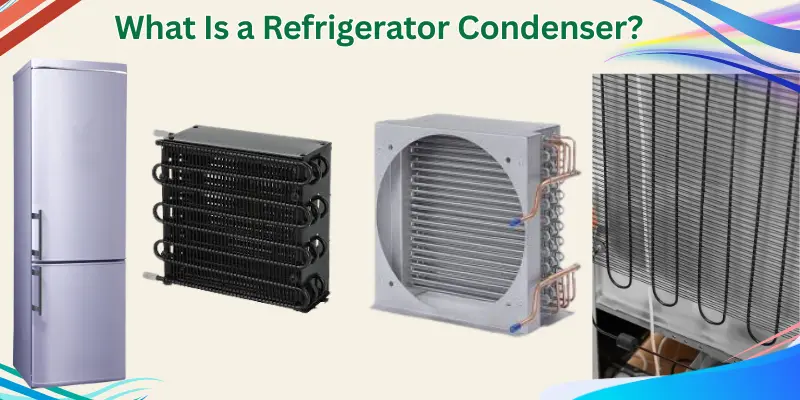
The condenser usually sits at the back or bottom of the fridge. It works quietly in the background while you use the refrigerator every day. When it stays clean and clear, the fridge works better. This simple part plays a big role in keeping your food fresh.
Importance of a Fridge Condenser
Even though it is a small part, the condenser plays a key role in your fridge’s performance. It helps the appliance stay efficient and ensures your food remains fresh for longer. When the condenser works well, the fridge does not have to work too hard, which keeps electricity use low. A healthy condenser also reduces wear and tear on other parts, making the fridge last longer. Simply put, it quietly supports the whole cooling process, so your fridge can do its job without problems.
Now that we know why it matters, let’s see how it actually works inside the fridge.
How a Refrigerator Condenser Works
A refrigerator condenser works in a simple way, even though it sits quietly at the back of your fridge. It helps move heat out of the fridge so the inside stays cool. Let’s break it into easy steps so you can understand the whole process:
- Hot gas comes from the compressor and enters the condenser coils.
- The coils release this heat into the air around the fridge.
- As the heat leaves, the hot gas cools down.
- The gas slowly turns into a liquid as it becomes cooler.
- This cool liquid goes back into the fridge’s cooling system.
- The cycle keeps repeating to help your fridge stay cold and steady.
Real Life Example
Think about a cup of hot tea. When you leave it on the table, the heat slowly moves into the air, and the tea becomes cooler. The condenser does the same thing. It takes the heat from inside the fridge and lets it escape into the air outside. This helps the inside stay cool while the outside feels a bit warm.
Types of Refrigerator Condensers
Refrigerators use different types of condensers to remove heat and keep the inside cool. Each type works a little differently, but they all do the same job. Knowing the types can help you understand how the refrigerator works and how to take care of it.
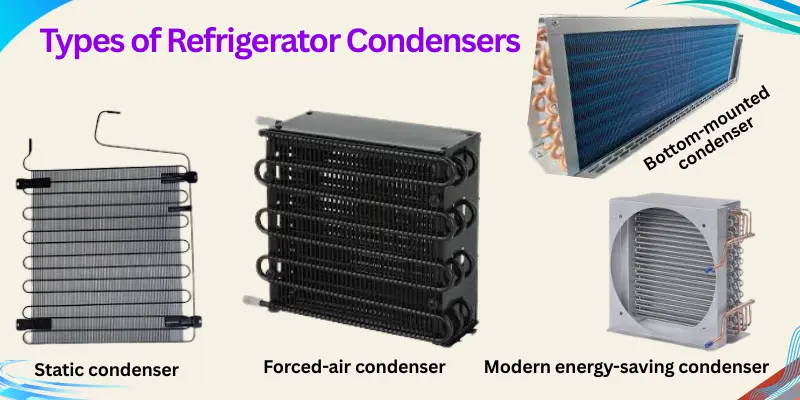
Here are the main types of refrigerator condensers:
- Static condenser
- Forced-air condenser
- Bottom-mounted condenser
- Modern energy-saving condenser
Now we will discuss each type in detail so you can understand how they work and what makes them different.
1. Static Condenser
Static condensers are simple and do not use a fan. Heat moves out slowly through the metal coils.
- Usually found in older refrigerators
- Works quietly without extra parts
- Needs enough space around the fridge for air to move freely
- It can take a little longer to cool the fridge
- Easy to maintain, just needs cleaning
2. Forced-Air Condenser
Forced-air condensers use a small fan to push air over the coils. This makes the cooling process faster.
- Common in modern refrigerators
- Cools the fridge more evenly
- Works well even in warm kitchens
- Needs the fan to work properly for best results
- Cleaning the coils and fan helps the fridge run efficiently
3. Bottom-Mounted Condenser
These condensers are located at the bottom of the fridge and are often hidden from view.
- Saves space and looks neat
- Air moves naturally through the coils at the bottom
- Easy to clean if you move the fridge slightly
- Helps the fridge stay cool without much noise
4. Modern Energy-Saving Condenser
These are built to use less power while keeping the fridge cool.
- Found in energy-efficient refrigerators
- Uses advanced materials or coil designs
- Helps reduce electricity bills
- Often paired with forced-air systems for better cooling
Advantages and Disadvantages of a Fridge Condenser
In this section, we will look at the advantages and disadvantages of a refrigerator condenser. Knowing these can help you understand why it is important and what issues to watch for.
Advantages of a Refrigerator Condenser
A fridge condenser helps the appliance work efficiently and keeps food fresh. Here are the main benefits:
| Pros |
|---|
|
Disadvantages of a Refrigerator Condenser
Even though condensers are useful, they can have some drawbacks if not cared for:
| Cons |
|---|
|
Common Problems With a Fridge Condenser
Even though condensers work quietly, they can face some common issues over time. Here are the main problems to watch for:
- Dust and Dirt Build-Up
Dust and debris can settle on the coils, slowing cooling and making the fridge work harder. - Overheating
Coils can get too hot if blocked or dirty, affecting performance and putting strain on the compressor. - Blocked Airflow
Placing the fridge too close to walls or other objects can reduce airflow and make cooling less efficient. - Faulty Condenser Fan
Some condensers have a small fan. If it stops working, the fridge may cool unevenly or make an unusual noise.
How to Clean and Maintain a Fridge Condenser
Keeping your condenser clean helps your fridge run efficiently and stay cool. Regular maintenance also helps save electricity and prevent problems. Here’s a simple guide for beginners:
- Turn Off the Fridge
Always switch off the fridge and unplug it before cleaning. - Gather Simple Tools
You will need a soft brush, a cloth, and a small vacuum or coil cleaning brush. - Locate the Condenser
Check the back or bottom of your fridge to find the coils. - Remove Dust and Dirt
Use the brush or vacuum to clean the coils gently. Make sure you reach all corners. - Check the Fan (If Present)
Clean around the fan carefully. Ensure it spins freely and that there is no dust blocking it. - Leave Space Around the Fridge
Ensure the fridge is not pushed against the wall and that there is enough airflow. - Regular Cleaning Schedule
Clean the condenser every 3 to 6 months for best performance. - Quick Safety Tip
Don’t use water directly on the coils, as this can damage the fridge.
When to Call a Technician
Sometimes a fridge condenser needs professional help. It’s important to know the signs so you don’t make the problem worse.
- Fridge Not Cooling Properly
If your fridge stays warm even after cleaning the condenser, it may need a technician. - Strange Noises
Loud or unusual sounds from the condenser fan or coils can indicate a problem. - Overheating
If the back or bottom of the fridge is very hot, it may signal a serious issue. - Burning Smell
Any unusual smell near the condenser requires immediate attention. - Repeated Problems
If issues keep coming back despite cleaning, professional service is the safest option.
Conclusion
Guys, in this guide, we have covered what is a refrigerator condenser, how it works, the different types, its advantages and disadvantages, common problems, and easy ways to clean and maintain it. Knowing all this helps your fridge work better and keeps your food fresh for longer.
My advice, buddies, is to check your condenser regularly and keep it clean. It’s a small step that can save electricity, prevent issues, and make your fridge last much longer. Taking care of it is simple but very important.
Keep learning and stay tuned for more handy tips to make your home appliances work their best!
FAQs About Fridge Condensers
Even though we’ve covered most of the basics, many people still have some extra questions about fridge condensers. Here are some common queries that can help you understand this part even better:
A refrigerator condenser can last as long as the fridge itself if it is well cared for. Regular cleaning and keeping it dust-free prevent most problems. Usually, a condenser works properly for 10 to 15 years. Replacing it is only needed if it gets damaged or stops working.
Yes, a dirty condenser can make your fridge use more electricity. Dust and debris block heat from escaping, so the fridge works harder to stay cool. This extra effort uses more power and can increase your electricity bill. Keeping the condenser clean helps save energy and money.
You can check the fan by listening for a soft humming sound or feeling air moving near the condenser. If the fan is very quiet or not spinning, it may need cleaning or repair. A working fan helps the fridge cool evenly. Checking it every few months is a good habit.
No, condensers vary depending on the fridge model. Some are at the back, some at the bottom, and their shapes and sizes can differ. Bigger fridges usually have larger condensers. The key is that the condenser can remove heat efficiently for that fridge.
Replacing a condenser is not easy for most people. It usually needs special tools and knowledge about the fridge system. If it is damaged, it is safer to call a technician. Trying to do it yourself can cause more problems or damage the fridge.
Yes, the location can make a small difference. Bottom-mounted condensers are often hidden but save space and work quietly. Back-mounted condensers may have better natural airflow if there is enough space. Either way, keeping it clean is more important than the exact location.
A condenser has two main jobs. First, it removes heat from the fridge to keep the inside cool. Second, it changes the hot gas from the compressor into a liquid so it can continue the cooling cycle. Both tasks are important for a fridge to work properly.
When a condenser goes bad, the fridge may not stay cold. It can make the compressor work harder, use more electricity, and even cause food to spoil faster. Strange noises, overheating, or poor cooling are signs that the condenser may need attention.
Signs that a condenser might need replacement include constant overheating, uneven cooling, loud noises, or if cleaning doesn’t fix the problem. If the fridge struggles to stay cold despite regular maintenance, a technician may need to check it.
Yes, a faulty condenser can strain the compressor. If the condenser cannot release heat properly, the compressor works harder to maintain cooling. Over time, this extra strain can lead to compressor failure. Keeping the condenser clean helps prevent this problem.