What is a Refrigerator Evaporator? Complete Guide for Beginners
Published: 26 Nov 2025
Have you ever looked inside your fridge and wondered how it becomes cold so fast? Many people feel the same confusion, and it is normal to think the cooling process is a big mystery. In this guide, we will break everything down in easy steps and help you understand what is a refrigerator evaporator. You will learn what it does, how it works, where it sits inside the fridge, and why it matters for your food. Stay with me, and everything will become clear and simple.
So, are you ready? Let’s discuss everything in detail.
Definition of Refrigerator Evaporator
A refrigerator evaporator is a part inside the cooling system that helps make the air inside your fridge cold. It stands for the section where the refrigerant absorbs heat from the food and the air around it. When this part works, the warm air inside the fridge loses its heat and turns cooler. The evaporator has metal coils that help this process run smoothly and quickly. Cold air then circulates through the fridge, keeping your food fresh.
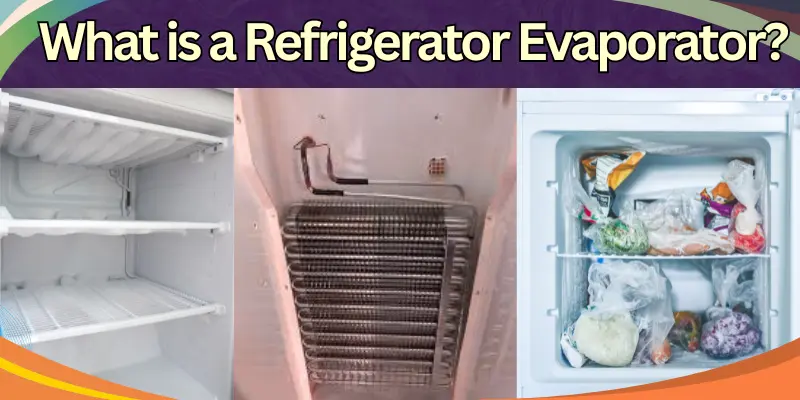
This part works all the time in the background while you open and close the door. Without it, your fridge cannot maintain a safe temperature. It is one of the most important parts in every modern refrigerator.
Importance of a Refrigerator Evaporator
The evaporator plays a big role in how the fridge works every day. It keeps the inside air cool and helps your food stay fresh for a long time. Without this part, your fridge cannot do its main job.
- Keeps the fridge cold and safe for food.
- Pulls heat out of the air inside the fridge.
- Helps drinks cool faster and stay cold longer.
- Supports even cooling in every shelf and corner.
- Works with other parts to keep the fridge running smoothly.
- Helps stop food from spoiling too fast.
Where Is the Evaporator Located?
The evaporator sits in a quiet spot inside your fridge, so you do not see it every day. It stays hidden because it works better when air can flow around it without anything blocking its path. This makes beginners wonder where it is placed.
In most refrigerators, the evaporator is inside the freezer section or just behind a cover panel. When you open your freezer and see a plastic or metal cover on the back wall, the evaporator is usually right behind that piece. This simple placement helps cold air move through the freezer and then spread into the fresh food section.
How a Refrigerator Evaporator Works
The evaporator helps your fridge turn warm air into cool air. It does this quietly in the background while you use your fridge every day. The process is simple when you break it into small steps.
- Cold refrigerant enters the evaporator coils.
- The coils pull heat from the air inside the fridge.
- As the heat leaves, the air becomes cold.
- A small fan pushes this cold air through the freezer and fresh food section.
- The refrigerant becomes warm after taking in heat and moves out of the evaporator.
- The cycle repeats to keep your fridge cold all the time.
Types of Refrigerator Evaporators
Refrigerators use different types of evaporators to cool the air inside. Each type works in a slightly different way, but all help keep your food fresh. Here are the most common types you will find:
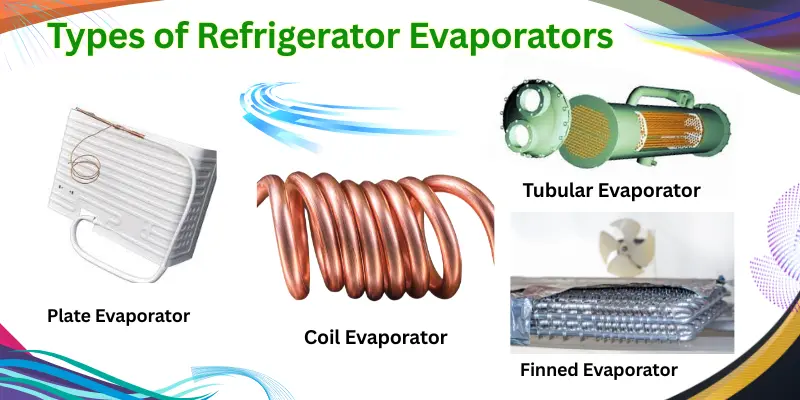
- Plate Evaporator
- Coil Evaporator
- Finned Evaporator
- Tubular Evaporator
Now we discuss all the types of refrigerator evaporators in detail.
1. Plate Evaporator
A plate evaporator is a flat metal sheet that cools the fridge by letting the refrigerant absorb heat quickly. It is simple, quiet, and often found in small to medium-sized home refrigerators.
- Cools the fridge fast and efficiently.
- Easy to clean and maintain.
- Works quietly without making much noise.
- Best for compact refrigerators.
2. Coil Evaporator
Coil evaporators use thin metal coils to move refrigerant and take heat from the air. They are common in both fridges and freezers and help cold air spread evenly.
- Provides consistent cooling across the fridge.
- Durable and reliable for daily use.
- Works well in various fridge sizes.
- Can handle larger volumes of food than plate evaporators.
3. Finned Evaporator
Finned evaporators have metal fins attached to coils, increasing the surface area to cool the air faster. This design helps keep the temperature even in all parts of the fridge.
- Spreads cold air more evenly.
- Prevents hot spots in the fridge.
- Helps food stay fresh longer.
- Often found in modern refrigerators with advanced cooling.
4. Tubular Evaporator
Tubular evaporators use metal tubes to carry refrigerant and remove heat efficiently. They are strong and usually found in larger or commercial refrigerators.
- Very efficient for heavy cooling.
- Durable and long-lasting.
- Handles large amounts of food without losing performance.
- Common in big home fridges and commercial units.
Advantages and Disadvantages of a Refrigerator Evaporator
In this section, we will look at the pros and cons of a refrigerator evaporator. This will help you understand its benefits and limitations without repeating what we have already explained.
Advantages of a Refrigerator Evaporator
The evaporator not only keeps your fridge cold but also improves its overall performance. Here are the key advantages:
| Pros |
|---|
|
Disadvantages of a Refrigerator Evaporator
Even though it is important, the evaporator has a few limitations. Here are the main disadvantages:
| Cons |
|---|
|
Tips to Avoid These Mistakes
In this section, we share easy tips to prevent common mistakes with your refrigerator evaporator. Following these tips will help your fridge work efficiently and keep your food fresh.
- Keep vents clear – Don’t block the airflow with food items.
- Check for frost regularly – Remove ice buildup before it gets too thick.
- Listen for unusual noises – Strange sounds can indicate fan or evaporator issues.
- Maintain proper temperature – Avoid changing settings too often; follow the recommended fridge temperature.
- Clean hidden areas – Occasionally check behind panels for dust or frost.
- Avoid overloading – Too much food can block cold air circulation.
- Call a professional if needed – Don’t try complicated repairs yourself if the evaporator has a problem.
Conclusion
So far, we have covered everything about the refrigerator evaporator. What is a refrigerator evaporator, how it works, where it is located, the different types, its advantages and disadvantages, and common mistakes to avoid. Understanding this part helps you keep your fridge running well and your food fresh.
My recommendation, guys, is to always check your evaporator for frost, keep vents clear, and maintain the right temperature. This small care makes a big difference in the fridge’s performance and helps your food stay safe longer.
Keep learning and take care of your fridge, buddies. Your food will thank you!
Also, don’t forget to check out more of our refrigerator-related posts below to learn tips, tricks, and helpful guides for keeping your fridge in top shape.
Common Questions and Answers
If you have any questions in your mind or want to know the ones people often ask, here is a list of the most common questions:
- How do I know if my fridge’s evaporator is bad?
- Can you repair an evaporator?
- What is the difference between a refrigerator evaporator and a condenser?
- How to tell the difference between the condenser and the evaporator?
- How much does a refrigerator evaporator cost?
- What is the lifespan of an evaporator?
- How many evaporators does a refrigerator have?
- What is the most common repair on a refrigerator?
- Can a dirty evaporator affect the fridge’s cooling performance?
- What are the signs that the evaporator fan is not working properly?
Below that, we will discuss the answers to all these questions one by one in detail.
If your fridge is not cooling properly, the evaporator may be the problem. You might see frost building up inside the freezer. Sometimes, the fridge makes unusual noises or the fan stops working. If food is spoiling faster than usual, it can also be a sign. Checking for these issues early can help prevent bigger problems.
Yes, a refrigerator evaporator can be repaired, but it is not easy. Small issues like ice buildup can be fixed by defrosting. If there is a leak or a damaged coil, it may need a professional to repair it. Trying to fix it yourself without knowledge can make the problem worse. Always call a qualified technician for complicated repairs.
The evaporator cools the air inside the fridge by absorbing heat. The condenser, on the other hand, removes heat from the refrigerant and releases it outside the fridge. The evaporator is inside the fridge or freezer, while the condenser is usually at the back or bottom of the fridge. Both parts work together to keep your fridge cold.
The evaporator is usually hidden behind a panel in the freezer or fridge section. It has metal coils and a fan to blow cold air. The condenser is outside, often at the back, and looks like a set of coils, too, but it releases heat. If the fridge is warm outside, the condenser is working; if the fridge is warm inside, the evaporator may have a problem.
The cost of a refrigerator evaporator depends on the brand and size. For a normal home fridge, it usually ranges between $50 to $200. Commercial or larger fridge evaporators can cost more. Labor for installation or repair can also add to the price. Always check prices with a trusted technician before replacing.
A refrigerator evaporator can last around 8 to 12 years with proper care. Regular cleaning and maintenance help it last longer. If it is damaged by frost, leaks, or poor handling, its life can be shorter. Watching for signs of trouble early can prevent total failure.
Most home refrigerators have one evaporator in the freezer section. Some modern fridges may have separate evaporators for the freezer and fridge compartments. Commercial or big fridges can have multiple evaporators. The number depends on the fridge design and cooling system.
The most common repair is fixing the evaporator or its fan. Other common issues include defrost problems or refrigerant leaks. Sometimes, the thermostat or temperature control also needs repair. Keeping the evaporator clean and frost-free helps reduce these repairs.
Yes, a dirty evaporator can block airflow and make the fridge warm. Dust, dirt, or ice buildup reduces its ability to absorb heat. This can spoil food faster and increase energy use. Cleaning it carefully helps the fridge run better and saves electricity.
If the evaporator fan stops, you may hear strange noises or no noise at all. The fridge may have uneven cooling or warm spots. Frost can build up faster in some areas. Checking the fan regularly ensures that cold air moves properly inside the fridge.
So, guys, it’s time to say goodbye.
If you enjoyed our article, you can also read our guide on How to Clean an Air Conditioner. It shows simple steps to keep your AC working well and your home cool. Don’t forget to leave a comment below if you have any questions or tips to share.