What is a Refrigerator Thermostat? Simple Guide to Keep Food Fresh
Published: 21 Nov 2025
Ever wondered why your fridge sometimes feels too cold or not cold enough? It can be confusing when your food doesn’t stay fresh as expected. In this guide, we will explain how your refrigerator controls its temperature, the signs when something is wrong, and simple tips to keep it working efficiently. By the end, you will clearly understand what is a refrigerator thermostat and how it affects your fridge’s performance.
So, are you ready? Let’s get started.
Definition of a Refrigerator Thermostat
A refrigerator thermostat is a small device that controls the temperature inside your fridge. It senses the coldness and tells the fridge when to turn the compressor on or off. The thermostat helps keep your food at the right temperature so it stays fresh longer.
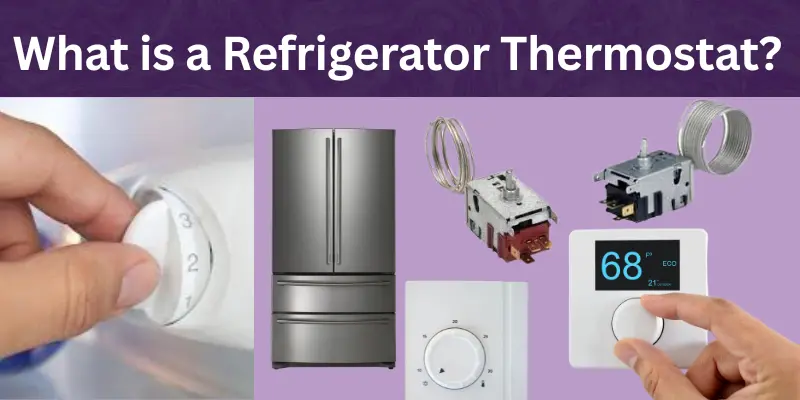
It works like a switch that responds to temperature changes. When the fridge gets too warm, the thermostat signals the compressor to start cooling. When it reaches the right temperature, it stops the compressor. This keeps the fridge from getting too cold or too warm. In short, the thermostat is the part that keeps your fridge balanced and your food safe.
Importance of a Refrigerator Thermostat
Sometimes we don’t notice it, but the thermostat is one of the most important parts of a fridge. It keeps your food safe, your fridge efficient, and your electricity bills low. Without it, the fridge cannot work properly.
- Keeps food fresh by maintaining the right temperature.
- Prevents freezing of fruits, vegetables, or drinks.
- Saves electricity by running the compressor only when needed.
- Protects the fridge from overworking and breaking down.
- Helps avoid food spoilage and reduces waste.
- Make sure the fridge stays at a consistent temperature for all compartments.
How a Refrigerator Thermostat Works
A refrigerator thermostat may seem small, but it controls the entire cooling system. It makes sure your fridge stays at the right temperature. Let’s see how it works in simple steps.
- The thermostat senses the temperature inside the fridge.
- If the fridge gets too warm, it sends a signal to the compressor to start cooling.
- The compressor pumps cold air through the fridge and freezer compartments.
- Once the temperature reaches the set level, the thermostat tells the compressor to stop.
- This cycle repeats to keep the fridge consistently cool.
- Some modern thermostats also control extra features like frost-free operation or fast cooling.
- It helps save electricity by running the fridge only when needed.
Types of Refrigerator Thermostats
Refrigerators use different types of thermostats to control temperature. Each type works in a simple way to keep your fridge at the right coldness. Knowing these types helps you understand your fridge better.
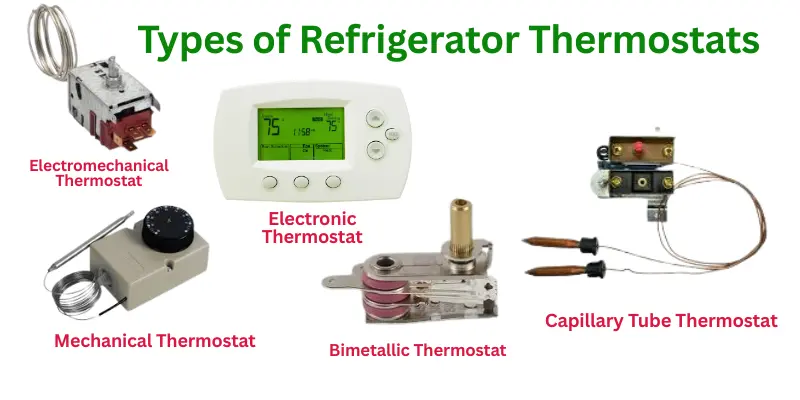
- Mechanical Thermostat – Uses a dial to set the temperature.
- Electromechanical Thermostat – Combines mechanical parts with electrical control.
- Electronic Thermostat – Uses sensors and a digital display for precise control.
- Capillary Tube Thermostat – Uses a thin fluid-filled tube to sense temperature.
- Bimetallic Thermostat – Uses a strip of two metals that bend with temperature changes.
Mechanical Thermostat
A mechanical thermostat is the most basic type. It has a dial you can turn to set the temperature. Inside, a simple switch turns the compressor on or off when needed. This type is reliable and easy to use. Most older refrigerators have this thermostat.
Electromechanical Thermostat
This thermostat combines a dial with electrical components. It senses the temperature more accurately than a purely mechanical one. When the fridge warms up or cools down, it sends a signal to the compressor. Many mid-range fridges use this type because it is simple and long-lasting.
Electronic Thermostat
Electronic thermostats use sensors to check the fridge’s temperature. They often come with a digital display to set the exact temperature. They can also control features like fast cooling or frost-free operation. Electronic thermostats are precise and save electricity. Most modern fridges use this type.
Capillary Tube Thermostat
This type has a thin tube filled with fluid. When the temperature changes, the fluid moves and triggers a switch to start or stop the compressor. Capillary tube thermostats are small, quiet, and reliable. They fit easily in tight spaces inside the fridge.
Bimetallic Thermostat
A bimetallic thermostat has a strip made of two metals. When the temperature changes, the metals bend. This bending turns the compressor on or off. It is simple, durable, and mostly found in older or basic refrigerator models.
Advantages and Disadvantages of a Refrigerator Thermostat
In this section, we will look at the pros and cons of a refrigerator thermostat.
Advantages
Refrigerator thermostats offer several benefits that keep your fridge working efficiently:
| Pros |
|---|
|
Disadvantages
There are a few drawbacks you should be aware of:
| Cons |
|---|
|
Overall, while thermostats have some limitations, their benefits make them an essential part of your refrigerator.
Mistakes or Misconceptions
In this section, we cover common mistakes people make or wrong ideas they have about refrigerator thermostats. Knowing these can help you avoid problems and keep your fridge running well.
- Setting the thermostat too low, thinking it will cool food faster, can actually waste electricity.
- Ignoring unusual fridge temperatures and assuming it will fix itself can lead to spoiled food.
- Believing all thermostats work the same way, when each type may need different handling.
- Frequently opening the fridge and blaming the thermostat for poor cooling is a common misunderstanding.
- Thinking digital or modern thermostats never fail; they still need occasional checks.
- Adjusting the thermostat too often instead of giving it time to stabilize can cause uneven cooling.
- Assuming a thermostat problem is always the compressor’s fault can lead to unnecessary repairs.
This section helps you understand what not to do, so your fridge stays efficient and your food stays safe.
Best Practices for Using a Refrigerator Thermostat
In this section, we cover useful tips to get the most from your fridge thermostat. Following these habits keeps your fridge working well, saves energy, and helps your food stay fresh longer.
- Check the temperature regularly and adjust if needed.
- Avoid opening the fridge door too often or for long periods.
- Don’t overload the fridge; leave space for air to circulate.
- Keep the thermostat dial or digital settings steady; sudden changes can confuse the system.
- Clean the thermostat sensor gently to ensure accurate readings.
- Allow the fridge to stabilize for a few hours after changing the temperature setting.
- Monitor unusual noises or inconsistent cooling and fix issues promptly.
- Place the fridge away from heat sources like sunlight or stoves.
- If you notice frequent temperature swings, call a technician instead of adjusting repeatedly.
Conclusion
So, guys, in this article, we’ve covered What is a refrigerator thermostat? in detail. Understanding how it works and knowing the common mistakes to avoid can help you keep your fridge running efficiently and your food fresh for longer. Personally, I recommend checking your thermostat regularly and following best practices to save electricity and prevent problems. Take a moment today to adjust your settings if needed and make sure your fridge is performing at its best. Your food and your wallet will thank you.
If you found this guide helpful, make sure to check out our other articles for more tips on refrigerators and Air conditioners. Also, feel free to leave a comment below and share your questions or experiences. We’d love to hear from you.
Frequently Asked Questions
Here, you will find simple answers to common doubts. These questions are based on what people usually ask online when they face cooling issues at home.
The thermostat controls how cold the inside of the fridge stays. It tells the cooling system when to start and when to stop. When the temperature rises, it turns the cooling on. When the fridge reaches the set level, it turns the cooling off.
A bad thermostat can make the fridge too warm or too cold. The motor may run nonstop or stop running for long hours. Food may spoil faster, or ice may form in places it shouldn’t. These clues show the thermostat may not be working right.
No, the fridge cannot work properly without a thermostat. The cooling system will not know when to switch on or off. This causes uneven cooling and can spoil food. It may also harm the fridge in the long run.
Turn the thermostat knob to the “off” position and wait for a minute. Then set it back to a normal level, usually in the middle. Give the fridge some time to adjust. You should hear the cooling start again soon.
Set the thermostat to a colder level and wait to see if the motor starts. You can also place a small thermometer inside the fridge. If the temperature does not change after some time, the thermostat may be faulty. This simple test helps you understand what’s happening.
If the fridge still cools unevenly even after cleaning and resetting, it may need a new thermostat. If the fridge does not respond when you change the settings, that’s another sign. Replacing it early protects your food and keeps the fridge running well.
The knob may be loose, or the airflow inside the fridge may be blocked. Dust, dirt, or an overloaded fridge can confuse the cooling system. Fixing these small things often helps the fridge cool better again.
Clicking can happen when the thermostat tries to start the cooling but fails. Buzzing may happen when parts work harder than normal. These sounds warn you that the thermostat may not be sending clear signals. Checking it early stops bigger problems later.