What Is an Upright Freezer – Complete Guide for Beginners
Published: 12 Dec 2025
Ever looked at a tall freezer standing in a corner and wondered how it differs from a chest freezer? Many folks feel the same. In this guide, we will explain what is an upright freezer, how it works, why people use it, its types, advantages and disadvantages, common mistakes, best practices, trends, and more. By the end, you will feel clear and confident in choosing the right one for your home or business.
So are you ready? Let’s move on to our article in detail.
What Is an Upright Freezer
An upright freezer is a vertical freezer that opens like a regular refrigerator, with shelves and compartments for organized storage. People often use it when they want easy access to frozen food without bending down. The design makes it ideal for smaller spaces or areas where floor space is limited.
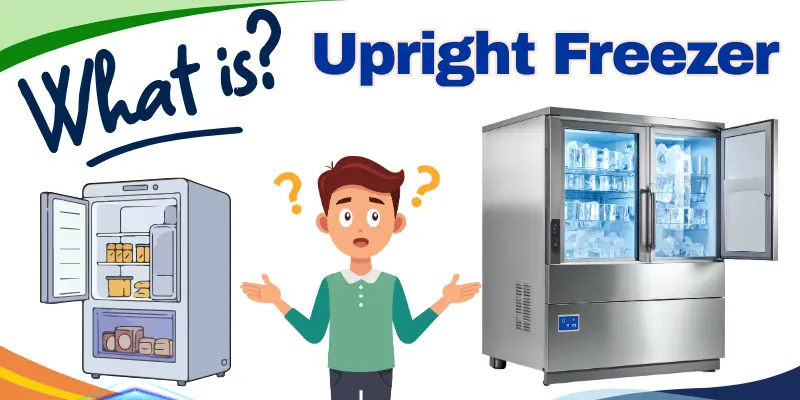
Upright freezers are commonly found in homes, apartments, and offices. They keep food frozen at a steady temperature while providing a clear view of stored items. Many models also come with frost-free technology, so you don’t need to defrost often. They are convenient, space-saving, and simple to use.
Importance
Upright freezers are useful for keeping food organized, easy to access, and safe for long-term storage. They help you save time and plan meals efficiently.
Here is why they are important:
- Provide easy access to frozen food on multiple shelves.
- Fit well in tight spaces or corners.
- Reduce food waste by letting you see everything inside.
- Save time with organized storage compartments.
- Suitable for apartments or homes with limited floor space.
How an Upright Freezer Works
Upright freezers may look simple, but they use a steady cooling system to keep food safe for months. Here’s how they work:
- Cold air circulates evenly through shelves to freeze food.
- A refrigerant absorbs heat from inside and releases it outside.
- The motor cycles on and off to maintain a constant temperature.
- Frost-free models use fans to prevent ice buildup.
- Insulation keeps the cold air inside for energy efficiency.
- Shelves and drawers help organize food without losing cold air.
All these parts work together to keep food frozen and fresh.
Types of Upright Freezers
Upright freezers come in several types to suit different needs. Here are the main ones:
- Standard Upright Freezer – Basic model with shelves for daily use.
- Frost-Free Upright Freezer – Prevents ice buildup automatically.
- Energy-Efficient Upright Freezer – Uses less electricity and lowers bills.
- Compact Upright Freezer – Small model for apartments or offices.
- Commercial Upright Freezer – Heavy-duty for stores and restaurants.
- Convertible Upright Freezer – Can switch between freezer and fridge modes.
Advantages and Disadvantages of Upright Freezers
In this section, we will look at the pros and cons to help you decide if an upright freezer is right for you.
Advantages of Upright Freezers
Here are the main benefits:
| Pros |
|---|
|
Disadvantages of Upright Freezers
Here are the common downsides:
| Cons |
|---|
|
Common Mistakes
In this section, we cover mistakes people often make with upright freezers. Avoid these to get the best use:
- Buying the wrong size and running out of storage.
- Placing it in hot or cramped areas.
- Not organizing shelves for easy access.
- Storing warm food, which raises the temperature.
- Ignoring regular cleaning or defrosting (if not frost-free).
- Opening the door too often and losing cold air.
Misconceptions
Here are some myths about upright freezers:
- They are only for small families, but even large families can use them.
- They consume too much electricity, yet energy-efficient models save power.
- Organizing food is hard, but shelves and drawers make it easy.
- They are noisy, but most models are quiet.
- They are not good for bulk storage, but commercial or large models handle it well.
Best Practices
Follow these tips to keep your upright freezer efficient and long-lasting:
- Keep it in a cool, dry, and ventilated area.
- Do not overload shelves; allow air circulation.
- Organize food by category for easy access.
- Check temperature regularly; ideal is around 0°F or -18°C.
- Clean the interior every few months.
- Close the door quickly to keep cold air in.
- Defrost manually if it is not a frost-free model.
Future
Here’s what to expect from upright freezers in the coming years:
- More energy-efficient designs to reduce electricity use.
- Smart models with temperature controls and alerts via apps.
- Eco-friendly refrigerants to reduce environmental impact.
- Compact and space-saving designs for smaller homes.
- Quieter operation with improved motors and insulation.
- Longer-lasting materials for durability.
Trends
Current trends in upright freezers show how technology and user needs are changing:
- Frost-free technology is more popular for low maintenance.
- Convertible models allow freezer or fridge use.
- Stylish designs to match modern kitchens.
- Digital controls and alarms for precise temperature.
- Compact models for apartments and offices.
- Fast-freeze options for quick food storage.
Conclusion
In this guide, we covered everything about what is an upright freezer, including how it works, types, advantages and disadvantages, common mistakes, best practices, future trends, and more. Knowing all this helps you make a smart choice and use your freezer effectively.
As a personal recommendation, folks, pick an upright freezer that fits your space and storage needs. It will keep your food organized, save you time, and make life easier at home or for small businesses.
Keep learning, buddies, and make the most out of your freezer!
FAQs About Upright Freezer
In this section, we have collected some bonus questions about upright freezers that many people often search for. These questions focus on practical points and tips that were not fully covered in the main article.
Here is a list of useful questions:
- How long can food stay frozen in an upright freezer during a power outage?
- Can an upright freezer be used outdoors or in a garage?
- What is the ideal temperature for an upright freezer to keep food safe?
- How do frost-free upright freezers differ from manual defrost models?
- Can upright freezers store large bulk items efficiently?
Now we discuss the answers to all the questions one by one.
A full upright freezer can usually keep food frozen for 24 to 36 hours if the door stays closed. A half-full freezer may lose cold faster. Try not to open the door during an outage. Adding ice packs can help maintain temperature.
Yes, some upright freezers work in garages or semi-covered outdoor spaces if temperatures stay within the recommended range. Avoid very hot or freezing areas. Make sure the space is dry and ventilated. Keep it away from direct sunlight and water.
The best temperature is around 0°F or -18°C. This keeps food frozen safely for months. Most freezers have a dial or digital control to set it. Check the temperature regularly to ensure it stays steady.
Frost-free freezers use fans to prevent ice buildup automatically. Manual defrost models need you to remove ice regularly. Frost-free is easier to maintain but may use slightly more electricity. Both types keep food frozen safely.
Upright freezers can store bulk items, but space may be limited by shelves. Larger or commercial models handle big packs better. Using removable shelves or adjustable drawers can help. Planning storage and organizing food efficiently improves space use.