What Is Fridge Temp Supposed to Be? Perfect Refrigerator Temperature Guide
Published: 20 Nov 2025
Do you ever open your fridge and wonder if the temperature is right? Many people do. A fridge may feel cold, but that does not mean it is at the proper refrigerator temperature. Keeping the right temperature is very important. It keeps your food fresh. It stops germs from growing. And it helps your fridge work better without wasting power.
In this guide, we will explain what is fridge temp supposed to be, what the recommended fridge temperature is, and why it matters. We will also share easy tips, real-life examples, and simple steps you can follow at home. By the end, you will know the ideal temperature for a refrigerator and how to check it correctly.
Are you ready to learn how to keep your food safe and cool? Let’s start!
What Is the Average Fridge Temperature?
Before we learn the best settings, let us first understand what a normal fridge temperature looks like. This helps you keep your food fresh and safe every day.
1. Understanding the Typical Temperature Range
Most refrigerators work best in a cool range that keeps food safe and tasty.
The usual and safe average fridge temperature stays between 35°F and 40°F, which is about 1.7°C to 4.4°C.
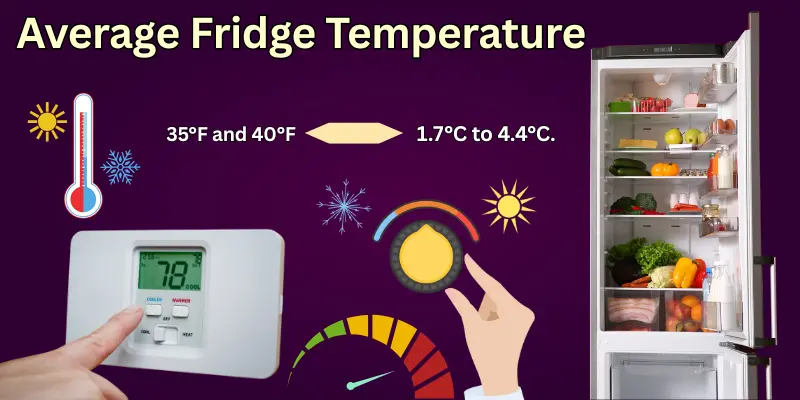
This range is neither too cold nor too warm. It keeps milk fresh, stops meat from spoiling fast, and helps fruits and vegetables stay crisp.
If the number goes higher, germs grow faster. If it goes lower, food can freeze.
2. Why Your Fridge Temperature May Change
Your fridge temperature can vary during the day. This is normal and happens for many reasons.
- Opening the door often lets warm air in. The fridge needs time to cool again.
- Placement matters. If your fridge is near a wall, sunlight, or a warm oven, the temperature inside may change.
- Seasons affect it. In summer, fridges work harder. In winter, they get cold easily.
- Some people keep the fridge slightly warmer to save energy, while others keep it cooler for extra food safety. Both choices affect the temperature inside.
Recommended Fridge Temperature Settings
Now that you know the normal range, let us look at the best temperature settings for daily use.
1. For the Refrigerator Compartment
The best and most trusted recommended fridge temperature for the main fridge section is 37°F, which is about 3°C.
Many experts say this number gives the right balance. It keeps food cool and fresh without freezing it.
This is the recommended refrigerator temperature that works for most homes.
If your fridge has a digital display, try setting it close to this number.
If you use a dial, choose the middle point, then check with a small thermometer to be sure.
This also fits the refrigerator temperature recommended by food safety groups.
2. For the Freezer Compartment
The freezer needs a much colder setting because it keeps food frozen for weeks or even months.
The best temperature for a freezer is 0°F, which is around minus 18°C.
At this level, ice cream stays firm, meat stays safe, and frozen food keeps its taste for a long time.
3. Adjusting Digital vs. Dial Controls
Many new fridges use digital panels. You can set the exact number, so it is easy to keep the right temperature.
Older fridges use a dial with numbers like 1 to 5. On these, the middle or slightly higher setting works best.
If you are not sure, place a fridge thermometer on the middle shelf and check it after a few hours. These small steps help your fridge work better and keep your food safe every day.
The Perfect Refrigerator Temperature for Food Safety
The right fridge setting keeps your food fresh and safe to eat. When the temperature stays steady, harmful germs grow more slowly, and fruits, vegetables, and dairy stay good for a longer time. This is why finding the perfect refrigerator temperature is important for every home.
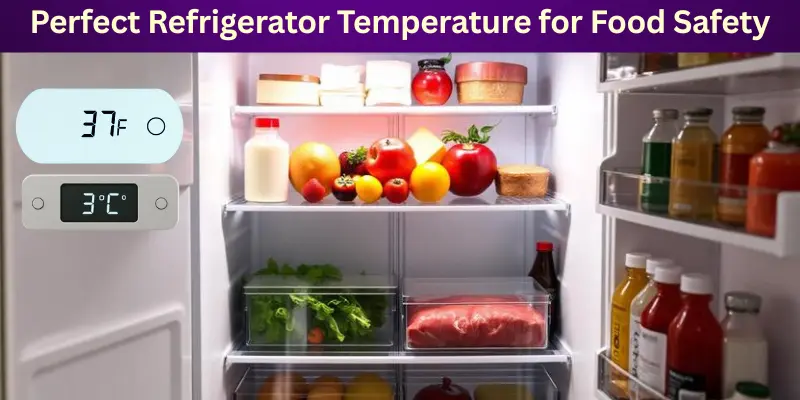
The fridge temperature ideal for food safety is close to 37°F (3°C). At this level, your food stays cool without freezing, and bacteria cannot spread fast.
1. How the Right Temperature Stops Spoilage
When your fridge is too warm, food spoils quickly. Milk turns sour, fruits become soft, and cooked food can go bad in just a few hours.
When it is too cold, some items freeze and lose texture.
Keeping the perfect refrigerator temperature helps stop both problems. It slows down germs and holds moisture inside your food. This helps your meals taste fresh for days.
2. Tips for Storing Different Types of Food
Here are simple tips to help you store food the right way:
- Dairy products (milk, yogurt, cheese) stay best on the middle shelves where the temperature is most stable.
- Fruits and vegetables go in the crisper drawer. It keeps moisture balanced.
- Raw meat and fish stay safest on the lowest shelf in a closed box, so juices do not drip.
- Leftovers should sit in airtight boxes to stay fresh for longer.
- Bottled drinks and sauces can go on the door shelves, which are a little warmer.
When you follow these small steps, your fridge stays clean, organized, and safe for your family.
Factors Affecting Fridge Temperature and How to Keep It Right
Your fridge temperature can change for many reasons. Knowing these factors helps you keep food fresh, safe, and properly cooled. Following a few simple steps can also help maintain the proper refrigerator temperature and save energy.
1. Door Openings and Frequent Use
Every time you open the fridge, warm air enters, and the fridge has to work harder to cool down again. Try to open the door only when necessary. Plan to take out multiple items at once instead of opening the fridge repeatedly. This helps your fridge maintain a steady cooling level.
2. Fridge Placement
Where your fridge sits in the kitchen makes a big difference. Avoid placing it near heat sources like ovens, stoves, or direct sunlight. Leave a small gap at the back and on the sides so air can circulate. Proper placement helps your fridge stay at the ideal cooling range.
3. Seasonal and Room Temperature Changes
Hot summer days make your fridge work harder, while cooler winter days make it easier to maintain the right temperature. If your kitchen gets very hot, consider using a thermometer to monitor the actual fridge temperature.
4. Fridge Age and Efficiency
Older refrigerators may not keep food as cold. Worn door seals, aging compressors, or poor insulation can affect cooling. Newer models are usually more efficient and maintain the proper refrigerator temperature more easily.
5. How to Check the Temperature
- Use a fridge thermometer. Place it in the middle of the fridge, not in the door or freezer. Check it after a few hours to see if it stays in the safe range.
- For digital fridges, set the exact numbers and compare with the thermometer.
- For older dial models, start at the middle setting, then adjust slightly if needed.
6. Tips to Keep Your Fridge at the Right Temperature
- Do not overfill the fridge; air must circulate freely.
- Keep it away from heat sources and sunlight.
- Make sure door seals are tight and not damaged.
- Open the fridge only when necessary and close it quickly.
- Check the temperature regularly with a thermometer.
By following these steps, your fridge will maintain the ideal cooling level, keep your food fresh longer, and help save electricity. This ensures your fridge temperature stays at the best level for both safety and efficiency.
Common Mistakes People Make With Fridge Temperature
Even if you know the right temperature, small mistakes can make your fridge less effective. Avoiding these helps keep your food fresh and safe.
1. Setting the Fridge Too Cold or Too Warm
Some people think colder is always better. But if the fridge is too cold, fruits and vegetables can freeze, and some items may lose texture.
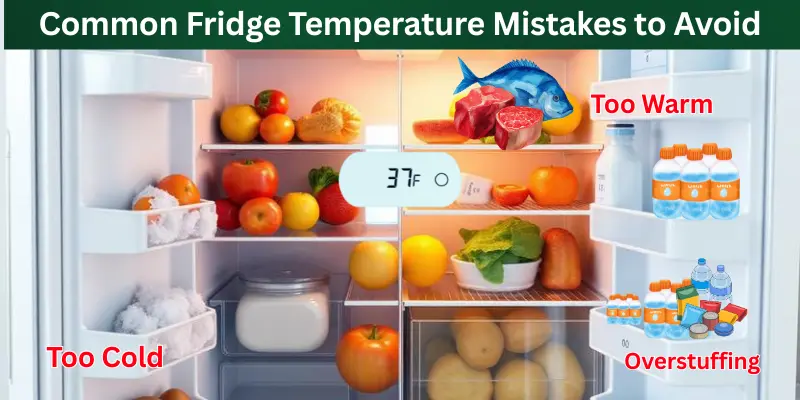
If it is too warm, milk, meat, and leftovers spoil faster. Always aim for the proper refrigerator temperature, around 37°F (3°C), to balance safety and freshness.
2. Overstuffing the Fridge
Filling every shelf makes it hard for cold air to circulate. Some food may stay warm while other areas freeze.
Keep space between items so air can move freely. This helps the fridge maintain a steady temperature.
3. Ignoring Freezer vs Fridge Zones
The fridge and freezer have different ideal temperatures. Sometimes people store items in the wrong section.
- Fridge compartment: about 37°F (3°C).
- Freezer compartment: about 0°F (-18°C).
Placing food in the correct zone ensures it stays fresh or frozen for the right time.
Fridge Temperature Q&A
Even if you know the proper fridge temperature, small doubts about fridge settings, food safety, and daily use are common. Here we answer the most frequently asked questions to help you keep your fridge working efficiently and your food safe.
- Should I set my fridge to 3 or 4?
- Which is colder, 1 °C or 7 °C in the fridge?
- Should I put my fridge on 1 or 7?
- Is 3°C good for a fridge?
- What temperature kills bacteria in a fridge?
- What is the Danger Zone in the refrigerator?
- What is the 2-hour rule for food?
- Where should milk be stored in the fridge?
- Should eggs be kept in the fridge door?
Now we will discuss each question in detail.
Most fridges have a dial from 1 to 5 or 1 to 7. The middle setting, usually 3 or 4, is best for keeping food fresh. It keeps the fridge cool without freezing items like vegetables, drinks, or leftovers. Always check the temperature with a thermometer to make sure it stays around 37°F (3°C). Adjust slightly if you notice food freezing or spoiling.
1°C is colder than 7°C. If your fridge is at 1°C, some foods like soft vegetables or drinks may freeze. At 7°C, the fridge is too warm, and bacteria can grow faster. The best temperature is around 3°C to 4°C to keep food fresh and safe. Using a thermometer can help you find the exact right spot.
The numbers on a fridge dial usually mean 1 is the warmest, and the highest number is the coldest. The safest choice is a middle number, which keeps food fresh without freezing. If you notice drinks or vegetables freezing, lower the number slightly. If food is spoiling quickly, increase the setting. Always check with a thermometer for accuracy.
Yes, 3°C is a very good temperature for most fridges. It keeps milk, leftovers, fruits, and vegetables fresh. This temperature also slows down bacterial growth. Do not go below 1°C because some items may freeze. Using 3°C ensures your food stays safe and tasty for longer.
Bacteria grow slowly at 37°F (3°C) or lower. If the fridge goes above 40°F (4.5°C), bacteria can multiply quickly and spoil food. Keeping the fridge around 37°F prevents germs from spreading. Regularly checking the temperature helps ensure your food stays safe. Always keep perishable items in the main fridge area.
The Danger Zone is 40°F to 140°F (4°C to 60°C). Food stored in this range can grow bacteria fast and may become unsafe to eat. Always keep your fridge below 40°F (4°C) to prevent spoilage. This is why checking the temperature with a thermometer is important. Keeping food out of the Danger Zone keeps you and your family safe.
Perishable food should not sit out at room temperature for more than two hours. After this, bacteria can grow and make food unsafe to eat. Always refrigerate cooked meals, milk, and leftovers quickly. If it is very hot, food should go in the fridge even sooner. Following this rule keeps your food fresh and reduces the risk of illness.
Milk stays freshest on the middle shelves of the fridge. This area has the most stable temperature. Avoid keeping milk in the door, as the temperature changes every time the fridge opens. Always keep it in its original container and close the cap tightly. This helps milk stay fresh longer.
No, eggs are best stored on the middle or top shelves. The fridge door temperature changes often, which can shorten egg shelf life. Keep eggs in their carton to protect them and reduce odor absorption. Storing eggs away from the door keeps them fresher for weeks.
Conclusion
So, guys, in this article, we’ve covered what fridge temp is supposed to be in detail. From understanding the average fridge temperature to knowing the perfect settings for both the fridge and freezer, we’ve shared tips to keep your food fresh and safe. Personally, I recommend setting your fridge to around 37°F (3°C) and your freezer to 0°F (-18°C) and checking it regularly with a thermometer. This simple habit will help your food last longer, prevent spoilage, and save electricity. Set your fridge to the recommended temperature today and enjoy fresher, safer food every day!
So, guys, it’s time to say goodbye to you.
We hope you liked our article and it helped you. You can also read our other guide to learn more about how air conditioner works. If you have questions, write them in the comments.