What is Refrigerator Gas? Complete Beginner’s Guide
Published: 30 Nov 2025
Imagine you just bought a fresh carton of milk, placed it in your fridge, and wondered how it stays cold all day. It might surprise you that a special gas inside your fridge is quietly doing all the hard work. In this guide, we will explain what is refrigerator gas, how it works, the types used in fridges, common issues, and simple ways to keep your fridge running smoothly. By the end, you’ll understand how this tiny component keeps your food fresh and safe.
So are you ready? Let’s know everything in detail.
What is a Refrigerator Gas?
A refrigerator gas is a special substance that helps your fridge stay cold. It moves inside the fridge’s cooling system to carry heat out. When the gas absorbs heat from inside, it changes from a liquid to a gas. Then it releases the heat outside and turns back into a liquid. This cycle keeps repeating to make sure the fridge stays cool.
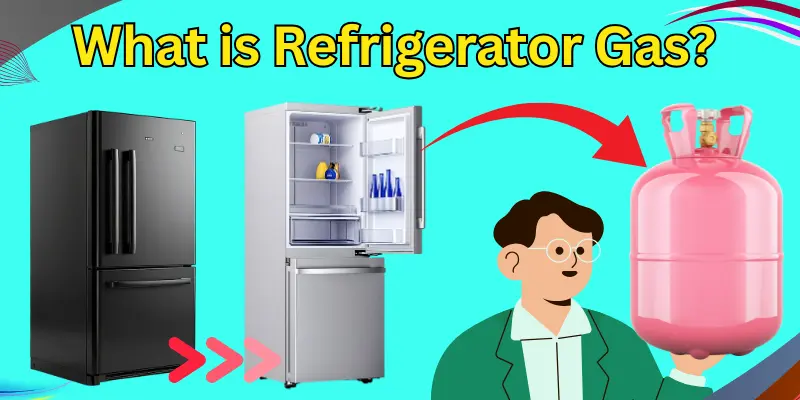
Different types of gases are used depending on the fridge model. These gases are safe when used properly and help the fridge work efficiently. Without this gas, the fridge would not be able to cool your food.
Importance of Refrigerator Gas
Refrigerator gas is what makes your fridge work properly. It helps move heat out of the fridge so the inside stays cold. When the gas works well, your food stays fresh longer. It also helps the fridge use less electricity and prevents extra wear on parts. Without the right gas, the fridge has to work harder, which can cause problems and higher bills. A properly working gas system keeps your fridge running smoothly every day.
How Refrigerator Gas Works
Refrigerator gas works quietly to keep your food cool and fresh. It moves in a simple cycle that takes heat out of the fridge and releases it outside. Understanding this cycle helps you see why the fridge stays cold.
- The gas absorbs heat from inside the fridge, taking warmth away from your food.
- It moves to the compressor, where it is compressed and pushed outside the fridge.
- Heat escapes into the surrounding air, and the gas cools down.
- The cooled gas turns back into a liquid and flows back into the fridge.
- This cycle repeats continuously to maintain a steady temperature inside the fridge.
Real example: Imagine a sponge soaking up heat and then squeezing it out somewhere else. This is exactly how the refrigerator‘s gas keeps things cool.
Types of Refrigerator Gases
Refrigerators use different types of gases to keep food cool. Each gas works in its own way and has benefits for efficiency and the environment. Knowing the types helps you understand your fridge better.
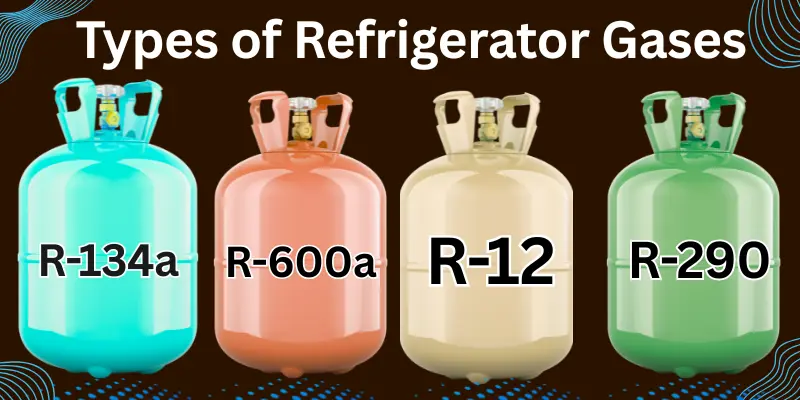
- R-12 (Dichlorodifluoromethane): Old gas, cooled well, but harmful to the ozone layer. Not used in modern fridges.
- R134a: Common in older fridges, reliable but less eco-friendly.
- R600a (Isobutane): Modern gas, energy-efficient, and environmentally friendly.
- R290 (Propane): Highly efficient, eco-friendly, and used in some new fridges.
- Other gases: Some fridges use blends for better cooling and lower energy use.
Modern gases focus on saving electricity and reducing environmental impact, while older gases may still be found in older appliances.
You can read our detailed guide about the types of refrigerator gas.
Advantages and Disadvantages of Refrigerator Gas
In this section, we will look at the pros and cons of refrigerator gas. This will help you understand why it matters and what to expect. Knowing both sides makes it easier to care for your fridge.
Advantages of Refrigerator Gas
Refrigerator gas offers many helpful benefits that support smooth cooling.
| Pros |
|---|
|
Disadvantages of Refrigerator Gas
Refrigerator gas also comes with a few drawbacks you should know.
| Cons |
|---|
|
Common Problems With Refrigerator Gas
Sometimes a fridge shows clear signs when the gas is not working properly. These signs help you understand the problem early and avoid bigger issues. Here are the most common problems you may notice:
- Poor cooling, even when the settings are correct
- Ice buildup in the freezer or around the coils
- Strange noises when the fridge tries to cool
- High electricity bills because the fridge works harder
If you want, I can expand this into detailed explanations or add real-life examples for each problem.
Safety Tips When Handling Refrigerator Gas
It is important to stay safe when dealing with refrigerator gas. This gas helps your fridge stay cool, but it must be handled with care. Here are some simple safety tips to follow:
- Never try to refill or repair the gas yourself
- Keep the fridge in a place with good airflow
- Call a trained technician if you notice any kind of leak or smell
- Do not push the fridge too close to the wall
- Keep kids away from the back side of the fridge
- Turn off the fridge if you sense anything unusual
If you want, I can expand this section with short explanations under each bullet.
Future of Refrigerator Gas
In this section, we cover how refrigerator gas is changing over time. New developments focus on saving energy, protecting food better, and being safer for the environment. These changes make fridges more efficient, reliable, and eco-friendly.
- More use of eco-friendly gases like R600a and R290
- Lower electricity use for energy savings
- Better cooling performance with safer gas types
- Reduced environmental impact from modern gases
- Stricter rules to phase out harmful old gases
- Smarter fridge designs that need less gas
- Improved leak-proof systems for longer fridge life
Conclusion
So, guys, in this guide, we learned all about what is refrigerator gas, how it works, the types used in fridges, common problems, and ways to keep your fridge running smoothly. We saw why this tiny gas is so important for keeping your food fresh, saving energy, and making your fridge last longer.
My advice: always keep an eye on your fridge’s performance, clean it regularly, and call a trained technician if you notice any issues with the gas. A healthy fridge means fresh food, lower bills, and fewer headaches.
Keep learning, buddies, and make sure your fridge stays in top shape every day!
FAQs
Here are some simple answers to the most common questions about refrigerator gas.
Refilling gas in a fridge depends on the type of gas and your fridge model. On average, it can cost between $30 to $100. Older types of gas may cost more because they are harder to find. The price also depends on your location and the technician. Always have a trained professional handle the refill for safety.
The cost of 1 kg of fridge gas varies by type. R134a gas usually costs around $10–$15 per kg. Eco-friendly gases like R600a or R290 may cost slightly more. Prices can also differ depending on your area and supplier.
Most fridges do not need frequent gas refills. The system is sealed, and the gas usually lasts for many years. A refill is only needed if there is a leak or if the fridge is not cooling properly. Regular maintenance helps detect problems early.
First, check the temperature settings and make sure the fridge is not overloaded. Ensure that vents are clear and the coils are clean. If the fridge still does not cool, there may be low gas or a compressor issue. Always call a trained technician to inspect and fix it safely.
A trained technician uses special tools to refill the gas safely. They may remove old gas or top it up, check for leaks, and test the fridge to ensure proper cooling. The process requires care and cannot be done at home. Safety is very important because the gas is under pressure.
No, the compressor is not a gas. It is a pump that moves the gas through the fridge system. The compressor compresses the gas, which allows it to release heat outside and cool the fridge’s interior. It works with the gas to keep your food cold.
No, a fridge cannot cool without gas. The gas absorbs heat from inside the fridge and releases it outside. Without gas, the fridge cannot maintain cold temperatures. Food will spoil quickly if the gas is missing or leaking.
Signs that your fridge may need gas include poor cooling, ice buildup in the freezer, strange noises, or high electricity bills. If the fridge is not maintaining a steady temperature, it may be low on gas. A technician can check the gas level and refill it safely.
Common symptoms include uneven cooling, ice forming on the coils, loud or unusual noises, and higher electricity use. These indicate that the gas may be low or leaking. Early detection can prevent food spoilage and expensive repairs.
No, refilling the fridge gas yourself is very dangerous. The gas is under high pressure and requires special tools and skills. Attempting it at home can cause injury or damage your fridge. Always call a trained technician to refill or repair the gas safely.